
Petzl Swift LT
4.5Editor score
380-lumen maximum output
43-gram lightweight design
USB-C rechargeable construction
Our expert guide compares 10 headlamps for ultra and trail running, evaluating brightness, beam reach, comfort, battery life, weather resistance, charging
A headlamp for ultra and trail running must do more than illuminate the path. It needs to remain stable through repetitive impact, deliver a beam far enough ahead to reveal roots and rocks, fit comfortably for long distances, and withstand rain, sweat, dust, and changing temperatures. Light weight matters especially, but beam quality, controls, and battery planning are equally important.
We compared 10 models using their published specifications and supplied product information. The evaluation considers maximum output, beam distance, lighting modes, weight, charging options, runtime, water resistance, impact resistance, fit, and features that improve safety during fast movement. The list covers compact ultralight options, brighter performance models, and premium reactive-light headlamps.
Each selection highlights a different reason to make the cut: the Nitecore NU25 MCT UL leads with output in a remarkably light design, the Petzl Swift LT balances portability with useful features, and the Fenix HM65R-T V2.0 targets runners who want exceptional reach and long battery life. Product availability and prices change, so confirm the current listing and specifications before purchasing.
4.5Editor score
4.7Editor score

4.6Editor score
The comparison below places every headlamp on the same practical scale, with emphasis on maximum brightness, weight, reachable distance, power flexibility, and protection against the conditions encountered during night running.




The Nitecore NU25 MCT UL is the most convincing all-around choice in this guide because it combines a stated maximum output of 400 lumens with a listed weight of just 1.65 ounces. That balance is particularly valuable for ultra runners, where every gram can affect comfort over distance. Its 144-yard maximum beam distance also provides more than enough reach for locating trail features ahead of the runner.
We may earn a commission when you buy through this link, at no additional cost to you.
Light color adaptability is the model's most distinctive feature. The headlamp can switch among warm, natural, and cool white light, giving runners a practical way to adapt to fog, rain, trail contrast, and personal comfort. It also provides SOS, beacon, and auxiliary red-light functions, while the stated four-output arrangement keeps the controls flexible without requiring complicated operation.
Power comes through a built-in USB-C port, and the included charging cable adds convenience for runners who already carry similar cables on long trips. A power-status indicator helps prevent an unnoticed depleted battery, while a listed runtime of up to 45 hours and a recharge time of just over one hour make the design practical for extended training blocks. The PC construction, IP66 rating, and one-meter impact resistance add useful protection against rain, dust, and ordinary trail mishaps.
The trade-off is that the brightest setting will not provide the same endurance potential as models with larger batteries or lower-output efficiency. There is also no reactive light sensor to alter output automatically as conditions change. Even so, the NU25 MCT UL gives runners a rare combination of low mass, flexible color, useful reach, and strong environmental protection, making it the most broadly practical selection here.
Warm, neutral, and cool white options let the runner select a more useful beam for foggy, rainy, or high-contrast terrain. Red, SOS, and beacon outputs also support night-vision preservation, signaling, and emergency use.
At a listed 1.65 ounces, the NU25 MCT UL reduces the burden of carrying a lamp on the forehead. Its compact format is especially attractive for ultrarunners who prioritize weight, organization, and freedom of movement.
We may earn a commission when you buy through this link, at no additional cost to you.
The Petzl Swift LT stands out as a compact and approachable option for runners who want a capable light without carrying a large or complicated unit. Its 43-gram weight and stated 380-lumen maximum output create a useful balance, while the desert-green housing adds some visual distinction to a category filled with black and gray headlamps.
We may earn a commission when you buy through this link, at no additional cost to you.
The lighting controls cover three white brightness levels, allowing a runner to trade visibility for runtime depending on how technical the trail becomes. A red-light mode helps preserve night vision and reduces the chance of dazzling nearby companions. Reflective thread in the streamlined headband also adds passive visibility when the headlamp is pointed elsewhere or temporarily turned off.
USB-C recharging makes the Swift LT straightforward to integrate into a modern travel kit. Its IPX4 rating protects against rain and splashes, making it appropriate for many trail conditions, although its protection level is not as comprehensive as the IP66 and IP68 ratings offered by several alternatives. The construction is better viewed as weather-ready for routine running than as a fully sealed design for prolonged exposure.
This is a strong pick for fast-paced training, shorter ultras, and runners who prefer straightforward controls. Its main limitation is the absence of a published maximum beam distance, so those who need to judge illumination reach in advance may prefer the Fenix HM65R-T V2.0. Even so, the Swift LT is compact, rechargeable, and flexible enough to serve as a dependable everyday trail headlamp.
The Swift LT combines three white levels, a red mode, and reflective detailing in a 43-gram format. It suits runners who want essential illumination controls without relying on a larger housing or more complex interface.
Reflective thread can help other road users or trail companions notice the wearer when the main beam is not directed toward them. This passive visibility is a useful complement to the active lighting.
We may earn a commission when you buy through this link, at no additional cost to you.
The Fenix HM65R-T V2.0 is the performance leader for trail runners who prioritize seeing far ahead. Its 1,600-lumen maximum output and stated reach of up to 185 yards are exceptional figures in this group, giving it a meaningful advantage on fast descents, wide open paths, and technically complex terrain where early detection of obstacles matters.
We may earn a commission when you buy through this link, at no additional cost to you.
The dual-beam arrangement adds meaningful flexibility. White light offers clear visibility, while warm white is easier on the eyes and can be useful in fog, rain, and other low-visibility conditions. The wide reflective headband and two-way SPORT fit system are designed for stability during sustained movement, and the fastening system can be adjusted with one hand, which is convenient when the other arm is working.
Despite the emphasis on high output, the supplied information states that a fully charged unit can run for over 600 hours, demonstrating strong low-mode efficiency. Power indicators provide runtime information, and USB-C charging means runners can use the same cables found in many contemporary travel kits. The magnesium-alloy frame is stated to be 30 percent lighter than aluminum while remaining durable, with impact resistance to two meters and an IP68 waterproof rating.
This is not the smallest or lightest option, and maximum brightness generally requires more energy than lower output. Nevertheless, the HM65R-T V2.0 is the most convincing choice for demanding runners who want exceptional reach, adaptable color, durable weather protection, and long-duration low-output use. For technical night trails and high-speed movement, those strengths outweigh the extra size.
A 185-yard stated reach gives runners more time to identify roots, rocks, branches, and changes in elevation. This makes the model particularly compelling for faster trail runners and unlit routes with substantial obstacles.
The wide reflective headband and two-way SPORT fastening system help maintain a steady position. One-handed adjustment is especially convenient during long efforts, pauses, and moments when removing a pack.
We may earn a commission when you buy through this link, at no additional cost to you.
The Petzl Swift RL is built for runners who would rather let the headlamp respond to changing light than repeatedly operate the controls. Its reactive lighting system uses a light sensor to adjust brightness and beam pattern automatically, helping the lamp adapt as the runner moves between open, exposed terrain and darker sections of trail.
We may earn a commission when you buy through this link, at no additional cost to you.
Maximum output of 1,100 lumens provides plenty of power for technical routes, while the red lighting offers continuous low-light use and a strobe mode for signaling location in emergencies. The split-headband design is intended to improve stability during dynamic movement, and reflective details add another layer of visibility when the main beam is not visible to others.
Power comes from an included 2350 mAh lithium-ion battery that charges through USB-C. A five-level battery indicator gives the wearer a clearer view of remaining capacity, which is useful during long-distance planning. The stated 100-gram weight is not ultralight by the standards of this guide, but the design still targets trail running, mountaineering, and skiing rather than general camping use.
The main appeal is automation. A runner can spend more time watching the trail and less time managing brightness, particularly on routes with alternating dark and bright sections. Some users may prefer to know exactly which output is active, however, and the weight is higher than that of the Nitecore models. It is best suited to those who value responsive illumination and secure fit over minimum grams.
The light sensor adjusts output and beam pattern as ambient conditions change. This can reduce manual control interruptions and preserve useful illumination without forcing one fixed setting for the entire route.
Continuous red lighting supports low-light use, while the red strobe provides a recognizable way to signal location. Both modes are useful additions to the emergency planning required for remote night running.
We may earn a commission when you buy through this link, at no additional cost to you.
The Nitecore NU20 Classic is an ultralight option with a particularly strong rating, offering 360 lumens at a listed weight of only 1.34 ounces. That makes it one of the most compelling choices for runners who judge comfort primarily by total mass and want a lamp that can remain on the forehead for long stretches without feeling bulky.
We may earn a commission when you buy through this link, at no additional cost to you.
The main white LED offers three brightness levels, supported by SOS, beacon, a soft reading light, and an auxiliary red mode. This range of functions lets the lamp move beyond the basic forward beam and adapt to campsite tasks, map checking, signaling, and low-light use. A maximum beam distance of 119 yards remains useful for most maintained or moderately technical trails.
Battery endurance is another major strength. The listed low-mode runtime reaches up to 97 hours, making the NU20 Classic a practical choice for runners and hikers who carry a light across several days of activities. It recharges through USB-C in just over an hour and includes a battery indicator to reduce the chance of beginning a long outing with an unknown reserve.
Rugged PC construction, IP66 waterproofing, and resistance to impacts up to one meter help it cope with rain, dust, and rough use. Its maximum reach is not as impressive as that of the Fenix or Petzl Swift RL, and the single primary white LED is simpler than a dual-beam arrangement. Even so, the combination of weight, output, endurance, and protective design makes the NU20 Classic an excellent lightweight choice.
The 1.34-ounce listed weight is especially notable for ultrarunning. Despite that low mass, maximum output reaches 360 lumens, providing more light than many similarly compact conventional headlamps.
The reading light, red mode, SOS, and beacon make the NU20 Classic useful during camping and trail work. Its up-to-97-hour low-mode runtime also reduces charging pressure on multi-day trips.
We may earn a commission when you buy through this link, at no additional cost to you.
The BLACK DIAMOND Cosmo 350 differentiates itself with dual-fuel operation. It can run on three included AAA batteries or the rechargeable BD 1500 lithium-ion battery, giving runners flexibility when planning remote routes, overnight races, or outings where carrying a specialized charging cable would be inconvenient.
We may earn a commission when you buy through this link, at no additional cost to you.
Output reaches 350 lumens, while a simple button interface provides dimming, strobe, and red night-vision settings. Adjustable brightness allows the user to choose a practical level for the terrain instead of relying only on maximum output. The low-profile housing and adjustable headband are designed to remain stable and comfortable during running, hiking, and climbing.
Its IP67 rating is among the strongest in this roundup. According to the supplied information, it can withstand submersion in water up to one meter for 30 minutes, although the headlamp should be fully dried after wet use. This level of protection is reassuring for runners facing sustained rain, stream crossings, and muddy trails.
The main limitation is that no built-in USB-C charging is specified, so runners who favor rechargeable cables may find the system less convenient than the Nitecore, Petzl, Fenix, and BLACK DIAMOND Deploy alternatives. Replacing AAA cells can also add recurring cost and environmental burden. Even with that caveat, dual-fuel flexibility, excellent water resistance, and a 350-lumen ceiling make the Cosmo 350 a highly versatile choice.
AAA power is broadly available and easy to carry, while the BD 1500 option supports rechargeable use. That flexibility is valuable when a runner must decide between convenience, weight, and access to power in a remote setting.
The IP67 rating provides strong water protection for rain, mud, and accidental immersion. As with any waterproof electronic device, the headlamp should be allowed to dry fully after exposure to wet conditions.
We may earn a commission when you buy through this link, at no additional cost to you.
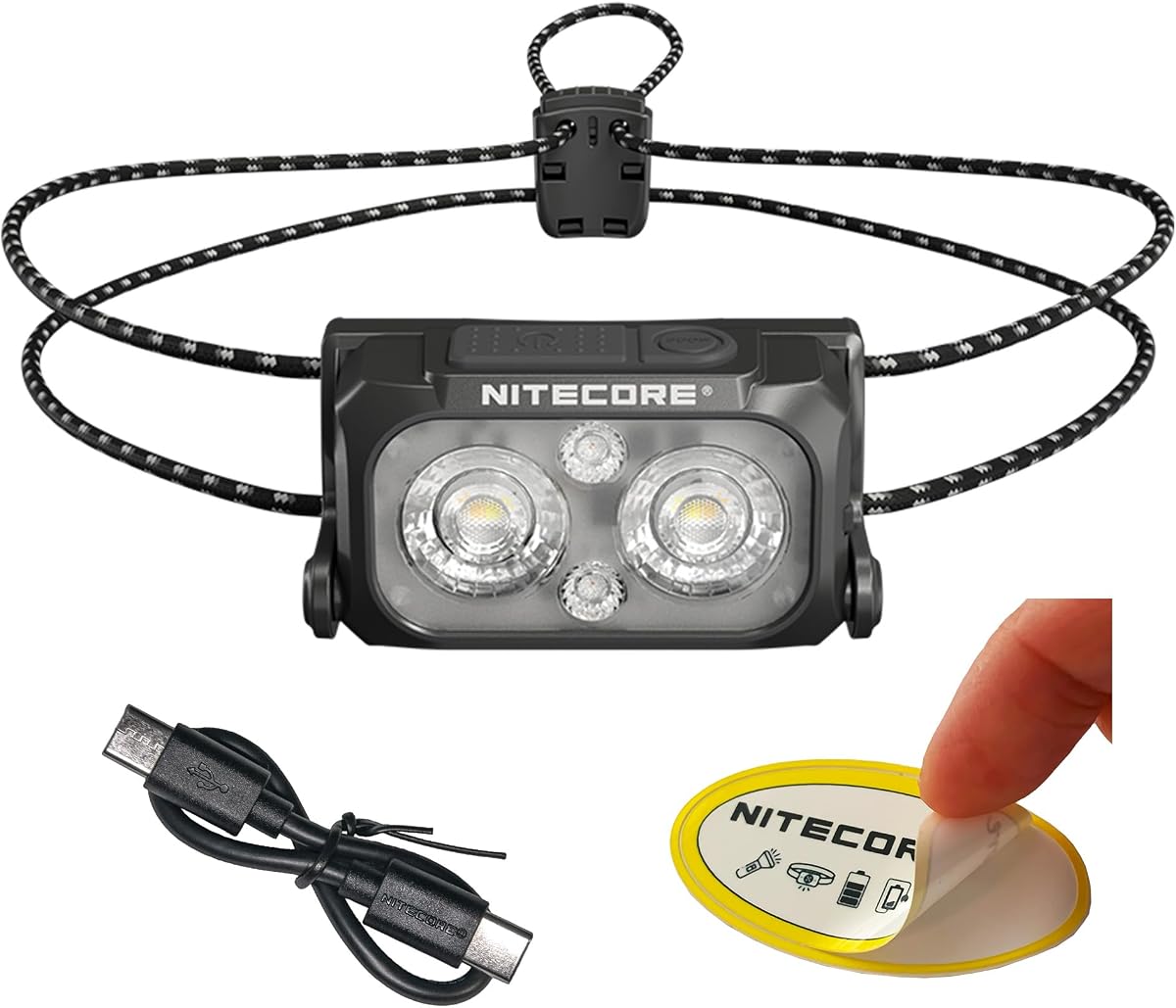
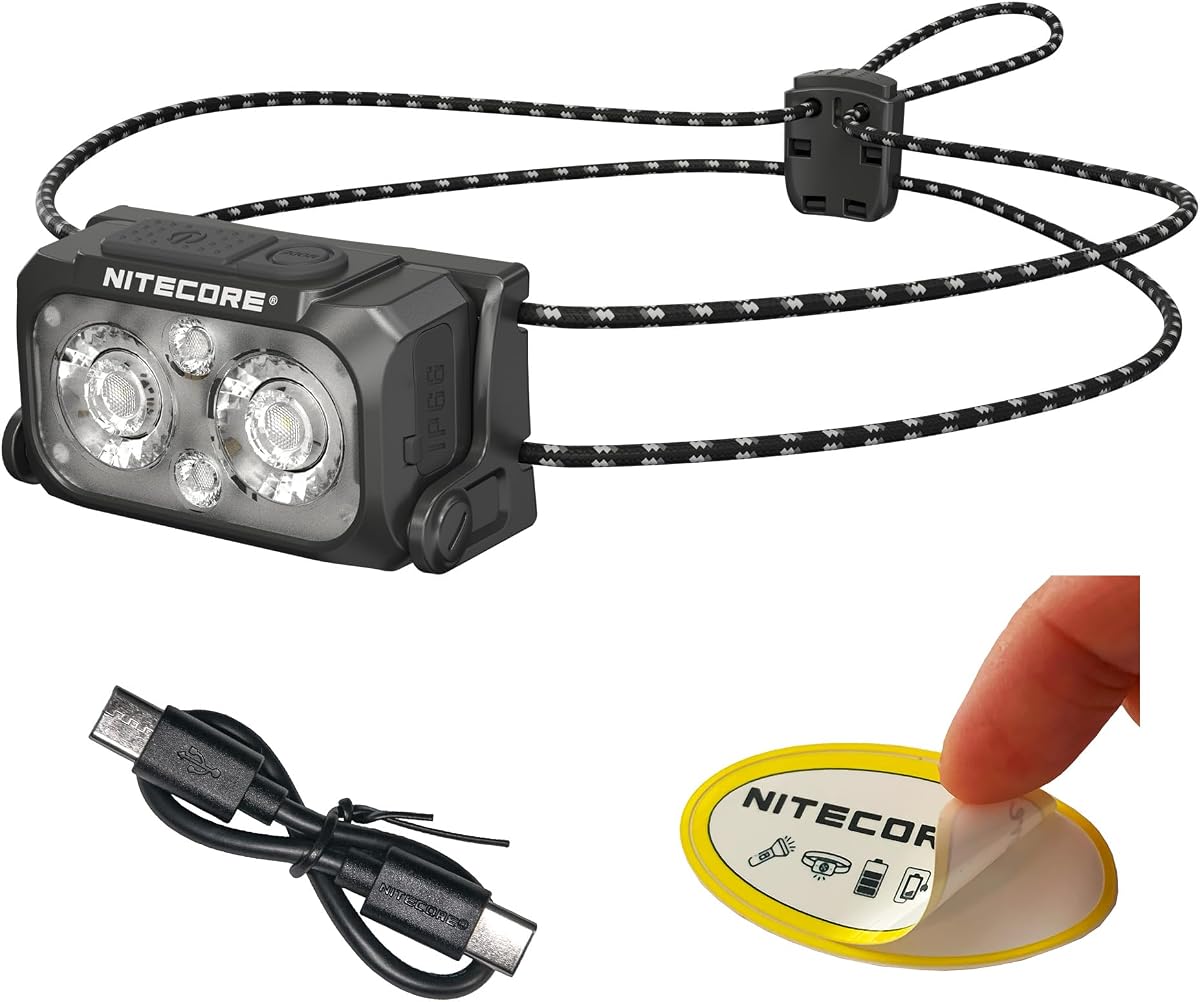
This Nitecore NU25 MCT UL listing shares the core platform of the top-ranked model, including 400 lumens, a 1.65-ounce weight, and a 144-yard maximum beam distance. It is another excellent ultralight choice, and its 4.8 rating reflects a particularly strong reception among the products considered here.
We may earn a commission when you buy through this link, at no additional cost to you.
The main differentiator within the Nitecore range is the explicit emphasis on multiple color temperatures. Warm light is easier on the eyes and useful in fog or rain, natural light produces a balanced view, and cool light can enhance outdoor contrast. These options give runners a way to tune visibility and comfort rather than accepting one fixed white tone.
The product provides four outputs along with SOS, beacon, and an auxiliary red light with three output levels. USB-C charging, a power-status indicator, and a recharge time of just over one hour simplify power management. The stated runtime of up to 45 hours is suitable for long days, and the stated IP66 and one-meter impact resistance provide good protection for outdoor use.
Compared with the Petzl Swift RL, this model is lighter and offers a higher maximum output, but it lacks automatic beam and brightness adjustment. Its maximum runtime is also shorter than several alternatives. Even so, the combination of low weight, 400-lumen capability, adaptable color, and a reach suitable for trail navigation makes it a particularly strong choice for runners who want control over light quality.
Color temperature can make a meaningful difference in changing conditions. Warm output may be more comfortable in rain and fog, while cooler output can improve the perception of terrain contrast when the trail is clear and dark.
SOS, beacon, and red-light functions add emergency and low-light options without changing the basic category of the headlamp. The included charging cable, headband, bracket, and stuff sack support a complete portable kit.
We may earn a commission when you buy through this link, at no additional cost to you.
The BLACK DIAMOND Deploy Run Light is purpose-built for movement, with a compact, contoured housing designed to sit close to the forehead. That low-profile arrangement can reduce the feeling of bulk and helps create a balanced, no-bounce fit, which is valuable when running at speed or navigating technical terrain.
We may earn a commission when you buy through this link, at no additional cost to you.
Maximum output of 325 lumens provides strong forward illumination without moving into the extreme brightness range of the Fenix HM65R-T V2.0 or Petzl Swift RL. The emphasis is instead on efficient operation and straightforward use. A side switch controls brightness and beam settings, including full dimming and a strobe mode.
A lockout function helps prevent accidental activation inside a pack or pocket, an important detail for anyone carrying a headlamp alongside a phone, keys, or other sensitive equipment. The built-in lithium-ion battery recharges by USB-C, removing the need to carry disposable batteries and reducing the number of separate charging cables needed for a long outing.
The model is described as lightweight and weather resistant, with an IPX4 rating for protection against rain and splashes. It is not as sealed as the Nitecore NU20 Classic, NU25 MCT UL, or NU27, and its 325-lumen ceiling is lower than those models' maximum outputs. Nevertheless, the Deploy Run Light is a focused, uncomplicated option for runners who value a stable fit, dimming, and lockout more than extreme output.
The contoured housing is designed to remain close to the forehead and limit bounce. This helps maintain a consistent light position while reducing the sensation of carrying a bulky device during repeated strides.
The side switch offers direct access to brightness and beam settings. Full dimming allows lower-output use, while lockout prevents the lamp from turning on unintentionally during storage or transit.
We may earn a commission when you buy through this link, at no additional cost to you.
The Nitecore NU27 occupies a useful middle ground between compact trail lamps and high-output performance headlamps. Its 600-lumen maximum provides a noticeable brightness increase over the NU20 Classic and NU25 MCT UL, while a 134-yard maximum beam distance remains strong for recognizing obstacles and reading trail features ahead.
We may earn a commission when you buy through this link, at no additional cost to you.
Warm, neutral, and cool white LEDs give the user three different approaches to the nighttime scene. Warm light may be easier in fog and rain, neutral light is suitable for ordinary tasks, and cool light can improve outdoor contrast. The lamp also includes five main outputs, SOS, beacon, and an auxiliary red light with three output levels.
USB-C charging, a status indicator, and a listed runtime of up to 57 hours provide solid power management. Recharging takes just over one hour, and the included clip offers a way to position the light away from the forehead when that suits a particular campsite or task. PC construction, an IP66 waterproof rating, and one-meter impact resistance support regular outdoor use.
The NU27 is heavier than the models designed specifically for minimum ultralight mass, and it does not automatically adjust to ambient light as the Petzl Swift RL does. It is nevertheless a versatile option for runners who want more maximum output than the lighter Nitecore models and a broader temperature selection than the Petzl Swift LT.
The 600-lumen maximum offers a strong reserve of illumination for technical sections, descents, and unfamiliar routes. The 134-yard stated reach gives runners useful time to identify and respond to obstacles.
The included clip adds carry flexibility, while three color temperatures and red-light options support trail running, campsite tasks, map reading, and low-light movement. That versatility makes it a strong one-headlamp solution for varied activities.
We may earn a commission when you buy through this link, at no additional cost to you.
The Foxelli USB-C Headlamp is a simple, accessible option for runners who need dependable hands-free lighting without a complicated feature set. Its 180-lumen maximum output is modest compared with the other selections, but it can illuminate the trail to a stated distance of 300 feet while remaining more approachable for routine evening runs.
We may earn a commission when you buy through this link, at no additional cost to you.
Five lighting modes include a white beam, a dimmed setting, red light, and an emergency SOS strobe. Dimming is useful when the trail does not require maximum output, while red light supports tasks that call for preserved night vision. A 45-degree tilt lets the user point the beam down toward immediate footing or farther ahead without moving the entire headband.
The stretch-fit headband is designed to remain secure and resist bouncing. That matters during running because a stable lamp reduces the repeated need to readjust it. The listed weight of 2.4 ounces is still light, though not as low as the Nitecore NU20 Classic or NU25 MCT UL.
USB-C charging lets the lamp recharge from a power bank, laptop, or car charger, reducing the need to carry proprietary charging equipment. Its IPX5 rating is suitable for rain, snow, and splashes, although it is less protected than fully sealed models. The Foxelli is therefore best suited to maintained trails, shorter ultras, and runners who value simplicity, adjustability, and straightforward charging.
White, dimmed, red, and SOS functions cover common running, navigation, and emergency needs. The straightforward selection avoids forcing users through complex settings during movement.
A 45-degree tilt helps direct light toward the trail or the runner's feet, while the non-slip stretch band helps limit bounce. These details improve practicality on routes where terrain and speed change quickly.
We may earn a commission when you buy through this link, at no additional cost to you.
Choosing a running headlamp involves balancing illumination with the physical demands of moving at night. Weight, stability, beam reach, controls, battery strategy, and weather protection should be evaluated together rather than treating maximum lumens as the only measure of performance.
Weight is especially important during ultras because the headlamp remains against the forehead for the entire event. The lightest options in this guide range from a stated 1.34 ounces for the Nitecore NU20 Classic to 1.65 ounces for the Nitecore NU25 MCT UL. The Petzl Swift RL is considerably heavier at a stated 100 grams, but that figure includes the broader design and feature set. Beyond the raw number, consider whether the housing sits close to the head, whether the band is comfortable over wet hair or a cap, and whether controls can be operated without removing the lamp.
A bright beam is only as useful as its pattern and reach. Maximum output can reveal detail at a distance, while a wider near field helps runners judge immediate footing. The Fenix HM65R-T V2.0 has the longest stated reach at 185 yards, followed by the Nitecore NU25 MCT UL at 144 yards, the NU27 at 134 yards, and the NU20 Classic at 119 yards. For a well-lit path, beam reach may matter less than a comfortable low mode. For unlit descents with roots and rocks, a stronger and more directional beam deserves additional weight and battery capacity.
White light is not identical in color or perceived contrast. Warm output tends to feel easier in fog, drizzle, and long nighttime sessions, while cool light can make outdoor detail appear crisper. Neutral light provides a balanced general-purpose option. The Nitecore NU25 MCT UL and NU27 provide warm, natural or neutral, and cool selections, while the Fenix uses a white and warm-white dual-beam system. The Petzl Swift LT provides three white levels plus red light, and the Cosmo 350 includes a dedicated red night-vision setting. Runners with sensitivity to harsh light may find temperature adjustment more valuable than a small increase in maximum output.
Runtime claims usually refer to the lowest output and may not describe the duration of maximum brightness. The Nitecore NU20 Classic lists up to 97 hours on low, the Fenix HM65R-T V2.0 can run for over 600 hours, and the NU27 lists up to 57 hours. The NU25 MCT UL lists up to 45 hours, while the Foxelli lists up to 40 hours. For a long race or multi-day trip, compare low-mode endurance, charging speed, battery indicators, and your ability to recharge. Most of the strongest modern options use USB-C, although the BLACK DIAMOND Cosmo 350 uniquely supports both AAA batteries and the BD 1500 rechargeable battery.
A comfortable lamp still needs to remain in the right place. The BLACK DIAMOND Deploy Run Light uses a low-profile contoured housing intended to reduce bounce, while the Fenix HM65R-T V2.0 uses a wide reflective band and a two-way SPORT fit system. The Petzl Swift RL uses a split-headband design intended to improve stability in dynamic activities. The Foxelli relies on a stretch-fit, non-slip headband, while the Nitecore models use conventional adjustable headbands. Fit preferences vary with head shape, hats, and personal sensitivity, so consider the adjustment range and whether the front housing is likely to interfere with a running cap.
Night running often takes place in wetter and less controlled conditions than daytime travel. The Fenix HM65R-T V2.0 and BLACK DIAMOND Cosmo 350 have IP68 ratings, the Nitecore NU20 Classic, NU25 MCT UL, and NU27 have IP66 ratings, and the Foxelli has IPX5 protection. The Petzl Swift RL and BLACK DIAMOND Deploy Run Light have IPX4 ratings intended to handle rain and splashes. Impact resistance is another useful measure: the Fenix is rated for impacts up to two meters, while several Nitecore models are rated up to one meter. Protection does not eliminate the need for sensible storage, but a higher rating provides more confidence during sustained rain or accidental falls.
Controls should be operable without looking and ideally without stopping. The BLACK DIAMOND Deploy Run Light places a side switch on the housing, while the Fenix offers a two-way headband fastener that can be adjusted with one hand. The Petzl Swift RL's sensor automatically changes brightness and beam pattern as ambient light changes, reducing the need for manual adjustments. This is particularly useful on routes with alternating shade and exposure. Runners who prefer predictable output may favor manual dimming instead. Look for lockout, clearly separated brightness levels, and a low or red mode that can be activated quickly when someone approaches from behind.
A running headlamp should be considered part of a broader safety system rather than the entire system itself. Red light can preserve night vision, and most models in this guide offer SOS or beacon functions for signaling. Reflective headband details, as found on the Petzl models, add passive visibility. Carry a charged phone, reflective clothing, an emergency layer, navigation tools, and a backup light for remote ultras. Battery indicators and status lights are also important: a runner should know whether the lamp is working and roughly how much capacity remains before darkness or distance makes charging difficult.
Before a long night outing, charge the headlamp fully and confirm that every output works in darkness. Check the strap, buckle, housing, and port for damage, then adjust the band so the lamp sits securely without pressing directly against the forehead. Choose a brightness level and color temperature appropriate to the route, and verify that the red or low mode is accessible without cycling through every setting. If the run will pass through unlit areas, confirm that you can operate the controls while wearing gloves and moving at speed.
During the run, start with a moderate output and increase it when terrain visibility demands more detail. Use a focused beam to inspect roots, rocks, and descents, but avoid staring directly into the brightest setting. Red light is useful for checking a phone, map, or watch while preserving dark adaptation. In rain, keep the charging port covered when it is not in use, and do not charge a wet headlamp. For a model with a sensor, such as the Petzl Swift RL, allow reactive adjustment to settle briefly after moving from a bright environment into darkness.
After the run, switch the headlamp off and inspect it for moisture, dirt, and impact damage. Let any wet unit dry completely before charging or storing it, especially if it uses removable batteries. Clean the headband and housing with mild soap and water when appropriate, avoiding harsh chemicals that could damage materials or seals. Store the lamp in a dry place, keep the port clear, and recharge it before an important outing rather than waiting until the last moment. For a remote ultra, treat a full battery and a verified backup light as essential equipment.
For maintained paths and short evening runs, 180 to 360 lumens can provide useful illumination at lower output settings. Technical trails, unlit descents, and faster runners may benefit from 600 lumens or more when maximum output is needed. Beam reach, beam pattern, and comfort are just as important as the headline lumen figure, so the strongest running headlamp is not automatically the most comfortable choice.
Lower weight reduces the physical burden of carrying a lamp on the forehead, but ultralight designs may have less battery capacity or fewer advanced features. The best choice balances mass with illumination, stability, runtime, and weather resistance. The Nitecore NU20 Classic is exceptionally light, while the Fenix HM65R-T V2.0 offers much greater output and reach for runners who value performance over minimum weight.
Warm light is often easier on the eyes and can be useful in fog or rain, while cool or neutral light may enhance the perception of contrast on clear trails. The Nitecore NU25 MCT UL and NU27 provide multiple color temperatures, and the Fenix offers white and warm-white beams. A red mode is useful for preserving night vision during brief low-light tasks.
The answer depends on brightness, temperature, sensor behavior, battery age, and whether the light is used continuously. Published runtimes generally reflect low-output use, and the stated 97-hour figure for the Nitecore NU20 Classic should not be interpreted as 97 hours at maximum output. For an ultra, review the brightest-mode duration, carry a backup light, and recharge whenever practical.
Many models are designed for wet conditions, with ratings ranging from IPX4 splash protection to IP68 waterproof protection. The Petzl Swift RL and BLACK DIAMOND Deploy Run Light have IPX4 ratings, while the Fenix HM65R-T V2.0 and BLACK DIAMOND Cosmo 350 have IP68 ratings. Even with a high rating, protect the charging port, avoid charging while wet, and let the lamp dry fully before storage.
A sensor can automatically change brightness and beam pattern as the runner moves between exposed and shaded terrain. The Petzl Swift RL is the featured model with this capability, reducing the need to make adjustments manually. Runners who want to know the exact active setting may prefer direct button control, while others may appreciate the automated conservation of battery and output.
Yes, a backup is sensible for remote routes, races without dependable support, and any run where a battery failure would create a safety problem. A small secondary light can be carried in a vest, waist pack, or emergency kit, and its batteries should be checked independently of the primary headlamp. A headlamp should complement navigation, communication, reflective clothing, and an emergency plan rather than serve as the only safety equipment.
Begin with a snug but comfortable fit and position the housing low and close to the forehead. Models such as the BLACK DIAMOND Deploy Run Light use a low-profile design, the Petzl Swift RL uses a split headband, and the Fenix HM65R-T V2.0 offers a wide reflective band with a two-way fit system. Check the fit while moving because a band that feels secure while standing may shift during repeated strides.
The Nitecore NU25 MCT UL is the strongest all-around pick, combining a stated 400-lumen output, a 1.65-ounce weight, useful beam reach, and adaptable warm, natural, and cool light. The Petzl Swift LT is an excellent compact alternative with a 43-gram listed weight, straightforward controls, red light, and USB-C charging. For runners who require exceptional visibility, the Fenix HM65R-T V2.0 leads with 1,600 lumens, 185-yard reach, dual beams, and exceptional low-mode endurance.
The right choice depends on the route and the runner. Ultras that emphasize minimum weight may favor the Nitecore NU20 Classic, while technical terrain may justify the Fenix or Petzl Swift RL. The Nitecore NU27 offers a versatile middle ground, the Cosmo 350 provides flexible battery options, and the Foxelli remains a simple, accessible solution. Prioritize a stable fit, adequate beam reach, realistic battery management, and controls that can be used without disrupting your stride.
Product listings, availability, and prices can change, so check the current specifications and included accessories before purchasing. Confirm the battery type, charging method, water-resistance rating, fit, and emergency functions against the demands of your planned route. Most importantly, test the selected headlamp in darkness before a race or long outing and ensure it is part of a complete night-running safety plan.