
BOSS Katana Mini
4.5Editor score
Seven-watt portable design
Brown, Crunch, Clean voices
Battery-powered operation
A clean guitar amp should make your instrument sound balanced, articulate, and alive without adding unwanted hiss, harshness, or coloration. The right model depends on your playing style, room, guitar, and whether you prioritize simple controls, portable operation, or extensive tone shaping.
We compared all ten amplifiers by examining their clean-channel features, wattage, speaker configurations, built-in effects, EQ controls, connectivity, and intended practice or performance roles. The list covers compact beginner units, portable modeling amps, versatile digital combos, and more advanced stage-oriented models.
Each pick reveals what makes that amplifier distinct, from dedicated clean voices and multiple effects to Bluetooth playback, recording outputs, and extensive app-based editing. Product ratings and features can change over time, so confirm current specifications and prices with the retailer before purchasing.
4.5Editor score

4.8Editor score
4.8Editor score
As an Amazon Associate we earn from qualifying purchases.
The comparison below highlights the major differences among these ten guitar amplifiers, including clean-channel access, power, speaker size, effects, and connectivity, so you can identify the model that best matches your room, playing style, and practice routine.


The Fender Mustang LT25 combines a 25-watt combo design with an eight-inch Fender special-design speaker, giving it a practical balance of portability and room-filling output. Its 4.8 rating reflects strong buyer satisfaction, while the included display and 30 preloaded presets make it approachable for players who want a clean foundation without navigating a dense control panel.
We may earn a commission when you buy through this link, at no additional cost to you.
The strongest part of the LT25 proposition is variety within a straightforward package. Its presets cover a wide range of music, allowing a guitarist to move between familiar starting points and refine the result with the amp's controls. The display also makes preset selection easier than memorizing settings or repeatedly turning physical knobs, which is particularly useful for a new player still learning how gain, EQ, and voicing interact.
Its clean sound should appeal most to players who want recognizable Fender character alongside modern convenience. The eight-inch speaker keeps the footprint manageable, yet 25 watts is more versatile than the smallest practice amplifiers, giving the user room to play at home without reserving every amp for ultra-quiet sessions. The two-year limited warranty also adds confidence for a new setup.
The main limitation is that the LT25 is not designed for the same depth of signal-chain editing as the Line 6 Spider V 20 MKII or BOSS Katana Head Gen 3. A guitarist who needs extensive effects routing or deep app-based control may eventually outgrow it. Even so, it remains an excellent first serious amplifier and our strongest all-around recommendation for clean guitar sound.
For anyone moving beyond a starter mini amp while keeping operation uncomplicated, the Mustang LT25 is a compelling choice. It offers meaningful power, a dedicated Fender speaker, broad preset coverage, and enough flexibility to support practice, lessons, and informal performances.
Thirty preloaded presets cover a wide range of music and provide dependable starting points for clean, overdriven, and other sounds. The color display keeps those choices visible and easy to browse, helping new players focus on finding a useful tone rather than starting from every control at once.
At 25 watts with an eight-inch speaker, the combo offers more headroom than a miniature practice amp while remaining compact. That combination is well suited to bedrooms, apartments, rehearsal rooms, and situations where a louder full-size amplifier would be inconvenient.
We may earn a commission when you buy through this link, at no additional cost to you.
The Fender Frontman 20G is a 20-watt combo with an eight-inch speaker and a 4.6 rating. Its most important feature for players seeking a clean sound is the dedicated clean channel, complete with its own volume and three EQ knobs. That direct approach lets you shape the low, middle, and high frequencies without navigating menus or recalling presets.
We may earn a commission when you buy through this link, at no additional cost to you.
A separate switchable Drive channel broadens the amp beyond clean playing. You can move between a clear, low-gain sound for chords, melodic lines, and country styles and a driven channel for blues or rock. The clean channel's independent volume control also allows the two sides to be balanced more precisely than on a single shared control.
The Frontman 20G includes an auxiliary input for playing along with music and a headphone jack for quieter practice. These connections make it easy to use the amp as a general practice hub rather than only as a straight guitar rig. Its uncomplicated interface also reduces the learning curve for beginners or returning players.
The main compromise is its relatively traditional feature set. Unlike app-connected modeling amplifiers, the Frontman 20G does not advertise a large preset library or sophisticated effect selection. Its eight-inch speaker will also produce less low-end than a ten-inch or twelve-inch combo, though that can be beneficial when a smaller speaker is easier to hear in a compact room.
Choose the Frontman 20G if you value a clear clean channel, physical EQ controls, and quick access to a second overdriven channel without a complex menu system. It is a straightforward and dependable choice for home practice, lessons, and straightforward gigging.
Volume and a three-knob EQ are assigned to the clean channel, allowing the tonal balance to be adjusted directly. That makes it easy to reduce bass in a tight room, open the mids for definition, or brighten the output when playing with a darker guitar.
The switchable Drive channel gives the Frontman 20G enough range for both clean practice and overdriven playing. Players do not need a separate pedal to move between those foundational sounds, although external effects remain a possible upgrade.
We may earn a commission when you buy through this link, at no additional cost to you.
The Rockville G-AMP 20 is a 20-watt Bluetooth combo built around a 6.5-inch speaker, and it carries a 4.5 rating. Its clean and overdrive channels, three-band EQ, built-in delay, and headphone output provide a useful foundation, while Bluetooth streaming adds a convenient layer for practice and casual play-along sessions.
We may earn a commission when you buy through this link, at no additional cost to you.
Dual guitar inputs are especially notable. A teacher can connect two instruments for a lesson, or two players can share the amplifier during a rehearsal. The amp also includes an LED status light, a carry handle, and metal corner protectors, making it look appropriately suited to regular transport.
For a guitarist who wants a clean platform without spending time patching together a separate music source, the Bluetooth connection is the defining convenience. A phone can provide backing tracks without requiring an auxiliary cable, while the built-in delay can add depth to otherwise simple clean lines.
Its limitations begin with speaker size and intended scale. A 6.5-inch speaker can be ideal in a bedroom or small teaching space, but it will not provide the same low-end fullness and projection as the larger speakers in the Fender Mustang LT25, Marshall MG30GFX, or Line 6 Catalyst CX 100. It is better suited to practice than to a loud band rehearsal.
The G-AMP 20 is a compelling option for beginners, instructors, and compact-room players who prioritize wireless playback and multiple inputs. Its 20-watt output is sufficient for focused practice, and the channel selection gives users a clean base plus an overdrive alternative for wider musical range.
Bluetooth connectivity lets a phone or another compatible device send music to the amplifier without a wired line connection. This makes practice sessions more engaging and reduces cable clutter in tight spaces.
Two guitar inputs support a teacher-and-student arrangement or a quick duo session. That flexibility gives the amp more use than a conventional single-input practice combo while keeping the control layout accessible.
We may earn a commission when you buy through this link, at no additional cost to you.
The Leo Jaymz 20W Electric Guitar Amplifier is a compact combo with a 6.5-inch speaker and a 4.4 rating. Its clean and distortion channels make it straightforward to move between two fundamental guitar sounds, while the three-band EQ provides familiar low, mid, and high adjustments for shaping the overall result.
We may earn a commission when you buy through this link, at no additional cost to you.
The physical control scheme is likely the main appeal for new players. Rather than relying on a display and preset menus, users can choose a channel and adjust the amplifier directly. This makes it easier to understand how changing one control affects the sound, especially for someone building foundational knowledge of amplifier tone.
A CD line input and 6.5 mm auxiliary jack add ways to play with recorded music. This is useful for silent practice with headphones or for a more interactive session with backing tracks. The comfortable handle and leather-style surface also suggest that the amp is designed to be moved between rooms rather than left permanently in one location.
The supplied information for this model is much more limited than for the digital modeling amps in the list. It does not list detailed effect options, recording outputs, app support, or extensive channel descriptions. Prospective buyers should therefore verify the exact control layout and connectivity against their needs, especially if digital effects or advanced recording are priorities.
The Leo Jaymz is best for players seeking a no-fuss clean channel, a basic distortion alternative, and conventional EQ controls in a portable package. It may not satisfy a guitarist who wants dozens of amp models or app-based preset management, but it covers the fundamentals with a compact design.
Three separate EQ bands let players sculpt the clean channel without navigating complex software. Bass, middle, and treble adjustments also translate directly to familiar amplifier terminology, making the amp approachable for beginners.
The built-in handle and line-input options make the amplifier convenient to carry and easy to pair with a music source. These practical details suit practice in different rooms or play-along sessions where auxiliary input is more useful than advanced onboard effects.
We may earn a commission when you buy through this link, at no additional cost to you.
The BOSS Katana Mini is a seven-watt combo with a 4.5 rating and a remarkably portable design. It offers three amp types—Brown, Crunch, and Clean—plus a three-band analog tone stack, making it one of the more focused choices for guitarists who want a clear clean voice in a compact package.
We may earn a commission when you buy through this link, at no additional cost to you.
The Clean setting gives the player a defined starting point for acoustic-style tones, light rhythm, jazz, funk, and clean rock. Because the amp types are modeled around different gain structures, switching among them changes not only distortion but also the way the instrument responds. That makes the Mini more versatile than a basic single-channel practice amplifier.
A multi-stage analog gain circuit, tape-style delay, auxiliary input, and recording output with cabinet voicing broaden its practical value. The recording output is especially helpful for players who want to capture ideas through headphones or interface with recording equipment without relying entirely on the built-in speaker.
The major limitation is output. Seven watts is intentionally modest, which means the amp is most appropriate for bedrooms, practice spaces, and quiet shared environments. It is not designed to compete with a 100-watt head in a loud rehearsal room, and its compact speaker will not deliver the same full low-end response as a larger combo.
The BOSS Katana Mini earns its budget recommendation because it delivers more purposeful voicing and recording flexibility than many similarly compact alternatives. For a player who values portability, clean response, and a dedicated Clean character, it is an especially polished entry point.
The dedicated Clean amp type gives the player a recognizable low-gain platform without searching through a crowded preset list. It works well as a starting point for chord progressions, arpeggios, funk patterns, and clear melodic work.
The cabinet-voiced recording output supports direct capture, while auxiliary input allows a phone or external device to supply backing music. Battery operation removes the need for a nearby outlet, making this one of the most travel-friendly options in the guide.
We may earn a commission when you buy through this link, at no additional cost to you.
The Line 6 Spider V 20 MKII is a 20-watt modeling amplifier with a 4.5 rating and a large amount of sound-shaping potential. Its 16 presets, three simultaneous effects, independent reverb, and classic speaker mode provide a more expansive clean platform than a conventional fixed-channel combo.
We may earn a commission when you buy through this link, at no additional cost to you.
The free Spider V remote app is central to the experience. It provides access to more than 200 amplifier and effect options, while the amp itself maintains approachable physical controls for tone and effects. That combination is useful for players who want quick preset changes but still value direct hands-on adjustment.
Editing and recording support for Mac, PC, iOS, and Android devices makes this model attractive to players interested in capturing ideas or preparing sounds for rehearsal. The built-in tuner and tap-tempo function reduce the need for separate tools when adjusting effects timing or checking pitch.
Compared with the Fender Frontman 20G or Leo Jaymz 20W, the Spider V 20 MKII involves more menus and decisions. That complexity is not inherently a drawback for an experienced player, but it can be unnecessary for a beginner who only wants a reliable clean channel and a volume knob. Its 20-watt output also keeps it in the practice-combo category.
The Spider V 20 MKII is best for guitarists who want an expanding library of clean, crunch, and high-gain sounds in one connected package. It is particularly suitable for tech-oriented players, home recorders, and anyone who expects to move beyond a single analog channel within an affordable combo format.
The app exposes more than 200 amplifier and effect options, allowing clean sounds to be changed without buying additional cabinets or pedals. Sixteen factory presets provide a quick starting point for players who do not want to configure everything from scratch.
Editing and recording compatibility across major desktop and mobile platforms simplifies capturing ideas. The result is an amplifier that can function as a practice voice, preset browser, and starting point for connected recording sessions.
We may earn a commission when you buy through this link, at no additional cost to you.
The BOSS Katana Head Gen 3 is a 100-watt amplifier head with a 4.6 rating, a built-in five-inch practice speaker, and an advanced tone platform. Its headline appeal is the combination of stage-ready power with enhanced Tube Logic technology, giving players responsive gain behavior and detailed control over clean and edge-of-breakup sounds.
We may earn a commission when you buy through this link, at no additional cost to you.
Twelve amp characters are available across six base types, including a newly developed Pushed character, with a selectable variation for each. The Pushed mode offers an expressive transition into saturation, which is valuable for guitarists who want more interaction than a sharply defined clean-to-distortion switch.
Five independent effects sections—Booster, Mod, FX, Delay, and Reverb—provide much deeper routing than most entry-level combos. The updated BOSS Tone Studio app allows remote editing of amp and effects parameters, while advanced connectivity supports integration with recording equipment and external devices.
The built-in practice speaker makes the head less conventional than a bare amplifier head, but it also creates a useful built-in practice solution. The tradeoff is added size and a substantial feature set that some beginners may not use. Players also need to consider how the head will connect to cabinets in different rehearsal or performance environments.
The Katana Head Gen 3 is ideal for a guitarist who wants clean tones with serious headroom, responsive dynamics, and deep effects control. It is especially convincing for players who plan to graduate from practice into rehearsals, recording, and stage use without settling for a limited digital combo.
Enhanced Tube Logic is intended to improve sound, feel, and response, particularly around gain transitions. That makes the amp interesting for players who adjust volume at the guitar or use pickup changes to move between clear and lightly driven textures.
The 100-watt head provides considerable output for loud rehearsals and performance contexts, while the five-inch speaker offers an immediate way to practice at lower volume. This dual-purpose design can make one head more versatile across locations.
We may earn a commission when you buy through this link, at no additional cost to you.
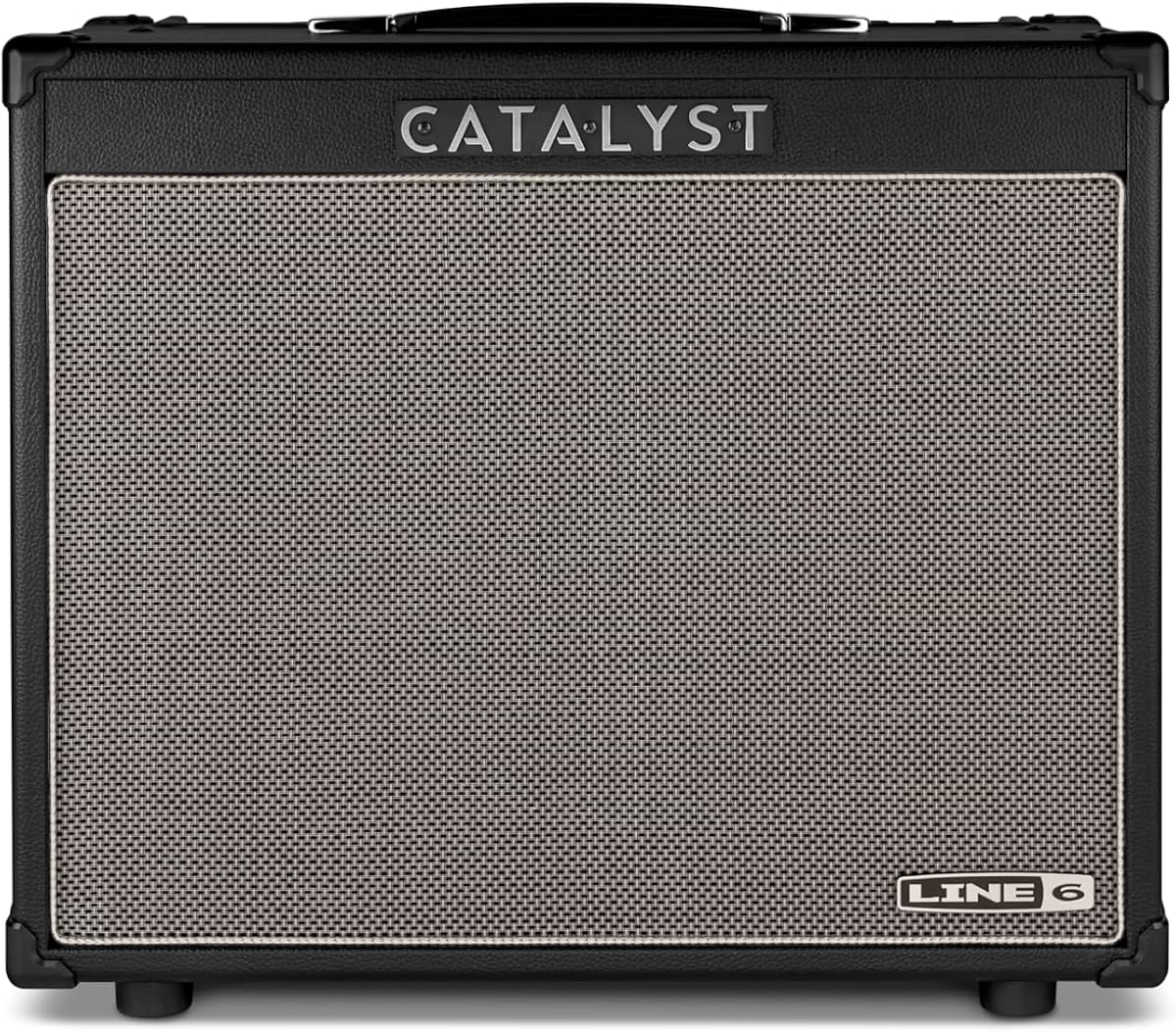
The Line 6 Catalyst CX 100 combines 100 watts of output, a twelve-inch speaker, and a 4.8 rating in a dual-channel combo. It is the strongest premium match for players who want a substantial clean sound with detailed modeling options without moving to a separate head and cabinet.
We may earn a commission when you buy through this link, at no additional cost to you.
Its 12 amp voicings are derived from Helix processors, giving the user several distinct starting points rather than one fixed clean channel. Twenty-four effects add further range, and the dedicated Boost circuit includes boost types optimized for each amp. That architecture makes it easier to preserve the character of a clean platform while adding presence and output.
The large one-by-twelve configuration should provide a fuller low-end response and more room-filling projection than the six-and-a-half-inch and eight-inch combos in this guide. At the same time, the physical footprint is larger, making it more appropriate for a dedicated practice room, rehearsal space, or home setup where floor space is available.
The Tap Tempo/Tuner button is a useful front-panel convenience, and the optional LFS2 footswitch expands hands-free control. Like any digital amp with many voicings and effects, the unit can feel dense until the player learns which controls matter most. Its digital workflow may also be unnecessary for someone who wants only a simple clean channel.
The Catalyst CX 100 is our premium recommendation for guitarists who want a generous clean platform, a full-size speaker response, and serious effects access in one cabinet. It bridges practice and louder use particularly well, provided the player is comfortable with a modern modeling workflow.
Twelve amp voicings provide meaningful variety in gain structure and response. Rather than forcing every guitar and style through a single clean voice, the player can choose a platform that better matches the instrument, music, and level of interaction desired.
The 100-watt output and twelve-inch speaker give the amplifier enough scale for rehearsals and performance-level volume. Combining the head and cabinet in one enclosure also simplifies transport compared with moving separate components.
We may earn a commission when you buy through this link, at no additional cost to you.
The Marshall MG30GFX is a 30-watt combo with a custom ten-inch speaker, four channels, and a 4.6 rating. Its Clean, Crunch, OD1, and OD2 selections offer more tonal range than most entry-level amps, making it appealing to players who want one clean channel for varied music and additional channels for distortion.
We may earn a commission when you buy through this link, at no additional cost to you.
A three-band EQ gives the user bass, middle, and treble control over the selected sound. Marshall's ten-inch speaker and 30-watt output create a middle ground between compact bedroom amps and very large stage combos, offering useful low-end and projection without moving into the footprint of the 100-watt models.
Built-in digital effects include chorus, phaser, flanger, delay, and octave. The design is also intended to work with external effect pedals, so a guitarist can expand the signal chain over time. A headphone output supports quiet practice and recording, while the 3.5 mm input allows play-along use.
The main drawbacks are size and feature density. Four channels and several digital effects can take longer for a complete beginner to understand, and the ten-inch speaker makes this heavier than the eight-inch and six-and-a-half-inch models. Players seeking an absolute minimal control panel may prefer the Frontman 20G.
The MG30GFX is a strong choice for a guitarist who wants a recognizable clean platform, substantial output, and several alternate channels in a single traditional-looking combo. It is particularly well suited to blues, rock, and classic-rock players who may want to graduate from clean practice into overdriven tones.
The dedicated Clean voice can serve country, jazz, funk, pop, and rhythm-rock applications. Separate Crunch, OD1, and OD2 channels let a player switch among increasingly aggressive sounds without relying on a pedal for every transition.
Ch chorus, phaser, flanger, delay, and octave effects provide useful onboard color, while compatibility with external FX pedals leaves room for further expansion. That makes the MG30GFX practical for players who expect their setup to grow.
We may earn a commission when you buy through this link, at no additional cost to you.
The Marshall MG10G is a compact ten-watt combo with a 4.6 rating and a design centered on straightforward electric-guitar practice. It is the most minimal option in this guide, making it most relevant to beginners, bedroom players, and anyone who wants a recognizable Marshall-style combo without a large feature set.
We may earn a commission when you buy through this link, at no additional cost to you.
The ten-watt output places it firmly in the quiet practice category. That can be an advantage in apartments, dorm rooms, and shared homes where excessive volume is inconvenient. It also provides a manageable starting point for a new guitarist who has not yet determined how much headroom or tonal flexibility they need.
Compared with the MG30GFX, the MG10G omits the larger cabinet, multiple channels, and advanced built-in effect set. This makes it more focused and potentially easier to use, but it also creates a more obvious upgrade path. A player who outgrows the output can move toward a larger Marshall combo with more tone options.
The supplied product information provides less detail about the MG10G than the other models, so buyers should check the current control layout and available connections before buying. Particular attention should be paid to headphone output, auxiliary input, and clean-channel functionality if those features are essential to the intended setup.
The MG10G is a sensible recommendation for a first Marshall-style amplifier or a compact secondary practice amp. It is less compelling for rehearsals, loud sessions, or players seeking extensive effects, but it addresses the basic need for a manageable electric-guitar voice with straightforward operation.
Ten watts is appropriate for close-range practice and learning, particularly in shared living spaces. The lower output also makes it easier for a new player to find a comfortable level without overpowering the room.
The MG10G's focused format provides an uncomplicated way to enter the Marshall product family. Players who later need greater projection, more channels, or onboard effects can move to a larger combo such as the MG30GFX.
We may earn a commission when you buy through this link, at no additional cost to you.
Choosing a clean guitar amp means balancing speaker response, available headroom, controls, effects, connectivity, and room size. The most important factors depend on whether you will practice quietly, rehearse with a band, record at home, or travel with your instrument.
A dedicated clean channel makes it easy to reach a clear sound without riding a gain control or selecting a heavily modeled voice. Some amplifiers provide a simple Clean setting, while others offer several voicings with different gain structures and response characteristics. Dedicated channels are especially useful for switching quickly during a set, but programmable digital models can offer even greater variety when a guitarist wants to refine the response at the guitar and pickup levels.
Speaker diameter has a major influence on perceived low end, clarity, and projection. The six-and-a-half-inch speakers in the Rockville and Leo Jaymz models prioritize compactness, the eight-inch Fender speakers offer a balanced middle ground, and the ten-inch Marshall MG30GFX moves toward a fuller response. The twelve-inch Line 6 Catalyst CX 100 is intended to deliver a larger, more substantial sound but requires more space and generally weighs more to move.
Wattage determines how much clean volume is available before the amplifier begins to compress or distort. Seven- and ten-watt models are suited to quiet practice, while 20- and 25-watt combos provide more latitude in a bedroom or small rehearsal setting. At 100 watts, the BOSS Katana Head Gen 3 and Line 6 Catalyst CX 100 are much more appropriate for loud rehearsals and performance-oriented use. More power is useful only when the volume and room genuinely require it.
A three-band EQ with separate bass, middle, and treble controls is the standard format across many of these amplifiers. Physical knobs provide fast, repeatable changes and make it easier to understand how the sound changes. Digital amp types may also include more advanced voicing or gain controls. For a clean guitar sound, consider how the middle frequencies affect note separation and whether the amp gives you enough control to adapt to different guitars and pickup combinations.
Onboard effects can add delay, reverb, modulation, and other colors without requiring pedals, but they are not essential to every clean guitar setup. The BOSS Katana Mini offers a tape-style delay, the Rockville G-AMP 20 includes delay, and the Marshall MG30GFX provides several digital effects. The Line 6 models offer much larger libraries, while the BOSS Katana Head Gen 3 provides five independent effects sections. More effects are useful when they improve workflow rather than simply adding menu depth.
A headphone output enables quiet practice, while an auxiliary input supports backing tracks. Bluetooth adds wireless convenience, and a recording or headphone output with cabinet voicing can make direct capture easier. The BOSS Katana Mini supports recording output, the Spider V 20 MKII offers editing and recording compatibility across major platforms, and the Katana Head Gen 3 provides advanced connectivity. Check whether your audio interface or mobile workflow matches the amp's available connections.
Compact size and weight can matter as much as sound when an amplifier moves between bedrooms, rehearsal rooms, classrooms, or stages. The BOSS Katana Mini is battery powered and designed for travel, while the Rockville G-AMP 20 includes a carry handle and metal corner protectors. Larger units with ten-inch or twelve-inch speakers generally produce more low end but require more floor space and effort to transport.
A limited warranty can add confidence when investing in an amplifier, particularly for a beginner. Both Fender models in this guide include a two-year limited warranty covering defects in materials and workmanship from the original purchase. Warranty terms do not determine tone, but they form part of the ownership experience and can provide useful protection against manufacturing problems.
Begin with your guitar plugged into the input, the volume turned down, and the amplifier set to the clean channel. Select a preset or voice that sounds musical, then raise the amp volume gradually. Make small changes with the guitar volume, bass, middle, and treble controls, because moving one setting can alter how the entire signal feels as well as how it sounds.
To find a clean sound without excessive hiss or harshness, lower the guitar volume slightly when using high-gain settings and use brighter pickup positions if needed. Keep the amplifier and guitar on a stable, ventilated surface, avoid blocking rear vents, and use a proper guitar cable. For practice, connect headphones if the model supports them, and use Bluetooth or an auxiliary input when you want to play along with recorded music.
Care for the amplifier by moving it with the handle rather than pulling it by the knobs or controls, and avoid placing drinks or other liquids near the speaker grille and top panel. Clean the exterior with a soft, dry cloth, inspect cables for damage, and store the amp in a dry location away from direct heat. Before an extended absence, unplug the power cord and let the unit cool in a safe, ventilated location.
For practice in a bedroom or apartment, a model between seven and 20 watts is usually manageable and still provides useful headroom. A 25-watt combo such as the Fender Mustang LT25 is a practical step up for players who want more volume. If you regularly rehearse with a loud band, consider a higher-powered model such as a 100-watt head or combo.
No. A larger speaker often delivers more low-end output and projection, but it does not automatically produce a more detailed or universally preferable tone. The guitar, amplifier voice, room acoustics, and playing style all affect the final result. A smaller speaker may be ideal in a tight room, while a twelve-inch model can feel more substantial during rehearsals.
Yes. Digital modeling amplifiers can offer multiple clean voices with different gain structures, speaker simulations, and effect options. Models such as the Line 6 Spider V 20 MKII and Catalyst CX 100 are particularly useful because they let players compare clean platforms and refine settings through an app. Physical controls remain available on the Spider V, so editing does not have to be exclusively software-based.
No. A clear amplifier tone with a usable EQ is the foundation of a good clean sound, and effects are optional additions. Delay and reverb can add depth, but a guitarist may prefer a pedal or digital audio workstation for those functions. Beginners should first learn how the amp's channel, volume, and EQ behave before adding complexity.
Yes, if the model includes a headphone output. The Fender Frontman 20G, Rockville G-AMP 20, BOSS Katana Mini, and Marshall MG30GFX all list headphone-related functionality. A headphone connection is ideal in shared homes because it allows the guitar to remain audible through headphones while keeping the cabinet output controlled.
The Fender Frontman 20G is among the simplest because it uses a clean channel, a switchable Drive channel, and familiar three-band EQ knobs. The Leo Jaymz 20W also offers direct controls without a complex preset system. Digital models provide more flexibility, but their larger menus can take longer for a new player to understand.
A combo integrates the amplifier and speaker into one enclosure, making it simpler to buy, transport, and set up. A head offers more flexibility over cabinet choice and is common for stages or multi-cabinet systems, but it requires a separate speaker cabinet and more space. For a first home amplifier, a combo is generally the most straightforward choice.
Start by lowering the guitar volume slightly and adjusting the amplifier's middle and high frequencies in small increments. A darker guitar or lower-output pickup may also help, while moving closer to a 12-inch speaker can change perceived brightness. The best result depends on the instrument and room, so make one adjustment at a time and keep the amp volume moderate while evaluating.
The Fender Mustang LT25 stands out as the best overall option because it combines 25 watts, a dedicated eight-inch Fender speaker, an accessible display, and 30 varied presets. The BOSS Katana Mini is the best budget and portability choice, while the Line 6 Catalyst CX 100 is the premium recommendation for players who want 100 watts, a twelve-inch speaker, and extensive Helix-derived sounds.
For most home players, prioritize the room first. Choose a compact, low-wattage model for quiet practice, a 20- or 25-watt combo for a bedroom or small rehearsal space, and a high-powered model for loud bands. Within that range, verify that the clean channel is easy to access, the EQ feels understandable, and the available headphone, auxiliary, Bluetooth, or recording connections match your workflow.
Ratings, firmware, app compatibility, and product specifications can change, and retailer prices are subject to fluctuation. Check the current product listing and manufacturer information before ordering, especially if a particular connectivity feature or effect is essential to your setup. With those checks in place, you can choose an amp that delivers an enjoyable clean foundation and room to develop your sound.