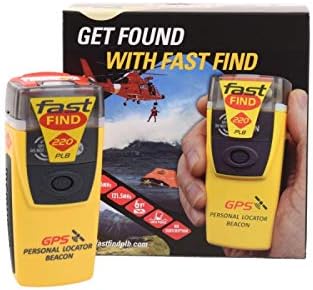
McMurdo FastFind 220
4.5Editor score
Simple three-step activation
Compact rescue beacon design
Worldwide operating capability
Compare the best Personal Locator GPS Beacon options, including rescue signals, global coverage, battery life, displays, portability, and accessories.
A Personal Locator GPS Beacon is a satellite-based emergency device designed to transmit a distress alert and location when a phone cannot connect to cellular networks. The best models combine dependable global coverage, straightforward activation, visible rescue signals, long battery life, and enough ruggedness for the environments where they will be used.
This guide compares ten personal locator beacons and satellite communicators using the supplied specifications, ratings, feature descriptions, and intended use cases. It covers dedicated rescue beacons, models with visual displays, complete survival kits, region-specific programming, and one messaging-oriented communicator, highlighting the practical differences that matter most.
Each entry reveals what the product is best suited to, from lightweight hiking and boating equipment to more advanced models with Return Link Service confirmation. Ratings and product details can change over time, and current prices, availability, registration rules, and regional compatibility should be checked before making a final purchase.
4.5Editor score

4.8Editor score

4.5Editor score
The comparison below organizes all ten products by core rescue functions, positioning systems, battery and operating life, physical features, and intended applications, making it easier to identify the device that best matches a particular trip.



The ACR ResQLink View RLS combines a dedicated satellite distress beacon with a visual display, Return Link Service, modern GNSS support, and no ongoing subscription. Its 4.8 rating makes it the strongest all-around choice in this group, especially for travelers who want confirmation that the emergency signal has reached Search and Rescue rather than relying only on activation.
We may earn a commission when you buy through this link, at no additional cost to you.
Return Link Service is the defining feature because it confirms that a distress signal has been received. The unit also uses GPS and Galileo GNSS, providing broad positioning support and compatibility with MEOSAR. A digital display improves the information available during operation, while the infrared strobe improves detection in conditions where a conventional visible light may be less useful.
The ResQLink View RLS is also built for real outdoor conditions. It offers built-in buoyancy, a compact and lightweight profile, 28+ hours of operational life, and a stated five-year battery life. Its multifunction clip system allows attachment to clothing, packs, or compatible safety gear, making it practical for hiking, boating, climbing, and travel beyond cellular coverage.
This is the most versatile recommendation for someone who prioritizes a complete dedicated emergency beacon rather than general satellite messaging. It is particularly attractive when Return Link Service and visible position information offer useful reassurance. Buyers still need to register the device correctly, understand its controls, and ensure the battery remains serviceable.
The ACR ResQLink View RLS earns the Editor's Choice recommendation because it balances dedicated rescue signaling, modern satellite positioning, confirmation of receipt, visibility features, and strong battery specifications. It is a logical first choice for serious outdoor users who want a purpose-built personal locator GPS beacon without a subscription requirement.
Return Link Service confirms that Search and Rescue has received the distress signal. That feedback adds a useful layer of assurance and sets this model apart from simpler beacons that provide fewer details about the status of an emergency alert.
GPS and Galileo GNSS support flexible positioning, while the digital display gives users a way to view relevant information. Built-in buoyancy and the multifunction clip make the unit practical for land and water adventures without requiring a bulky separate enclosure.
We may earn a commission when you buy through this link, at no additional cost to you.
The McMurdo FastFind 220 is a straightforward personal locator beacon for travelers who need a dedicated satellite emergency signal without paying for a more elaborate device. Its 4.5 rating reflects a practical design centered on fast activation, dependable positioning, and a compact form suited to hiking, boating, camping, and travel.
We may earn a commission when you buy through this link, at no additional cost to you.
Operation is refreshingly simple: deploy the antenna, pull the anti-tamper seal, and press the ON button. The beacon can function worldwide, but this listing is programmed for registration with the US country code. If registration outside the US is required, the supplied information directs buyers toward a separately programmed Rest of World listing and a no-charge reprogramming service.
Registration is not an optional formality. Personal locator beacons must be registered in most countries so Search and Rescue authorities have the owner's identity, emergency contacts, and relevant travel details. A correctly registered beacon can help authorities begin a more informed response, while incomplete registration may delay the process.
The main compromise is that this specific version lacks the richer feedback and GNSS features found in higher-end models. There is no Return Link Service confirmation or advanced display in the supplied specifications. Nevertheless, the simple activation process, worldwide operating capability, and dedicated rescue purpose make it a persuasive value-oriented option.
Choose the McMurdo FastFind 220 if it is registered for the correct country, you prioritize simplicity, and your main goal is an emergency alert with location rather than ongoing satellite messaging. It is one of the most approachable choices for a first personal locator GPS beacon.
The antenna, anti-tamper seal, and ON button create a clear activation sequence that can be practiced before an emergency. This reduces the amount of menu navigation or screen reading a user must handle under stress.
This listing uses US programming, which is appropriate only when that registration pathway matches the user's needs. International travelers should verify the proper country code and registration contact before relying on the beacon.
We may earn a commission when you buy through this link, at no additional cost to you.
The ACR ResQLink View PLB425 is a buoyant GPS personal locator beacon with a 4.6 rating and a strong emphasis on both satellite distress signaling and user-visible information. It is well suited to hikers, boaters, campers, climbers, and RV travelers who want a dedicated rescue device with a display and multiple attachment methods.
We may earn a commission when you buy through this link, at no additional cost to you.
Once activated, it sends an SOS distress signal with GPS position through the 406 MHz emergency distress signal and 121.5 MHz homing signal. Its global coverage uses three COSPAS-SARSAT satellite constellations, sending the distress message directly to Search and Rescue agencies without requiring a rescue monitoring center.
The supplied feature set also includes a digital display, bright LED strobe, infrared strobe, and a range of attachment options. A belt clip, oral inflation tube clip, straps, and lanyards make it easier to keep the device accessible and visible in different activities. Built-in buoyancy is especially relevant for marine use.
An optional 406Link testing subscription enables pre-canned non-emergency self-tests and GPS tests delivered to multiple contacts by SMS or email with a customized message. This can help users practice procedures, although the core distress function does not require a subscription.
The PLB425 is a strong recommendation for buyers who prioritize a display, visible signaling, buoyancy, and global COSPAS-SARSAT coverage. It does not offer the Return Link Service found in the newer RLS models, but its dedicated rescue capabilities and flexible attachment system remain well suited to outdoor adventures.
The visual display complements the distress beacon by making device information easier to inspect. This is useful before departure and during practice, although the device remains primarily intended for emergency activation rather than ordinary navigation.
Belt, lanyard, strap, and oral inflation tube clips support several ways of carrying the beacon. Buoyancy and multiple strobes make the unit particularly versatile for activities that may cross between land and water.
We may earn a commission when you buy through this link, at no additional cost to you.
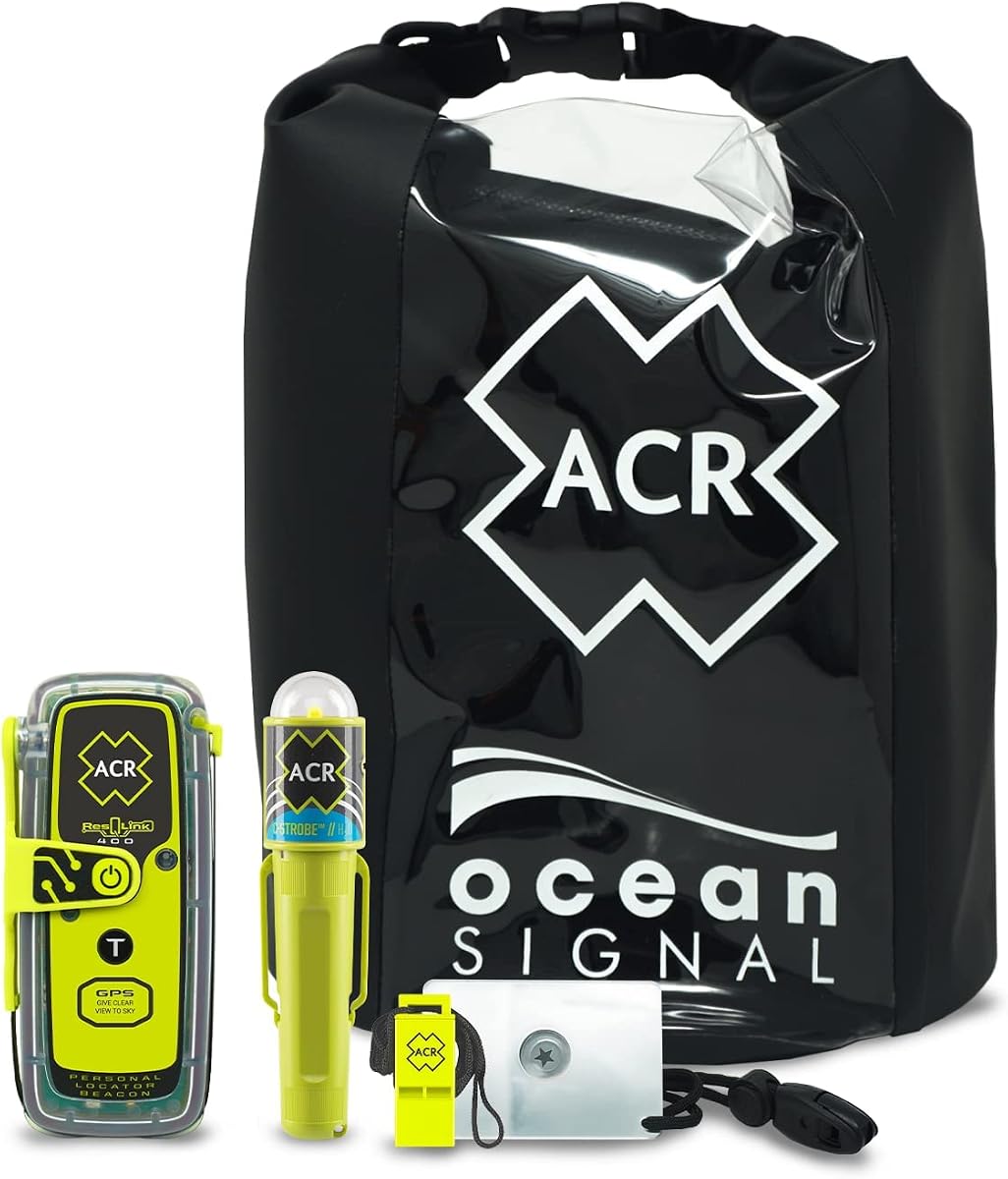
The ACR ResQLink 400 Survival Kit pairs a GPS personal locator beacon with several complementary emergency tools. Its 4.7 rating and broad bundle make it appealing to buyers who want more than a standalone satellite device, especially when preparing for hiking, camping, boating, or remote travel.
We may earn a commission when you buy through this link, at no additional cost to you.
The ResQLink 400 provides GPS tracking, a bright strobe, and rapid rescue capabilities in a compact design. Around it, the kit adds a C-Strobe H2O Rescue Light with a waterproof enclosure and high-visibility LED, a compact Res-Q Whistle, and a Signal Mirror capable of reflecting sunlight over long distances.
The RapidDitch Drybag is another practical inclusion. It protects essential gear from water and provides organized, accessible storage for emergency equipment. This matters in outdoor settings where a sudden storm, paddling incident, or wet trail can quickly undermine otherwise useful gear.
A bundle is not automatically better for every user. Someone who already owns a strong whistle, signal mirror, waterproof light, and dry bag may prefer to spend more on a higher-tier beacon or related safety equipment. The included accessories still add meaningful redundancy and make the package approachable for a new buyer.
This kit is a strong choice for people building a first emergency kit or seeking one coordinated set of rescue tools. The GPS locator provides the satellite emergency function, while the light, whistle, mirror, and dry bag provide additional ways to attract attention or protect essential supplies.
The combination of a strobe, whistle, and signal mirror covers audible, nighttime, and reflective signaling needs. These tools do not replace the beacon, but they add useful layers when responders are nearby or a faster visual or sound cue is appropriate.
The RapidDitch Drybag keeps survival gear protected and accessible. A dedicated storage solution can prevent emergency items from becoming scattered or wet, particularly during marine trips or prolonged rain exposure.
We may earn a commission when you buy through this link, at no additional cost to you.
The Ocean Signal rescueME PLB1 is built around portability and uncomplicated emergency operation. With a 4.6 rating, a weight of four ounces, and one-handed activation, it appeals to hikers, paddlers, sailors, and travelers who want a personal locator GPS beacon that takes up very little room.
We may earn a commission when you buy through this link, at no additional cost to you.
Its most notable physical advantage is its compactness. The manufacturer states that it is 30% smaller than its next smallest beacon, while a unique mounting clip allows attachment to a lifejacket. That makes it easier to keep accessible in a jacket pocket, pack, or marine safety setup.
Durability is another major strength. The PLB1 is waterproof to 49 feet, offers more than 24 hours of operational life, and carries a stated seven-year battery life. Its 66-channel GPS receiver and one-candela high-intensity strobe support positioning and visibility, while the international government rescue satellite network provides the alert pathway without a subscription.
The trade-off is that the supplied specifications do not mention a detailed screen or Return Link Service confirmation. Users who want ongoing satellite messaging, rich mapping, or confirmation that Search and Rescue received a distress signal may need a more advanced communicator instead of a dedicated compact beacon.
The rescueME PLB1 is an excellent recommendation for minimalists and anyone who prioritizes small size, one-handed activation, long battery readiness, and water resistance. It provides focused emergency functionality without unnecessary complexity, which makes it particularly suitable for recreational boating and lightweight outdoor travel.
The PLB1 is explicitly designed for intuitive one-handed operation. That focus is valuable in cold, wet, injured, or otherwise difficult conditions when handling a small emergency device may be challenging.
At four ounces and with a lifejacket mounting clip, the unit is easy to include without taking up significant pack space. Carrying a beacon consistently is often more important than carrying additional features that are rarely used.
We may earn a commission when you buy through this link, at no additional cost to you.
The ACR ResQLink 400 PLB is a dedicated satellite SOS beacon with a 4.7 rating and a straightforward feature set. It supports 406 MHz distress signaling and a 121.5 MHz homing signal, making it a practical choice for users who want an emergency locator without an ongoing service commitment.
We may earn a commission when you buy through this link, at no additional cost to you.
Positioning is handled through GPS and Galileo GNSS. Global coverage comes through COSPAS-SARSAT and MEOSAR compatibility, providing access to international satellite rescue infrastructure. These systems are designed to help authorities receive distress alerts and coordinate assistance when cellular networks are unavailable.
The unit also includes an LED strobe and an infrared strobe. Visible light assists rescuers in daytime or illuminated settings, while infrared can help with detection in low-light conditions. Together, they make the beacon useful not only for transmitting an alert but also for improving the chance of a visual sighting after responders reach the area.
This version does not include the display found on View models or the Return Link Service featured by newer RLS units. Those omissions make it a more focused device. Buyers who only need a dependable distress beacon, location capability, and visible signaling may find that simpler design preferable.
The ResQLink 400 is a solid recommendation for conventional outdoor safety preparation, especially for users who do not want a subscription. Its combination of global satellite support, dual GNSS support, homing signal, and dual strobes covers the core functions expected from a serious personal locator GPS beacon.
The dedicated distress and homing signals give the unit a clear emergency purpose. COSPAS-SARSAT and MEOSAR compatibility broaden the satellite infrastructure available to users who travel internationally.
LED and infrared strobes help rescuers detect the device under different lighting conditions. These signals complement the satellite alert and can be especially valuable after a responder arrives near the reported coordinates.
We may earn a commission when you buy through this link, at no additional cost to you.
The ACR ResQLink View Survival Kit combines a display-equipped GPS personal locator beacon with a coordinated set of emergency accessories. Its 4.7 rating makes it one of the stronger bundles here, offering a satellite alert, visual position information, high-visibility lighting, audible signaling, and dry storage in one package.
We may earn a commission when you buy through this link, at no additional cost to you.
The ResQLink View provides GPS tracking, a visual display, bright strobe functionality, and rapid rescue capabilities. Its companion C-Strobe H2O Rescue Light adds a waterproof, high-visibility LED signal designed for day or nighttime use, which can serve as a separate light when the beacon is clipped inside clothing or stored in a pack.
The Res-Q Whistle offers a loud, compact way to attract nearby attention. A Signal Mirror provides a reflective alternative for remote daylight conditions, while the RapidDitch Drybag keeps emergency items protected from moisture and readily accessible when needed.
The bundle is most valuable to someone starting from a minimal safety setup or preferring coordinated accessories. People who already carry a whistle, mirror, waterproof strobe, and dry storage may find the package redundant. In such cases, the individual beacon specifications and intended trip environment deserve more attention than bundle size.
This kit is a strong recommendation for general-purpose outdoor preparedness. It offers multiple layers of visibility and signaling alongside a display-equipped rescue beacon, making it a flexible choice for camping, hiking, boating, and travel where a complete kit is more practical than a single device.
The C-Strobe H2O and Signal Mirror support visual signaling in different environments. One is designed for high-intensity LED visibility, while the other uses reflected sunlight, giving users more than one visual option.
The whistle, dry bag, light, and mirror fill common emergency gaps. This makes the bundle approachable for a first-time buyer who wants a ready collection of practical safety tools alongside the locator beacon.
We may earn a commission when you buy through this link, at no additional cost to you.
The ACR ResQLink 410 RLS is a compact, buoyant personal locator beacon that adds Return Link Service confirmation to a focused emergency design. Its 4.5 rating and combination of global coverage, no-subscription operation, and long battery readiness make it a strong premium choice for dedicated rescue use.
We may earn a commission when you buy through this link, at no additional cost to you.
Return Link Service confirms that Search and Rescue has received the emergency distress signal. GPS and Galileo GNSS provide positioning capabilities, while MEOSAR compatibility supports global coverage. These features focus on delivering a dependable distress alert and useful location information rather than providing an ordinary messaging experience.
The unit offers a five-year battery life and 24+ hours of operational life. Built-in buoyancy, a small and lightweight design, and both strobe and infrared strobe lights broaden its suitability for land and water adventures. A multifunction clip system provides several attachment options and helps keep the device accessible.
Compared with the ResQLink View RLS, the supplied data indicates less stated operational life and no digital display. That makes this model better suited to users who prioritize confirmation, compactness, and long-term battery readiness rather than on-device visual information.
The ResQLink 410 RLS is a compelling premium recommendation for experienced outdoor travelers who want a dedicated, subscription-free beacon with Return Link Service. Its compact construction and multi-environment signaling features are particularly useful for hiking, paddling, and international expeditions where cellular communication is unavailable.
Return Link Service provides confirmation that Search and Rescue has received the distress alert while the device remains free of an ongoing subscription. This is a notable combination for a premium dedicated beacon.
Built-in buoyancy, a lightweight profile, and dual strobes support use in varied outdoor conditions. The multifunction clip allows the user to choose a practical carry method for the planned activity.
We may earn a commission when you buy through this link, at no additional cost to you.
The ACR ResQLink 400 No Display is a minimalist personal locator beacon offered under a listing that identifies manufacturer part number 2921. Its 4.8 rating indicates strong customer feedback, while the lack of a display keeps the focus on direct satellite rescue signaling and GPS positioning.
We may earn a commission when you buy through this link, at no additional cost to you.
The supplied information is less detailed than for other ResQLink entries. It identifies the device as an ACR ResQLink 400 Personal Locator Beacon without a display and notes that expert advice is available, damaged or defective return shipping is covered by the seller, and the seller is an authorized dealer.
Because the listing emphasizes expert advice and dealer support, it may be especially useful for buyers who want help understanding registration or setup. A no-display design can also reduce the number of interfaces a user must learn, which is beneficial when the beacon's core function is emergency activation rather than navigation.
The primary drawback is limited information in the supplied listing. Buyers should confirm that the package includes the beacon and appropriate accessories, verify the current battery condition, and review the complete product details before ordering. The absence of a display also means the user cannot rely on visual position feedback.
This listing is a strong option for someone who values a straightforward, highly rated, dedicated GPS locator and prefers not to carry a screen-based device. The recommendation depends on the availability of clear specifications and responsive seller support at the time of purchase.
Removing the display creates a simpler device for users who only need a dedicated emergency alert. This can make the beacon less distracting during hiking, boating, and other activities where compactness is important.
The listing identifies the seller as an authorized dealer and states that expert advice is available. Buyers can use that support to confirm setup requirements and clarify the limited details included in the product listing.
We may earn a commission when you buy through this link, at no additional cost to you.
The Garmin inReach Mini 3 Plus is more of a satellite communicator than a conventional distress-only personal locator GPS beacon. With a 4.7 rating, it offers the broadest communication features in this group, including Iridium-based messaging, media sharing, interactive SOS coordination, location sharing, weather access, and app integration.
We may earn a commission when you buy through this link, at no additional cost to you.
An interactive SOS alert reaches Garmin Response, a 24/7 staffed emergency coordination center that receives the user's location and supports two-way communication during a crisis. Users can exchange texts, voice messages, and group messages outside cellular coverage, and compatible phone pairing allows photos to be sent through the Garmin Messenger app.
Its scratch-resistant color touchscreen and IP67-rated enclosure are designed for demanding terrain, impact, and severe weather. The internal rechargeable battery can provide up to 350 hours in 10-minute tracking mode or up to 95 hours in performance messaging mode, making it useful for multi-day travel when regular recharging is difficult.
The Garmin Explore and Messenger apps support trip planning, weather forecasts, LiveTrack, distance, time, and elevation information. Voice commands allow hands-free check-ins, while preset messages can reduce data use. The supplied bundle also includes a cleaning cloth, USB Type-A to USB Type-C cable, and USB wall charger.
This device is best for users who need to remain in contact with family, teammates, or colleagues rather than only transmit a final distress alert. Its wider functionality and rechargeable battery distinguish it from dedicated PLBs, and service requirements should be confirmed before purchase. It is a feature-rich choice for coordinated adventures and professional fieldwork.
Two-way messaging, group communication, photos, weather, and LiveTrack make this device useful before an emergency occurs. That makes it valuable for travelers who want regular check-ins as well as emergency support.
Garmin Response receives the user's location and maintains two-way communication during a crisis. This adds an active support layer beyond sending a one-way distress signal to a rescue authority.
We may earn a commission when you buy through this link, at no additional cost to you.
The right personal locator GPS beacon depends on where it will be used, how much communication you need, and how easily you can carry or access the device. The following factors help separate dedicated rescue beacons from display-equipped models, complete survival kits, and subscription-based satellite communicators.
A dedicated personal locator beacon is designed primarily to send an SOS distress alert and location to Search and Rescue. It is generally focused, compact, and intended for emergency use. A satellite communicator adds two-way messaging, group communication, media, tracking, weather, and other ongoing contact functions, but it may involve a service plan and greater charging demands. Choosing the wrong category can leave a buyer paying for unwanted features or lacking routine communication.
Choose a dedicated beacon for emergency-only readiness, compact packing, and simple operation. Choose a communicator when regular check-ins, detailed location sharing, or conversation with contacts is a central part of the trip.
Personal locator beacons generally require registration so authorities know the owner's identity, emergency contacts, and relevant travel information. Registration rules and accepted country codes vary, and some models are programmed for a specific region. The McMurdo FastFind 220 listing, for example, uses US programming while still operating elsewhere; international users may need the appropriate regional listing and reprogramming service.
Verify the registration country before purchase and complete registration before traveling. A technically capable beacon is less useful if its emergency information is filed incorrectly or with the wrong authority.
Dedicated rescue devices rely on international satellite systems such as COSPAS-SARSAT, MEOSAR, or compatible government infrastructure. Some models add Galileo GNSS alongside GPS, while communicators such as the Garmin use the Iridium network for messaging. Compatibility should reflect the countries and waters expected during the journey rather than simply the region of purchase.
Check global coverage language, regional operating notes, and any programming limitations. For international travel, also review how the device and its registration are supported abroad.
A beacon's storage battery life shows how long it can remain ready between uses, while operational life indicates how long it can continue working after activation. The ACR ResQLink View RLS lists a five-year battery and 28+ hours of operating life, the ResQLink 410 RLS lists 24+ hours, and the Ocean Signal rescueME PLB1 offers a seven-year battery with more than 24 hours of operating life. Rechargeable communicators require another calculation because battery use depends on tracking and messaging modes.
Choose a long-storage beacon for infrequent adventures and verify active runtime when it matters most. For a communicator, include regular charging equipment and account for the demands of messaging and tracking.
A device is only useful if it is carried and accessible. The rescueME PLB1 weighs four ounces and offers a lifejacket mounting clip, while the ACR View RLS uses a multifunction clip system. Other models include belt clips, straps, lanyards, and oral inflation tube clips. The intended activity matters: marine users should consider buoyancy and lifejacket compatibility, while hikers may prioritize pack space and attachment to a belt or shoulder.
Try the included attachment system and establish a consistent carry method before departure. Keep the beacon reachable and protected rather than burying it in equipment that would be difficult to access under stress.
Strobes help rescuers locate a beacon after they reach the area. LED strobes provide visible nighttime signaling, while infrared strobes can support detection in low-light conditions. Some products also include a separate waterproof rescue light, and the survival kits add signal mirrors and whistles. These accessories do not replace satellite communication, but they provide additional signaling methods for close-range search situations.
Prioritize dual strobes when visibility and nighttime rescue are priorities. Consider a complete kit if you also lack a whistle, mirror, waterproof light, or dry storage for emergency equipment.
A display can make status information easier to inspect, while Return Link Service can confirm that Search and Rescue received a distress alert. The ACR ResQLink View RLS combines a digital display with RLS confirmation, the PLB425 offers a display without that listed confirmation, and the ResQLink 410 RLS provides RLS without a digital display. These features are distinct, and a buyer should not assume that one implies the other.
Choose a display for easier information review and RLS for distress-receipt confirmation. A simple no-display beacon can still provide a dedicated emergency function while being smaller and less complex.
Water exposure, impact, dust, temperature changes, and prolonged carrying all affect equipment differently. The rescueME PLB1 is waterproof to 49 feet, several ACR models have built-in buoyancy, and the Garmin inReach Mini 3 Plus has an IP67-rated, scratch-resistant touchscreen. Product ratings alone do not replace proper care, so protective cases, careful storage, and regular inspections remain important.
Choose water resistance and buoyancy for marine or wet environments, and rugged construction for demanding travel. Keep the device away from moisture beyond its stated limits and inspect clips, buttons, seals, and battery indicators before every trip.
Begin by reading the manual, confirming the correct regional programming, and completing the required registration. Enter accurate emergency contacts and provide any relevant travel information requested by the registration authority. Test the device before departure, verify that the intended contacts will be reachable if an alert is sent, and familiarize yourself with the antenna, activation control, protective seal, clip, and any display.
Carry the beacon in the location and manner recommended for the activity. Keep it accessible, protect it from avoidable impact, and prevent it from being buried in a pack or attached where a fall could separate it. For marine use, select a suitable lifejacket attachment and confirm buoyancy. At home, keep the unit dry and stored securely; for rechargeable communicators, maintain the battery and bring the appropriate charging cable and power source.
Perform a scheduled self-check before every trip and after any drop, immersion, or storage period. Look for physical damage, blocked antennas, loose clips, moisture intrusion, and signs of battery deterioration. Do not activate a live distress signal merely to test it. Use any manufacturer-provided test function exactly as directed, keep the manual accessible, and replace or service an aging beacon before relying on it for another remote journey.
Yes. Dedicated personal locator beacons transmit emergency signals through satellite systems rather than relying on cellular towers. That makes them useful in mountains, forests, remote deserts, and open water where a phone may have no signal. The beacon must still be registered correctly, its battery must be serviceable, and it must be activated according to the manufacturer's emergency procedure.
Registration is required by law in most countries and is considered essential preparation. It identifies the owner and gives Search and Rescue authorities emergency contacts and other relevant details. Missing or inaccurate registration can delay an operation. Check the registration authority and country-specific instructions for the exact beacon before relying on it during travel.
A PLB is primarily an emergency alert and positioning device, usually activated to summon rescue. A satellite communicator supports two-way messaging, location sharing, weather, tracking, and related features throughout a trip, while often including an SOS function. A communicator is better for regular communication, while a dedicated PLB offers a simpler emergency-focused design.
Several models listed here, including the ACR ResQLink View RLS and the Ocean Signal rescueME PLB1, state that no subscription is required for their core rescue service. The Garmin inReach Mini 3 Plus provides broader messaging through Garmin Response and Iridium services, so service-plan requirements should be verified before purchase. Optional testing or enhanced features may also be subscription-based.
The McMurdo FastFind 220 can operate worldwide, but the initial emergency point of contact will be the US authority with which it is registered. International travelers may need a beacon programmed for their country or a separately provided reprogramming service. Verify this before departure because registration errors can complicate a rescue response.
Check the physical condition, battery status, attachment, and controls before every trip. Use only the manufacturer's designated self-test or test-message function; do not trigger a live distress alert merely to verify the unit. Devices with long battery specifications still require regular inspection, and any unit that has been damaged, immersed unexpectedly, or stored for a long period should be professionally checked.
It depends on the device and attachment system. The rescueME PLB1 includes a lifejacket mounting clip and is waterproof to 49 feet, while several ACR models provide buoyancy and clips suited to personal carry. Confirm that the attachment will release or perform safely during an inflation event and follow the manufacturer's marine guidance.
A PLB can provide a satellite distress alert and location without those accessories, but they add redundancy for close-range signaling and everyday preparedness. A whistle, signal mirror, waterproof light, and dry bag are especially useful when help is nearby or responders need help locating a person after reaching the area. The survival kits in this guide combine a beacon with several of these tools.
The ACR ResQLink View RLS stands out as the best overall option because it combines Return Link Service confirmation, a display, GPS and Galileo support, buoyancy, dual strobes, and subscription-free rescue operation. The McMurdo FastFind 220 is the clearest budget choice for a simple, compact beacon, while the ACR ResQLink 410 RLS delivers premium rescue-focused features and signal confirmation in a small design.
Prioritize registration compatibility, satellite and GNSS support, battery readiness, operating life, and a carry method suited to the actual trip. Choose a dedicated beacon for focused emergency protection, a display or Return Link Service when those features improve confidence, and a satellite communicator when two-way communication is important enough to justify its broader functionality and service requirements.
Before ordering, confirm that the current package includes the intended beacon and accessories, review the latest specifications, and compare current prices with the features that matter most. Product listings, service terms, ratings, and prices can change, so verifying the current details helps ensure the chosen device is ready for the planned environment.