
Professional Dual-Channel Audio Compressor
4.7Editor score
Dual-channel VCA compression
XLR and TRS connectivity
Sidechain and noise gate
Our hardware compressors for home studios guide compares ten rack units for vocals, mixing, mastering, streaming, and flexible gain control.
Hardware compressors give home studios reliable, hands-on control over dynamics without adding another software processor to the signal chain. A good unit should shape volume predictably, preserve the character of the source, and integrate cleanly with microphones, instruments, mixers, and audio interfaces.
We compared the ten compressors using only their published specifications, features, channel formats, control options, connectivity, and supplied ratings. The list covers single-channel dynamics processors, dual-channel compressors, channel strips, stereo bus compressors, and premium optical designs for recording and mixing.
Each review explains what distinguishes the product and who should consider it. Ratings reflect the supplied customer feedback, while product features and intended applications are separated from personal experience. Availability and pricing can change, so confirm current details before purchasing.
4.7Editor score

4.6Editor score

3.4Editor score
The comparison covers channel count, compression style, connectivity, metering, gating, and sidechain capabilities to show how each unit fits different home-studio workflows.


The dbx 266xs earns the Editor's Choice position because it combines a recognizable compressor and gate with an unusually broad range of useful studio applications. Its supplied rating is 4.6, placing it among the strongest-reviewed products in this guide. The processor is built for vocals, guitars, drums, mix buses, and other dynamic sources, making it a practical centerpiece for a compact home rack.
We may earn a commission when you buy through this link, at no additional cost to you.
Its program-adaptive expander and gate are particularly valuable because they simplify the problem of handling uneven source material. Rather than relying on a single fixed gate response, the processor adapts to the program, which can make cleanup more musical. The sidechain insert adds another layer of utility for triggering external behavior, while separate LED displays show gain reduction and the compression and gate thresholds for faster, more accurate adjustments.
The main trade-off is that the 266xs is a single-channel unit, so finishing a stereo mix requires two units or a different hardware topology. Its controls also reflect a classic rack-processor design rather than a modern plug-in interface. Even so, those characteristics do not outweigh the flexible dynamics behavior, straightforward setup, and dependable integration with common studio routing.
This is the strongest general recommendation for a home studio that wants one compressor capable of handling both tracking and mixing duties. Choose it when reliability, clear metering, flexible gating, and sidechain control matter more than simultaneous stereo operation. For users building a larger rack, it can also serve as a dedicated vocal, drum, or mix-bus processor.
The 266xs can smooth uneven levels, add sustain to guitars, fatten drums, and tighten mixes. That range makes it useful as a shared front-end processor rather than a narrowly specialized accessory.
Separate precision displays for gain reduction and both thresholds help operators see what the compressor and gate are doing. Faster visual feedback leaves more time for listening and critical adjustment.
We may earn a commission when you buy through this link, at no additional cost to you.
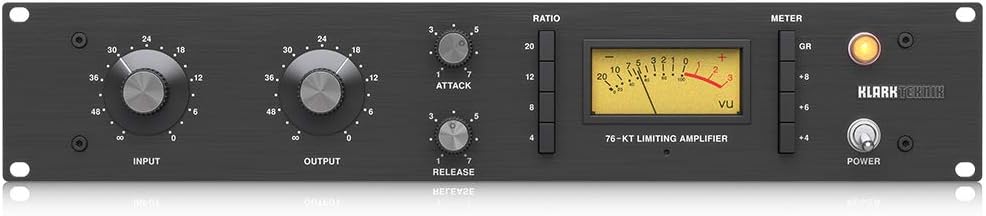
The Klark Teknik 76-KT is a single-channel compressor built around a classic FET-style topology associated with fast, assertive dynamics control. Its supplied rating is 4.3. The design is modeled after iconic 1176LN variants and gives home-studio users a direct, hands-on alternative to software emulation without claiming to reproduce every detail of the referenced hardware.
We may earn a commission when you buy through this link, at no additional cost to you.
A completely discrete signal path, Class-A line-level output amplifier, and custom-built MIDAS input and output transformers form the core signal chain. Four push-button compression ratios—4:1, 8:1, 12:1, and 20:1—provide clearly defined starting points for vocals, bass, drums, and other sources. The discrete construction and transformer stages are particularly attractive for engineers who want hardware to contribute part of the sound rather than merely duplicate a plug-in.
The compressor is limited to one channel and the supplied specifications do not mention a sidechain function, so it is less flexible for advanced triggering or multi-source processing. It also places the emphasis on a particular vintage-inspired character, which may not be the first choice for every recording. Even so, the clear ratio selection and focused circuit design can make it easier to approach aggressive compression with confidence.
Consider the 76-KT when you want a dedicated FET-style unit for punch, impact, or controlled sustain and prefer a dedicated hardware circuit over a software plugin. It is especially relevant for bass, drum overheads, guitars, and lead vocals that benefit from firm level control. Users seeking stereo processing should plan to add a second unit if their workflow requires matched channels.
The four selectable ratios make it straightforward to move from moderate control to firmer limiting behavior. That simplicity is useful for engineers who want an immediate and repeatable starting point.
Custom-built MIDAS transformers sit at the input and output of the discrete signal path. That analog topology can give recordings a different character from software-only compression.
We may earn a commission when you buy through this link, at no additional cost to you.
The Warm Audio WA-1B is a premium single-channel optical compressor for home-studio owners who want a specialized analog dynamics processor rather than a general-purpose feature stack. Its supplied rating is 3.4, the lowest among these ten products, so buyers should examine available documentation and current customer feedback carefully before committing. The defining specification is a one-channel tube optical compression circuit.
We may earn a commission when you buy through this link, at no additional cost to you.
Optical compressors are valued for their smooth gain reduction and their natural relationship to program material. In a mixing environment, that behavior can be useful when the goal is subtle control, a sense of cohesion, or a more gradual response than a conventional aggressive compressor. The tube-based implementation also gives the unit a hardware identity that cannot be judged solely from a feature checklist.
The limited published information is the biggest practical drawback. The supplied data does not describe exact controls, metering, I/O formats, operating levels, or sidechain capabilities, and the product is restricted to one channel. Its lower supplied rating also warrants more caution than the strongly reviewed alternatives. None of that eliminates the WA-1B's relevance; it simply makes informed comparison especially important.
The WA-1B is best suited to a producer or mixing engineer who specifically wants a premium optical compressor and is prepared to study its controls and operating details. It may be a better fit for mastering, stem control, or selected mix-bus duties than for immediate plug-and-play tracking. For a versatile new studio build, one of the multi-feature rack compressors may offer more practical value.
The optical circuit gives the WA-1B a fundamentally different control character from VCA and FET designs. It can be attractive when smooth, gradual dynamics shaping is the priority.
Tube circuitry gives this premium compressor a strong identity for mixers seeking analog character. Its focused design may be more rewarding than a generic multi-function processor.
We may earn a commission when you buy through this link, at no additional cost to you.
The generic dual-channel compressor takes the Best Budget position because it combines broad functionality with the highest supplied rating in the group, 4.7. It is a one-rack-space unit with two processing channels, making it more immediately useful in a home studio than a single-channel compressor that must be duplicated for stereo work.
We may earn a commission when you buy through this link, at no additional cost to you.
Its VCA-based architecture supports vocals, guitars, drums, and other sources. Overeasy compression provides a gentler transition into gain reduction, while automatic attack and release settings reduce the number of starting adjustments. XLR and quarter-inch TRS inputs and outputs support professional and project-studio routing, and the sidechain insert enables frequency-controlled ducking for bass or kick relationships.
A built-in noise gate and separate indicators for gain reduction, compression, and gate thresholds add useful monitoring. The trade-off is that the product uses generic branding, and its supplied information does not identify the manufacturer or provide detailed specifications for every control. Buyers should confirm the manual, warranty coverage, included accessories, and return terms before purchase.
This compressor is a strong recommendation for a new home studio that wants two-channel dynamics control, gating, sidechain functionality, and flexible connectivity in a compact rack unit. It can serve separate mono sources, linked or paired stereo material, or a mix-bus role depending on the available controls. The high rating also makes it one of the most appealing choices for value-conscious buyers.
Dual-channel processing supports vocals, instruments, stereo sources, and grouped studio tasks. This expands usefulness compared with single-channel alternatives.
The sidechain input can help bass or kick control, while the integrated noise gate reduces unwanted background sound. Both functions address common recording problems.
We may earn a commission when you buy through this link, at no additional cost to you.
The ART Solo VLA carries the highest supplied rating in the guide at 4.9, making it an especially compelling choice for buyers who prioritize customer satisfaction alongside a distinctive feature set. This single-channel compressor is built around mastering-quality signal-path concepts and gives the operator several ways to shape the relationship between compressed and uncompressed signal.
We may earn a commission when you buy through this link, at no additional cost to you.
Selectable multi-voice tube or solid-state control lets users compare different circuit characters. Analog optical isolators form part of the design, while the variable blend can mix uncompressed and compressed signals rather than forcing complete compression. Switchable +4dBu and -10dBV level modes also improve compatibility with different studio chains, particularly in setups that mix professional and consumer-style gear.
The variable blend is powerful but requires disciplined gain staging. A user who simply increases output after enabling compression could unintentionally alter level balance. The single-channel format also means two units would be needed for full stereo treatment. Despite those considerations, the broad internal voicing options make this more than a one-setting dynamics processor.
Choose the Solo VLA when you want detailed control over parallel compression and enjoy comparing different analog characters on the same source. It is particularly relevant to mastering-leaning mixers and engineers working with stereo stems. For quick vocal recording or a two-channel tracking workflow, a dual-channel unit may be more operationally convenient.
Variable parallel blending lets the operator retain part of the uncompressed signal. This can produce subtler density while preserving dynamics and transients.
The +4dBu and -10dBV modes make the unit easier to integrate with mixed equipment ecosystems. Correct operating levels simplify signal routing and troubleshooting.
We may earn a commission when you buy through this link, at no additional cost to you.
The dbx 286s is a full channel-strip processor with a supplied rating of 4.5. Rather than offering compression alone, it combines a microphone and instrument preamp with compression, de-essing, enhancement, and an expander or gate. That makes it a strong candidate for home studios that want to streamline the path from source to interface.
We may earn a commission when you buy through this link, at no additional cost to you.
The floating balanced XLR input accommodates microphones, while two quarter-inch TRS inputs accept balanced or unbalanced line and instrument signals. Compression reduces dynamic range for clarity, the de-esser targets harsh high frequencies and sibilance, the enhancer increases high- and low-frequency detail, and the expander or gate handles unwanted low-level noise. A loop-out insert provides an additional point for inserting external processors.
The drawback is that many functions demand more attention than a dedicated compressor. Settings can interact, and new users may need time to understand the relationship among the preamp and effects. It is also a single-channel processor in a one-rack-space chassis. Nevertheless, consolidating several stages into one unit can simplify wiring and save rack space.
The 286s is ideal for a singer, instrumentalist, producer, or podcast setup that needs a reliable front end. It is especially useful when one source needs de-essing, level control, and cleanup at the same time. Check operating voltage and included warranty terms before ordering, and consult the supplied manual for configuration details.
The integrated de-esser, enhancer, and expander or gate address common vocal and instrument problems. One unit can therefore serve as a complete input-processing chain.
A balanced XLR microphone input, TRS line inputs, and a loop-out provide several connection choices. The insert point also allows additional processing.
We may earn a commission when you buy through this link, at no additional cost to you.
This dual-channel rackmount compressor and limiter has a supplied rating of 4.1 and targets studios, live sound, streaming, broadcasting, and stage performance. Its versatility comes from combining VCA compression, a noise gate, sidechain control, and professional connectivity in a compact hardware unit.
We may earn a commission when you buy through this link, at no additional cost to you.
Overeasy compression is designed to create a more natural transition into gain reduction, while adjustable attack and release controls offer more detailed shaping than a fully automatic setup. VCA-based circuitry is aimed at improving vocal clarity, warmth, and presence. XLR and quarter-inch TRS inputs and outputs make the unit straightforward to connect with interfaces, mixers, PA systems, and other rack processors.
LED indicators show gain reduction, compression levels, and gate thresholds, which helps with setup and monitoring. The sidechain input supports frequency-based ducking, including tightening bass and kick relationships. Its principal weakness is that it shares generic product branding with many minimally identified rack devices, and its rating trails the more strongly reviewed options. Detailed manual information and warranty details are especially important to verify.
This unit is a practical option for creators who record and broadcast from the same space. Use the two channels for separate voice and instrument paths, stereo processing, or a dedicated broadcast chain. It may also work as a live dynamics processor. Buyers who prioritize brand transparency may prefer a named manufacturer, while value-focused users may appreciate the broad feature set.
The VCA design, noise gate, and vocal-focused controls suit podcasting, voiceover, live singing, and streaming. It can clean and stabilize a voice before it reaches the interface.
A dedicated sidechain input enables controlled ducking around bass, kick, or other frequency content. Adjustable timing controls help the behavior remain responsive.
We may earn a commission when you buy through this link, at no additional cost to you.
The Behringer Classic 369 is a dual-channel compressor and limiter that draws on the sound heritage of the Neve 33609. Its supplied rating is 4.1. The product is aimed at producers who want cohesive vintage-style dynamics with controls that range from subtle musical compression to assertive peak management.
We may earn a commission when you buy through this link, at no additional cost to you.
Each channel includes a compressor section with adjustable threshold, recovery, gain, and ratio controls. Ratios span 1.5:1 through 6:1, with Recovery presets that adapt to the input signal. The limiter section offers its own threshold, attack, and recovery controls, with a recovery range from 50 to 800 milliseconds. This dual-mode design lets the processor move between broad mix-bus glue and stronger peak control.
Custom-built MIDAS transformers contribute to the analog-oriented signal path. The sturdy two-rack-space chassis can operate in stereo or mono mode, and each channel has an individual bypass switch. The tradeoff is physical size compared with one-rack-space alternatives, along with a more limited ratio range than some focused FET or VCA compressors. It also remains a relatively large addition to a small home rack.
Choose the 369 when a producer wants a single stereo dynamics unit that can alternate between compression and limiting. It is a good match for mixes needing cohesive control or dance-oriented peak shaping. Installers with enough rack space can take advantage of its channel-by-channel flexibility, while owners of compact racks may find a one-rack-space dual compressor more convenient.
Separate compressor and limiter sections offer two distinct approaches to dynamics. The processor can glide between subtle control and assertive peak management.
Stereo linking, mono operation, and individual bypass controls provide useful routing choices. These options make the unit adaptable to different mix structures.
We may earn a commission when you buy through this link, at no additional cost to you.
The ART SCL-2 is a dual-channel compressor, limiter, expander, and gate with a supplied rating of 4.4. It provides both individual dual-channel operation and linked stereo operation, making it adaptable to separate sources as well as paired mix channels without requiring two separate compressors.
We may earn a commission when you buy through this link, at no additional cost to you.
Balanced XLR and quarter-inch TRS inputs support common studio interfaces and live equipment. The stereo mode includes a balance control for keeping the image centered, while automatic and manual attack and release modes let the operator choose between quick setup and detailed control. Precise LED level meters improve visibility during gain staging and performance.
One compromise is that linking the channels reduces the ability to shape each side independently, although that is an intentional feature for stereo work. The supplied specifications do not detail sidechain functionality, so users should confirm that requirement separately. Its feature set also sits between the dedicated ART Solo VLA and more specialized FET-style designs, making careful comparison worthwhile.
The SCL-2 is a balanced choice for a project studio that handles both mono and stereo material. It can process a stereo mix, a linked pair of sources, or two related channels, with gating and expansion included for cleanup. Choose it when automatic setup convenience, manual timing, and balanced routing are more important than a very specific compressor character.
The unit can handle two related channels independently or operate as a linked stereo pair. This flexibility suits changing studio assignments.
Automatic modes simplify initial setup, while manual attack and release settings invite closer control. Both paths support fast and deliberate working styles.
We may earn a commission when you buy through this link, at no additional cost to you.
The Warm Audio Bus-Comp is a two-channel stereo VCA bus compressor with a supplied rating of 4.6. Unlike channel-strip processors, it is specifically intended for controlling a stereo bus, making it useful near the end of a mixing chain where cohesion and controlled dynamics are the main goals.
We may earn a commission when you buy through this link, at no additional cost to you.
Its VCA design offers five selectable compression ratios, allowing the user to move between restrained and firmer behavior. The filterable sidechain input provides a way to shape how the unit reacts to selected frequency content, which can help maintain clarity while controlling the broad mix. Cinemag output transformers add a notable analog stage at the output and support the unit's character as a dedicated bus processor.
The principal limitation is specialization. A stereo bus compressor is not a substitute for a flexible vocal or instrument channel, and the supplied information does not detail metering, I/O formats, or additional controls. The ratio selection is also more limited than on some multi-mode units. Those constraints are reasonable for a purpose-built tool but worth recognizing before purchase.
The Bus-Comp is best for producers who already have solid channel-level dynamics and need a final mix-bus stage. It is a particularly compelling option when the goal is measured cohesion rather than aggressive individual-source control. The strong supplied rating and transformer-based stereo design distinguish it from general-purpose dual compressors in this guide.
This processor focuses on stereo mix control rather than duplicating track-level functions. That concentration makes it a natural final-stage option.
The sidechain input can be filtered so the compressor reacts selectively to relevant frequencies. This provides more control than an unfiltered trigger.
We may earn a commission when you buy through this link, at no additional cost to you.
The right compressor depends on the signal, available rack space, operating level, and desired control style. These factors help separate versatile channel tools, stereo mix processors, and specialized premium circuits.
Choose single-channel models for specialized tracking chains and dual-channel models for broader everyday coverage.
Prioritize smooth optical control for subtlety, FET punch for impact, and flexible VCA behavior for general-purpose use.
Use a gate for unwanted room sound, but adjust release carefully to avoid cutting off natural decays.
Choose a filterable sidechain when precise ducking matters and verify the exact routing before installation.
Confirm XLR, TRS, rack height, and signal-level compatibility before ordering to avoid costly reconfiguration.
Prioritize visible gain-reduction feedback and controls you can operate accurately without repeatedly consulting a menu.
Match the compressor to the operating level used by the rest of the signal chain and verify headroom before recording.
Prioritize the functions you will regularly use, then consider circuit character and build quality within your budget.
Begin by placing the compressor after the source preamp and before the audio interface, mixer, or next processor. Confirm the operating level, connect balanced cables where possible, and allow the unit to warm up if its manual recommends it. For microphones, ensure the preamp supplies adequate gain before compression; the compressor should control dynamics rather than compensate for an extremely weak signal.
Set the ratio and threshold conservatively, then bypass the compressor while checking the raw signal level. Increase compression gradually and listen for even level control, natural transients, and clean decay. Use the gate separately from the compressor, starting with a slow release so it does not cut off breaths, instrument tails, or quiet consonants. When using sidechain triggering, begin with a modest setting and verify the filter behavior.
For long-term care, keep the unit covered against dust and moisture, secure all cables, and avoid placing it near heat sources. Check that ventilation openings remain unobstructed. Clean the front panel with a soft dry cloth, consult the manual before opening the chassis, and record your settings for each source so they can be reproduced reliably during mixing or future sessions.
A hardware compressor is not mandatory for every home studio because excellent software processors are widely available. It can be valuable when you want hands-on controls, predictable routing, and an analog circuit outside the computer. It is also useful for live performance, streaming workflows, or projects where low-latency hardware processing is preferred.
One channel is enough for vocals, bass, guitar, drums, or other individual mono sources. Stereo mixes generally require two channels or a dedicated stereo processor. A dual-channel model may therefore provide greater flexibility if your studio handles several simultaneous sources or linked stereo material.
VCA compressors are known for consistent, flexible gain control and are common in versatile studio units. FET-style compressors can provide fast, assertive, punchy behavior. Optical compressors typically respond with smoother gain reduction. The best choice depends on the source, the level of control required, and the amount of harmonic character you want.
A compressor reduces the dynamic range to make a source more consistent, while a limiter primarily prevents peaks from exceeding a target. Many rack processors combine both functions with separate threshold and timing controls. Begin with moderate compression, then use limiting for final peak protection rather than as a substitute for careful gain staging.
There is no universal percentage or decibel figure because the right amount depends on the performance, microphone, preamp, and mix context. Listen for consistent perceived level while preserving consonants, breaths, and emotional dynamics. If the vocal sounds lifeless or every phrase has the same shape, reduce the amount or ratio.
A gate is useful when room noise, hum, or handling sounds sit between intended performances. It is not necessary for every source and can shorten vocal phrases or acoustic decays if set too aggressively. Use a moderate threshold and a release slow enough to preserve natural tails.
Only if it has stereo or linked operation. A single-channel processor may accept left and right inputs separately, but it cannot create true stereo-linked behavior from one unit. Dual-channel models with a link mode are more appropriate for maintaining a stable stereo image.
Named products can provide clearer documentation, established support, and clearer manufacturer accountability, while generic dual-channel units may offer more features for less. Compare warranty terms, control documentation, I/O, and intended circuit design. The better choice is the one whose functions and support match your studio requirements.
The dbx 266xs stands out as the strongest all-around choice because it combines usable compression, adaptive gating, sidechain control, and clear displays. The dual-channel professional compressor offers the best budget package of processing channels, VCA control, gating, and connectivity, while the Warm Audio WA-1B is the premium choice for users specifically seeking tube-based optical compression.
Before purchasing, prioritize the job the unit must perform. Choose a dual-channel compressor for broad studio coverage, a single-channel FET or VCA processor for focused track control, an optical design for smooth refinement, or a stereo bus compressor for mix cohesion. Also confirm operating level, rack height, input format, metering, sidechain behavior, warranty coverage, and the availability of clear documentation.
Product ratings, features, availability, and pricing can change over time. Review the current listing, manufacturer documentation, and customer feedback before ordering so the hardware still matches your room, interface, workflow, and preferred sound at the time of purchase.