
Deal4GO CSR8510 Bluetooth 4.0 Dongle
4.1Editor score
Dedicated Bluetooth 4.0 adapter
Three-megabit transfer speed
Supports multiple device profiles
The best Bluetooth 4 0 USB adapters compared for Windows, Linux, macOS, range, drivers, device support, and everyday wireless use.
A Bluetooth 4.0 USB adapter can transform a desktop or older laptop into a convenient hub for wireless keyboards, mice, headphones, phones, printers, and other compatible accessories. The right dongle balances operating-system support, driver setup, wireless range, portability, and reliable low-energy performance without demanding advanced technical knowledge.
This guide compares ten USB Bluetooth adapters using their stated specifications, compatibility details, supported devices, and customer ratings. It covers compact and long-range options for Windows, Linux, and selected macOS systems, while separating dedicated Bluetooth 4.0 hardware from newer adapters that remain backward compatible with 4.0 devices.
Each entry explains the adapter's strongest use case, important limitations, and ideal buyer profile. The top selections are identified by practical distinctions rather than price alone. Product ratings and availability can change, and current prices should always be checked on the linked listing before purchasing.
4.1Editor score
4.5Editor score

4.4Editor score
The table below compares the ten adapters by Bluetooth generation, operating-system support, range, form factor, and practical feature set, making it easier to identify the right option for your computer and connected accessories.


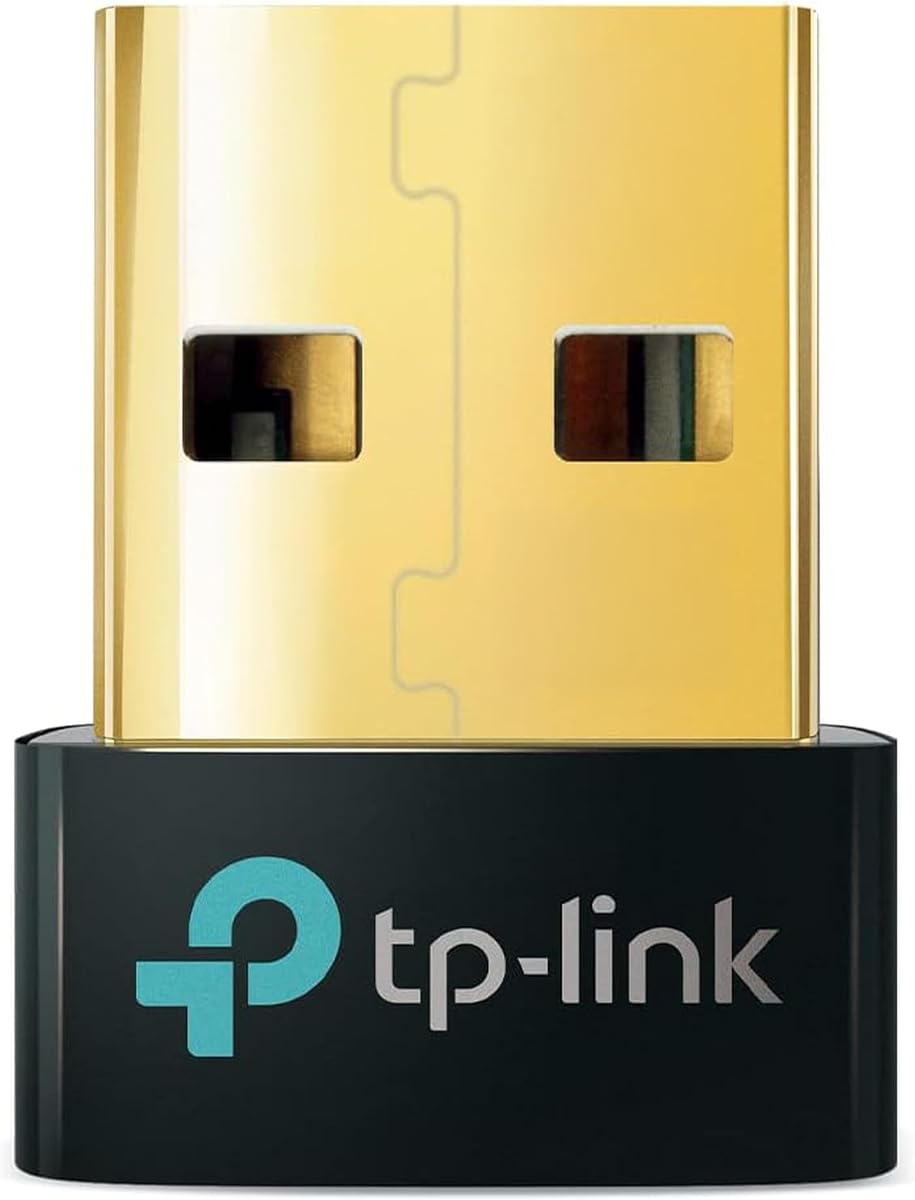
The TP-Link UB500 is a compact Windows receiver with a 4.5 customer rating and support for Bluetooth 5.4, Enhanced Data Rate, and Bluetooth Low Energy. Although the search category centers on Bluetooth 4.0 adapters, this model is especially relevant because it remains backward compatible with 4.0, 4.2, 5.0, 5.3, and earlier Bluetooth versions.
We may earn a commission when you buy through this link, at no additional cost to you.
Its main strengths are straightforward installation, broad peripheral support, and a small form factor that can remain inserted in a laptop. The stated performance reaches up to twice the data-transfer speed and four times the coverage of Bluetooth 4.0, making it a logical upgrade when compatibility with newer peripherals matters. It can communicate with desktop computers, printers, phones, headsets, and other Bluetooth-enabled devices.
The limitations are worth considering. It is designed for Windows PCs and is not listed for macOS, Linux, televisions, Windows 8, or direct game-console use. Windows 7 also requires a downloaded driver, while Windows 8.1, 10, and 11 generally use plug-and-play installation with internet access. Existing internal Bluetooth should be disabled to avoid conflicts.
This is the strongest general recommendation for a Windows user who wants one small adapter to serve both Bluetooth 4.0 and newer equipment. It suits home offices, travel setups, and systems where avoiding another full-size USB peripheral is important. Buyers who only need macOS or Linux should choose a product explicitly listing those systems.
The UB500 can pair with Bluetooth 4.0 accessories while also supporting newer standards. That makes it a more versatile selection than a dedicated 4.0 dongle when you expect to replace headsets, keyboards, or other equipment over time.
Support for up to seven Bluetooth devices makes the adapter useful for a typical desk setup involving an input device, headset, phone, and printer. Its nano-sized housing also reduces the temptation to unplug and lose the receiver between uses.
We may earn a commission when you buy through this link, at no additional cost to you.
The Deal4GO CSR8510 is a dedicated Bluetooth 4.0 mini dongle with a 4.1 customer rating. It uses a CSR8510 control chip and supports both Bluetooth Low Energy and Enhanced Data Rate while remaining compatible with Bluetooth 3.0, 2.1, 2.0, and 1.1 equipment.
We may earn a commission when you buy through this link, at no additional cost to you.
The stated transfer rate reaches 3 Mbps, with a range of up to 33 feet or 10 meters in open space. Its profile support covers products such as smartphones, keyboards, mice, speakers, and headsets, and multiple Bluetooth applications can be supported simultaneously. For users seeking a straightforward 4.0 receiver rather than a newer-generation model, this is a focused choice.
Its most significant inconvenience is installation. The package does not include a CD driver; the driver must be downloaded from the seller's website. It also targets Windows XP through Windows 10 rather than the latest Windows 11 release, so owners of a current PC may prefer the TP-Link UB500 for broader platform support.
The adapter is best for older or still-supported Windows computers, particularly when the goal is basic peripheral connectivity on a limited budget. It also makes sense for a user whose existing accessories are explicitly Bluetooth 4.0 and who does not need the extra range or speed associated with newer generations.
Rather than emphasizing a newer standard, the Deal4GO concentrates on the mature Bluetooth 4.0 feature set. It can be a sensible match for legacy keyboards, mice, and headsets that are already paired to the dongle.
Because no disc or packaged driver is supplied, buyers should confirm that they can access the listed driver download. Keeping the correct driver available is particularly important for legacy Windows installations.
We may earn a commission when you buy through this link, at no additional cost to you.
The TP-Link UB400 is a purpose-built Bluetooth 4.0 USB receiver with a 4.4 customer rating. It supports Bluetooth Low Energy and Enhanced Data Rate and remains backward compatible with Bluetooth 3.0, 2.1, 2.0, and 1.1, giving it relevance for a wide collection of existing peripherals.
We may earn a commission when you buy through this link, at no additional cost to you.
Its operating-system support is one of its strongest attributes. Windows 8, 8.1, 10, and 11 use plug-and-play installation, while Windows 7 and XP require a downloaded driver. The listed transmission distance reaches 65 feet, which exceeds the open-space range stated for many compact alternatives in this guide.
The trade-offs are platform limits and adapter conflicts. The UB400 does not support macOS, Linux, or televisions, and it cannot be used directly with PS4 or Xbox consoles. It can, however, support those controllers when they are connected to a PC. Two UB400 units also cannot pair with each other, and an existing internal Bluetooth function may need to be disabled.
This adapter is a sensible choice for Windows users who specifically want a true 4.0 receiver and value broad compatibility with older Windows releases. It also fits users who need more stated range than the Deal4GO while remaining within the familiar TP-Link adapter format. Newer peripherals may ultimately be better served by the UB500.
Support extending from Windows XP through Windows 11 makes the UB400 useful for systems of very different ages. Modern Windows versions offer the simplest setup, while older releases remain possible with a separate driver.
The receiver's backward compatibility lets it serve older Bluetooth equipment as well as dedicated 4.0 products. It is a practical bridge for users who have not yet standardized on the latest Bluetooth generation.
We may earn a commission when you buy through this link, at no additional cost to you.
The Panda Bluetooth 4.0 USB Nano Adapter stands out with a 4.5 customer rating and explicit support for numerous Linux distributions, including Ubuntu, Mint, Fedora, openSUSE, Lubuntu, Zorin, Kali Linux, BackTrack5 R3, Raspbian Wheezy, and OpenELEC.
We may earn a commission when you buy through this link, at no additional cost to you.
It is Bluetooth Smart Ready and supports both Low Energy and Enhanced Data Rate. The stated operating range reaches 80 feet when connected to a Bluetooth Smart device, making it attractive for users who move between rooms or need more flexibility than a desk-bound adapter normally provides.
The main consideration is that compatibility depends on the operating system and its Bluetooth stack, not merely the adapter's Bluetooth version. The product listing includes a Windows software stack and an extensive operating-system list, but buyers should still confirm that their exact Linux distribution and version is covered. The listing also emphasizes Windows XP through Windows 11 in its title.
This is the leading recommendation for a Linux user searching specifically for a Bluetooth 4.0 receiver. It also works for compatible Windows systems, particularly where broad distribution support matters more than the latest Bluetooth generation. For users who want a Windows-only adapter with simpler current-system support, the TP-Link options are easier to assess.
The unusually detailed Linux support list gives the Panda adapter a clear advantage over models limited to Windows. It is especially attractive for older Ubuntu-family systems, security-focused Linux installations, and media systems such as OpenELEC.
An 80-foot stated operating range provides more flexibility than many compact dongles. Obstacles and interference can still reduce actual performance, but the specification makes this model worth considering for larger desks or homes.
We may earn a commission when you buy through this link, at no additional cost to you.
The StarTech USBBT2EDR4 is a compact Bluetooth 4.0 adapter that combines Windows compatibility with support for macOS 10.8 through 10.15 and 11.0. Its 4.2 customer rating reflects a solid general-purpose option for systems that cannot use the Windows-only TP-Link models.
We may earn a commission when you buy through this link, at no additional cost to you.
It uses a Class 2 transceiver with a stated range of up to 10 meters, or 33 feet. Enhanced Data Rate transfer speeds reach 3 Mbps, and backward compatibility extends to Bluetooth 3.0, 2.x, and 1.x equipment. Low power consumption and the ultra-compact housing make it convenient for travel.
The TAA designation may be meaningful for organizations that require a suitable model for government procurement, although individual buyers should evaluate their own requirements. Its range is shorter than the Panda and TP-Link UB400 options, and the macOS support list does not imply support for every later macOS release. Installation and operating-system behavior should therefore be checked before purchase.
This adapter is a good match for a user who needs Bluetooth 4.0 across Windows and a listed macOS version, especially when portability matters. It is less attractive when maximum range or the newest Bluetooth standard is the priority. Its defined model number and broad legacy compatibility make it a practical choice for stable, established equipment.
Cross-platform support distinguishes the USBBT2EDR4 from Windows-only budget dongles. A user moving between a supported Mac and PC can carry one small receiver instead of managing separate hardware.
Backward compatibility with older Bluetooth versions and a clearly identified model number make this adapter suitable for established networks of peripherals. The stated 3 Mbps EDR rate is ample for standard accessories such as keyboards, mice, and headsets.
We may earn a commission when you buy through this link, at no additional cost to you.
The StarTech USBBT1EDR4 is the long-range choice in this roundup, with a stated transfer distance of 50 meters or 165 feet. It retains a 4.2 customer rating and provides Bluetooth 4.0, Low Energy, and Enhanced Data Rate functionality for adding wireless capability to a computer through USB.
We may earn a commission when you buy through this link, at no additional cost to you.
Unlike the smaller StarTech Class 2 model, this adapter is presented as a Class 1 device designed for extended reach. It supports transfer rates up to 3 Mbps, low-power operation, and 128-bit AES encryption for transfers. The listing says it is natively supported on Windows and Mac without additional software, which simplifies setup for supported systems.
The tradeoff is that this reach comes with a design that may not be as visually compact as a nano dongle, even though it is still described as lightweight. The product information does not list Linux support, so cross-platform users outside Windows and macOS should look elsewhere. Actual range will vary with walls, interference, antenna placement, and the capabilities of the paired device.
This adapter is well suited to a home, workshop, or large workspace where a mouse, keyboard, or headset may be used away from the computer. It is the top selection when maximum stated range is the defining requirement. For a small desk or travel kit where compactness matters more, the StarTech USBBT2EDR4 is a better fit.
The 165-foot stated reach separates this model from typical compact dongles. That makes it useful for connected equipment located across a room, workshop, or other open interior space.
The inclusion of 128-bit AES encryption for transfers provides a useful security feature. Native support on listed Windows and macOS systems also avoids the extra driver-download step required by some budget alternatives.
We may earn a commission when you buy through this link, at no additional cost to you.
The TP-Link UB500 Plus is a premium long-range receiver with a 4.4 customer rating and Bluetooth 5.3 support. It remains backward compatible with Bluetooth 4.0, 4.2, 5.0, and older versions, making it an appropriate choice even when the user's immediate need involves 4.0 equipment.
We may earn a commission when you buy through this link, at no additional cost to you.
Its defining feature is the rotatable, multi-directional antenna. Positioning the antenna can improve reception in different environments, and the stated capabilities reach up to twice the speed and four times the coverage of Bluetooth 4.0. That makes it valuable for peripheral placement that is less than ideal or for a workspace extending beyond a small desk.
The compromises are platform specificity and size. It is intended for Windows PCs, with plug-and-play support for Windows 8.1, 10, and 11; Windows 7 requires a driver. It does not offer the macOS and Linux coverage shown by some alternatives. Its adjustable housing also takes up more visual and physical space than a standard nano receiver.
The UB500 Plus is recommended for users who value reception and flexibility enough to accept a Windows-only premium design. It is especially compelling for compatible Bluetooth 4.0 devices located farther from the computer, while also preparing the setup for newer peripherals. Those wanting the smallest general-purpose dongle should consider the UB500 instead.
The multi-directional antenna can be rotated toward the connected equipment, which can improve reception in rooms with obstacles or unusual layouts. The result is a receiver that can be adjusted rather than left in one fixed position.
Bluetooth 5.3 support gives the adapter value beyond 4.0 peripherals while maintaining backward compatibility. Buyers can connect current 4.0 accessories and retain the option to adopt newer Bluetooth equipment later.
We may earn a commission when you buy through this link, at no additional cost to you.
The ASUS USB-BT600 is a compact adapter with Bluetooth 6.0, Bluetooth Low Energy, and support for as many as seven connected devices. Its 4.0 customer rating is still positive, and the product is positioned for users who want a small receiver with broad support for current Bluetooth accessories.
We may earn a commission when you buy through this link, at no additional cost to you.
The seven-device capacity is the central attraction. A single adapter can serve equipment such as a mouse, keyboard, headset, phone, and other peripherals, reducing the need for multiple USB receivers. Backward compatibility with earlier Bluetooth versions also means that 4.0 devices remain within the supported ecosystem.
Operating-system coverage includes Windows 10 and 11 plus Linux, which makes the adapter more flexible than Windows-only TP-Link choices. Mac users are not included in the stated support, however. The lower customer rating also suggests that prospective buyers should consider recent customer feedback and desired features carefully rather than assuming it matches the strongest-rated alternatives in every respect.
The USB-BT600 is a good selection for a Windows or Linux user who wants many peripherals attached through one tiny adapter. It is also a forward-looking option because Bluetooth 6.0 can support newer devices. Those whose priorities are maximum range, cross-platform Mac support, or a dedicated Bluetooth 4.0 receiver should examine the StarTech, Panda, or TP-Link UB400 models.
Seven simultaneous connections can simplify a busy workspace that includes several Bluetooth peripherals. It also reduces port clutter compared with using individual receivers for different device categories.
Bluetooth 6.0 and BLE provide a modern foundation, while backward compatibility keeps Bluetooth 4.0 accessories in scope. This makes the adapter suitable for gradual upgrades rather than requiring an all-at-once peripheral replacement.
We may earn a commission when you buy through this link, at no additional cost to you.
The Generic CSR8510 Mini USB Bluetooth Adapter is a low-cost, dedicated Bluetooth 4.0 dongle with a 3.3 customer rating. It uses the widely recognized CSR8510 chipset, supports a USB 2.0 interface, and is compatible with Bluetooth 4.0, 3.0, 2.1, 2.0, and 1.1 devices.
We may earn a commission when you buy through this link, at no additional cost to you.
Its stated transfer rate reaches 3 Mbps over a distance of up to 20 meters without barriers. Compatible device categories include headsets, mobile phones, keyboards, mice, printers, GPS equipment, laptops, and other Bluetooth-enabled products. The listing also describes CSR Harmony drive management software, adaptive frequency hopping, sleep-and-wake behavior, and 24-bit CRC interference resistance.
The principal drawback is the very low customer rating, which is lower than every other product in this guide. Its operating-system note is also difficult to interpret, stating that the system can only be used in versions 10.2 through 10.84. Buyers should therefore verify operating-system support and driver availability before ordering rather than assuming universal compatibility.
This adapter is most appropriate for a basic Windows setup that needs a small Bluetooth 4.0 receiver for standard peripherals. Its chipset, compact form, and long stated open-space range offer recognizable advantages. However, users who place more importance on support breadth, formal platform compatibility, or customer feedback should choose a better-rated model.
The CSR8510 chip is used across several inexpensive Bluetooth dongles. Its dual-mode design and support for common profiles make it a practical option for basic keyboard, mouse, and headset connectivity.
The ambiguous operating-system statement is more significant than the familiar chip. Users should confirm that their Windows version is covered and that the required driver is available from a reliable source.
We may earn a commission when you buy through this link, at no additional cost to you.
The TP-Link UB600 is a compact Bluetooth 6.0 receiver with a 4.2 customer rating. It can connect as many as seven types of Bluetooth devices at the same time and is backward compatible with earlier versions, so existing Bluetooth 4.0 accessories remain part of the intended setup.
We may earn a commission when you buy through this link, at no additional cost to you.
Its stated priorities are fast transfer, stable connections, and low latency for activities such as gaming, video, and file transfers. The ultra-compact housing can remain connected without blocking surrounding USB ports. Setup covers Windows 11, 10, 8.1, and 7, although Windows 10 and 8.1 receive plug-and-play installation while Windows 11 and 7 require a downloaded TP-Link driver.
The operating-system limitation is important: no macOS or Linux support is listed. A latency claim also does not guarantee that every paired accessory will deliver the same responsiveness, because the headset, controller, software, and system configuration all affect performance. Nevertheless, the seven-device capacity and compact form make this a capable general-purpose Windows receiver.
The UB600 is recommended for a Windows user who wants the newest Bluetooth generation, a tiny profile, and room for numerous accessories. It is less suitable for users seeking broad operating-system support. If Bluetooth 4.0 is the firm requirement rather than a compatibility goal, the UB400 or Deal4GO CSR8510 is a more direct fit.
The small body is designed to stay in a laptop or desktop without interfering with nearby ports. That makes it convenient for users who switch between docked and mobile working arrangements.
The seven-device limit accommodates a typical collection of mice, keyboards, headsets, phones, controllers, and printers. Users should still verify the exact number and combination of profiles supported by their operating system and applications.
We may earn a commission when you buy through this link, at no additional cost to you.
The right USB Bluetooth adapter depends on your computer's operating system, the peripherals you plan to connect, the distance between devices, and how much setup effort you are willing to handle. Version compatibility alone does not guarantee that every device profile or pairing mode will work as expected.
Begin with the operating system installed on your computer, because USB Bluetooth adapters are not automatically interchangeable across platforms. TP-Link's UB500 and UB500 Plus are Windows-focused, while the StarTech USBBT2EDR4 and USBBT1EDR4 also list selected macOS releases. The Panda adapter provides the broadest explicit Linux coverage in this group, and the ASUS USB-BT600 supports Windows and Linux.
Bluetooth 4.0 remains useful for keyboards, mice, headsets, and other conventional accessories, but a newer receiver can offer a longer upgrade path. The TP-Link UB500 supports Bluetooth 5.4, the UB500 Plus supports 5.3, and the ASUS and UB600 models support 6.0. These newer models are also advertised as backward compatible with Bluetooth 4.0, allowing them to serve both older and current devices.
Range is affected by antenna design, interference, walls, and the capabilities of the connected accessory, so the stated maximum is best treated as a comparative guide. Compact models generally provide enough reach for a desk. The StarTech USBBT1EDR4 advertises up to 165 feet, the Panda lists up to 80 feet, and the TP-Link UB500 Plus uses an adjustable directional antenna to improve reception in challenging layouts.
Bluetooth versions describe the radio standard, while profiles determine what kinds of accessories can communicate. Most adapters in this guide support common categories such as keyboards, mice, headsets, phones, and printers. A product that supports multiple application profiles is more useful for a varied setup, but confirm that the specific peripheral and its pairing method are covered before purchase.
Modern Windows installations are generally the simplest, but several products still require a downloaded driver. The Deal4GO adapter includes no CD or retail packaging, and TP-Link models require separate drivers for older Windows versions. The UB600 specifically calls for drivers on Windows 11 and 7. Check whether the manufacturer offers a straightforward driver page and whether your internet connection will be available during setup.
Nano-sized receivers can remain plugged into a laptop without blocking nearby ports, making them convenient for travel and mobile work. The Deal4GO, TP-Link UB400, UB500, UB600, and Panda models emphasize compactness. The UB500 Plus offers an adjustable antenna, while the long-range StarTech Class 1 design may be more noticeable. Consider both the receiver and the space needed to rotate or position an antenna.
If you plan to connect several peripherals, simultaneous-device capacity matters. The TP-Link UB500 and UB600 support up to seven devices, and the ASUS USB-BT600 also supports up to seven connections. The Deal4GO says multiple Bluetooth applications can be supported simultaneously, although it does not provide the same explicit number. Determine how many devices you need and whether the operating system supports the required combination of profiles.
A computer with built-in Bluetooth may encounter driver conflicts when a USB adapter is added. TP-Link specifically recommends disabling existing internal Bluetooth in Device Manager before using the UB500, and the UB400 carries a similar instruction. This step is not a reason to reject either adapter, but it means the first installation may require a few extra clicks in system settings before pairing begins.
Start by identifying the operating system and checking the manufacturer's compatibility list. Insert the adapter into an available USB port, then visit the official support page if the system requires a driver. On supported modern Windows versions, the device may be recognized automatically after installation. Allow the operating system to finish scanning before attempting to pair any accessory.
Open the computer's Bluetooth settings and choose the option to add or pair a new device. Put the keyboard, mouse, headset, phone, or printer into its documented pairing mode, then select it from the detected-device list. Complete any confirmation prompt and verify that the peripheral works as expected. If the adapter conflicts with internal Bluetooth, disable the existing Bluetooth function in Device Manager as directed by the manufacturer.
For good reception, keep the receiver unobstructed and position it closer to the computer than to major walls or metal objects. Adjust the UB500 Plus antenna toward the equipment when necessary. Do not repeatedly unplug the dongle while devices are connected, and avoid pressing the tiny receiver into a port so tightly that removal becomes difficult. When the computer is off, unplugging the receiver is a simple way to protect the port.
A Bluetooth 4.0 adapter can generally connect to devices that support the same or older Bluetooth profiles, but the newest devices may rely on capabilities or specifications introduced after 4.0. A backward-compatible 5.x or 6.0 receiver offers a more flexible option when you also own newer peripherals. Always check both the computer adapter and accessory documentation before assuming every feature will work.
It depends on the exact adapter. The StarTech USBBT2EDR4 and USBBT1EDR4 list selected macOS versions, the Panda adapter explicitly supports several Linux distributions, and the ASUS USB-BT600 supports Windows and Linux. Several TP-Link models are Windows-only. Verify the operating-system version, architecture, and driver requirements before purchasing.
Begin by checking another USB port and confirming that the product is supported on your operating system. Install the current driver from the manufacturer's official website if required, then restart the computer. If internal Bluetooth is enabled, temporarily disable it in Device Manager to remove a possible driver conflict. Also test the adapter with a second computer to determine whether the issue is with the receiver or the setup.
Many adapters can maintain multiple connections, although the supported combination depends on the product and operating system. The TP-Link UB500, UB600, and ASUS USB-BT600 each advertise support for up to seven devices. The Deal4GO states that multiple Bluetooth applications can be supported simultaneously. Verify the profiles required by your keyboard, headset, phone, and printer before assuming they can all remain connected.
No. Maximum range is usually measured under favorable conditions and may be reduced by walls, interference, antenna orientation, and the connected device's own radio. A short-range adapter may be perfectly adequate for a desk, while a long-range or adjustable-antenna model becomes more valuable in a large room or unusual equipment layout.
The TP-Link UB500 and UB400 instructions recommend disabling an existing internal Bluetooth function to avoid driver conflicts. Doing so can make setup more reliable when the internal adapter is unused or malfunctioning. If you need both radios simultaneously, check the operating system and product guidance carefully because some systems may not manage them as separate independent radios.
The TP-Link UB400 and UB500 are intended for Windows PCs, not direct PS5, PS4, or Xbox console connections. A compatible controller can be used through the PC for supported PC software or games. Console pairing normally requires a Bluetooth adapter or controller support built into the console itself, so the console's own requirements should be checked first.
Not necessarily. If every accessory you use supports Bluetooth 4.0 and your computer's internal Bluetooth works correctly, a dedicated 4.0 receiver can remain appropriate. A newer adapter is more useful when you want faster transfers, improved range, broader device support, or compatibility with accessories built around newer Bluetooth capabilities.
The TP-Link UB500 is the most versatile general recommendation for Windows users because it combines a compact profile, multi-device support, and backward compatibility across Bluetooth 4.0 and newer generations. The Deal4GO CSR8510 is the dedicated budget option for straightforward 4.0 connectivity, while the TP-Link UB500 Plus stands out for its adjustable long-range antenna.
Platform support should drive the final decision. Windows users have several strong choices, Linux users should look closely at the Panda adapter, macOS users may prefer a compatible StarTech model, and buyers needing the smallest receiver can focus on nano-sized designs. The number of peripherals, required range, and driver process deserve equal attention because each affects daily convenience.
Ratings, product availability, and prices can change, so check the current listing and manufacturer support information before ordering. Confirm the exact operating-system version, verify compatibility with your peripherals, and review the latest customer feedback. Those checks will help ensure that the selected Bluetooth USB adapter integrates smoothly with your particular setup.