
Mount-It! MI-421
4.4Editor score
0.35-inch wall gap
Supports 165 pounds
Fits 37-86 inch TVs
Magnetic flush connection
A thinnest TV mount can give a large television the appearance of framed artwork while reclaiming valuable room space. The right model balances a nearly invisible wall gap with secure support, accurate installation, cable access, and compatibility with your screen size, weight, and VESA pattern.
We compared ten fixed and full-motion mounts using the specifications supplied for each product. The comparison covers wall gap, screen-size range, load capacity, supported VESA measurements, adjustment options, wall compatibility, and installation features that affect everyday convenience.
Each review highlights the strongest reason to consider a particular mount, along with any meaningful limitations. The picks span very low-profile fixed designs and more flexible articulating models, so readers can compare appearance and function. As with all products, availability and prices change over time.
4.4Editor score

4.5Editor score

4.4Editor score
As an Amazon Associate we earn from qualifying purchases.
The table below compares all ten mounts by profile, supported television size, weight capacity, and VESA range, making it easier to identify the model that matches your screen and wall.


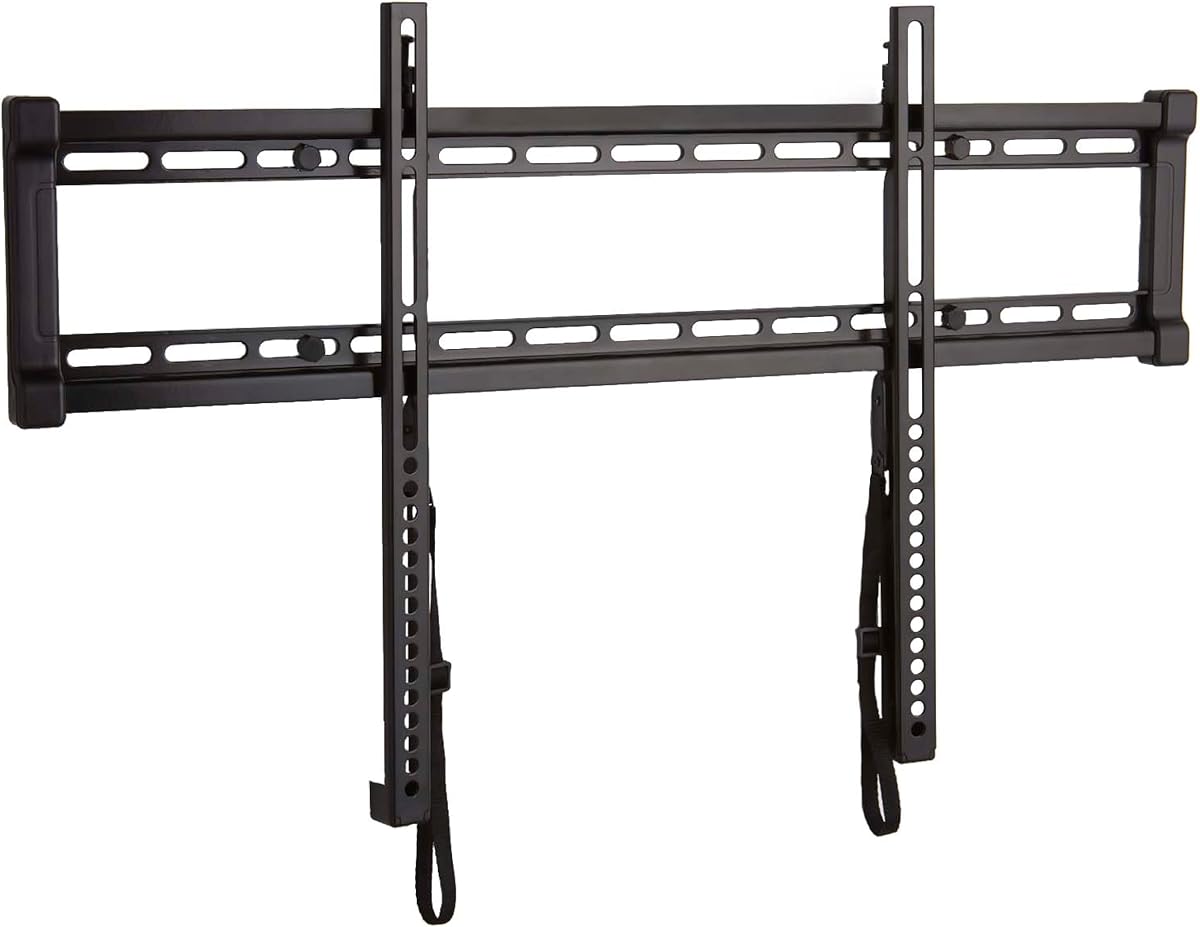


The Supcline Ultra Slim is a fixed magnetic mount distinguished by a stated gap of just 0.31 inches between the television and wall. Its supplied specifications identify support for 42- to 100-inch flat-panel televisions and a load capacity of 176 pounds. That combination makes it a compelling choice when a nearly frameless appearance and broad television compatibility are the main priorities.
We may earn a commission when you buy through this link, at no additional cost to you.
The mount uses a reinforced panel structure and an improved edge design to create a rigid connection behind the screen. Four N52 magnets provide the final holding force after the wall plate and television brackets connect. A pull-down magnetic catch can be released for wiring, connection checks, or maintenance, so the thin profile does not entirely come at the expense of service access. The supplied information also reports extreme testing at 330 pounds without damage, although its stated normal capacity remains 176 pounds.
Compatibility is unusually broad. The product supports LED, LCD, and OLED flat or frame televisions from 42 inches through 100 inches, with VESA measurements extending from 200×100 millimeters to 1200×800 millimeters and larger patterns when the television remains within the supported load range. The main caution is installation-related: a wooden-stud installation depends on matching the television's VESA pattern to the available stud spacing, so measuring the wall is essential.
This is a strong recommendation for owners of large televisions who want the screen to sit extremely close to a solid wall. It is especially relevant when the television has a flat back and a VESA pattern that aligns with the wall structure. Buyers should verify both the rear clearance and the dimensions around their VESA holes before ordering, and they should not install it on unsupported drywall alone.
The 0.31-inch separation places this fixed mount among the thinnest options in the comparison. It is best suited to a smooth wall finish where a modest shadow behind the television is less noticeable than the bulk of a conventional bracket.
Four N52 magnets help keep the television attached after the brackets engage the wall plate. Pulling down the magnetic catch also provides a practical way to access cables without removing the screen from its mount.
We may earn a commission when you buy through this link, at no additional cost to you.
The Perlegear Ultra Slim combines a 1.1-inch retracted position with genuine full-motion adjustment. It is designed for most 42- to 90-inch LCD, LED, and OLED televisions, supports up to 132 pounds, and covers VESA patterns from 200×200 to 600×400 millimeters. That makes it a practical middle ground for people who want a relatively thin appearance without giving up the ability to reduce glare or angle a large screen toward a seating area.
We may earn a commission when you buy through this link, at no additional cost to you.
Its articulating arms extend up to 15 inches from the wall, swivel through plus or minus 45 degrees, and tilt 5 degrees upward or 15 degrees downward. The television can also be leveled by plus or minus 3 degrees after installation. The extendable wall plate improves drilling-position flexibility, particularly when the wall studs do not align perfectly with the center of the television's mounting pattern.
The trade-off is clear: at 1.1 inches when retracted, it does not create the same nearly frameless effect as the Supcline, Ultra Slim Magnetic Mount, or Mount-It! MI-421. Its moving structure also occupies more depth when extended, and the 132-pound limit is lower than several fixed alternatives. Nevertheless, the supplied specifications report a 4x maximum-load test and describe heavy-duty steel construction, providing reassurance for supported displays.
Choose this mount if your room benefits from flexible positioning and you want a single bracket to handle glare, seating angles, and cable access. It is especially well suited to larger flat-panel screens in living rooms and home theaters where fixed positioning would be inconvenient. Confirm the television's VESA measurements, weight, and the wall structure before installation, and never mount it on drywall alone.
Swivel, tilt, extension, and post-installation leveling provide several ways to adapt the screen to the room. These controls can reduce reflections or let a seated viewer use a large display without leaving the main seating area.
The extendable plate allows the drilling positions to move across a broader area. This is helpful when the television's VESA pattern and the wall's stud spacing are not perfectly centered or aligned.
We may earn a commission when you buy through this link, at no additional cost to you.
The AU42 Articulating Mount is designed for televisions from 13 to 46 inches and supports the three most common compact VESA patterns: 100×100, 200×100, and 200×200 millimeters. Its defining qualities are refinement rather than size: tool-free post-installation leveling, a built-in level, a snap-in position lock, and a decorative cover that hides exposed screw heads.
We may earn a commission when you buy through this link, at no additional cost to you.
Three wall attachment points add stability beyond a simple single-bracket arrangement. The articulating design allows the display to move away from the wall when needed and return to a compact position afterward. A snap-in mechanism locks the position when retracted, helping preserve the intended tidy appearance. Integrated cable management is also designed to keep wiring organized as part of the finished installation.
The principal limitation is compatibility. This mount is not intended for today's largest televisions, and its supported VESA range is narrower than that of the other models in the guide. A buyer should also verify the television's dimensions and weight against the manufacturer's instructions before purchase, since the supplied data focuses on screen size and VESA compatibility rather than listing a maximum load figure.
This is a thoughtful option for a bedroom, office, kitchen, or compact entertainment area where a television no larger than 46 inches is desired. It appeals to buyers who value an articulating mechanism, neat hardware presentation, and easy post-installation leveling. Confirm the exact hole pattern and structural requirements first, as the model's narrow compatibility makes careful measurement essential.
The decorative cover conceals screw heads and the integrated level, keeping installation hardware from becoming the most visible part of the wall presentation. That attention to appearance suits a compact, carefully arranged room.
Post-installation leveling does not require tools according to the supplied specifications. This reduces the effort needed to align the display after the wall plate and television are already attached.
We may earn a commission when you buy through this link, at no additional cost to you.
The monTEK 1.1-Inch Ultra Slim Full Motion targets most 43- to 90-inch LCD, LED, and OLED televisions. It supports up to 132 pounds and VESA patterns from 100×200 through 600×400 millimeters. Its most useful feature is the broad movement range: the screen extends 16.5 inches, swivels plus or minus 60 degrees, and tilts 3 degrees up or 12 degrees down.
We may earn a commission when you buy through this link, at no additional cost to you.
Six tilt-and-swivel arms form the moving structure, while the supplied description reports heavy-duty steel construction and a 4x maximum-load test. A velcro strip provides cable management, and a plus-minus 3-degree leveling adjustment allows fine positioning after installation. The mount is designed for 16- or 18-inch wood studs as well as concrete and brick, with drywall-only installation explicitly excluded.
Its fixed-position rivals create a smaller gap, and this model retracts to 1.1 inches rather than below half an inch. The 132-pound capacity is also lower than that of several heavy-duty fixed mounts. Even so, the long extension and broad swivel range make it one of the most flexible choices for large televisions, especially in rooms with multiple seating locations or glare from windows.
This mount is a sensible recommendation for a 43- to 90-inch screen in a living room, kitchen, bedroom, office, or home theater where easy angle changes are important. Verify that the screen's VESA pattern, weight, and wall structure fall within the listed limits. A measuring tape, the included bubble level, and the provided instructions make alignment more manageable.
A plus-minus 60-degree swivel gives the television more directional freedom than most listed alternatives. It can be useful in a room where the display is mounted off-center or viewed from several positions.
The 16.5-inch extension pulls the screen forward for easier access to connections. A velcro cable-management strip helps keep wiring gathered once the display returns to the wall.
We may earn a commission when you buy through this link, at no additional cost to you.
The Ultra Slim TV Wall Mount offers a fixed design with only a 0.37-inch gap behind the screen. It supports flat and frame-style televisions from 37 to 86 inches, with a listed capacity of 165 pounds and VESA compatibility from 200×200 through 600×400 millimeters. For many modern flat-panel televisions, that combination produces a clean, picture-frame-style installation.
We may earn a commission when you buy through this link, at no additional cost to you.
Steel construction and reinforced magnetic connectors create a secure lock after the television engages the wall plate. The supplied information reports testing at four times the standard load without damage. A built-in kickstand provides some space for cable management, while visual markers on the wall plate help align the television's mounting holes. An included level assists with positioning.
Compatibility requires more attention than the headline screen range suggests. The supplied tips specifically advise measuring from each VESA hole to the television's edge so the mount does not remain exposed. It also notes that the included screws come in several lengths, so buyers should confirm that the television's rear mounting depth will not contact the fasteners. Concrete, brick, and wooden walls are listed as compatible, with both 16- and 24-inch stud spacing supported.
This is a good fixed option for a moderately large television when appearance is the priority and frequent angle adjustment is unnecessary. It offers more than a minimal weight allowance and a broad television-size range, but check the television's rear profile, VESA dimensions, edge clearance, and screw-depth requirements before ordering. Those measurements are central to achieving the intended flush look.
The 0.37-inch separation keeps the television close enough to the wall to create a nearly flush display. That makes the mount well suited to a finished feature wall where visible depth would detract from the layout.
Visual alignment markers and the included level assist with positioning the screen. A kickstand adds practical room for cables behind the television without converting the mount into an articulating bracket.
We may earn a commission when you buy through this link, at no additional cost to you.
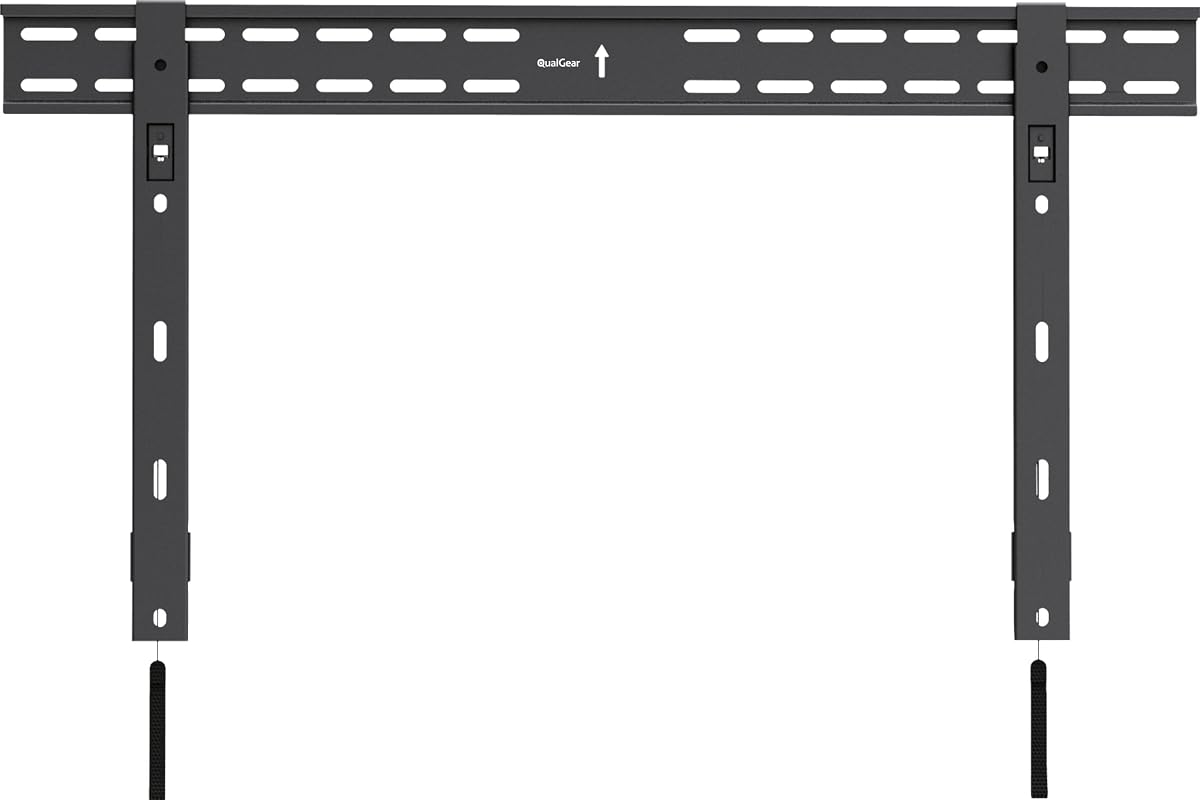
The QualGear QG-TM-002-BLK is a fixed, low-profile wall mount for televisions from 37 to 70 inches. It supports up to 88 pounds and accommodates a broad VESA range of 200×200 through 800×400 millimeters. The black design and simple mounting format are appropriate for a bedroom, office, or living room where a television is used mainly from one position.
We may earn a commission when you buy through this link, at no additional cost to you.
Because it is a fixed mount, there are no arms or swivel mechanisms to interfere with the television's position. This can result in a visually simpler installation and eliminates the possibility of accidental movement after leveling. The mount's capacity is lower than that of most heavy-duty models in this guide, but it remains meaningful for many 37- to 55-inch flat-panel televisions, depending on their individual weight.
The supplied product data is concise and does not describe included installation tools, adjustment features, or specific wall types. Buyers should therefore rely on the full manufacturer instructions for those details rather than assume that every standard wall fastener is included. It is also important to check the television's own maximum mounting weight and the VESA pattern on its rear panel before installation.
This QualGear model is best for a straightforward fixed installation involving a compatible screen below the weight limit. It may be particularly appropriate for a dedicated media area where the viewing position is already established. It is less suitable for users who need to tilt, swivel, or extend the screen to reach connections. Confirm all measurements and installation requirements before purchase.
A fixed bracket remains in one carefully selected position and contains no moving arms. This is useful when the television is viewed straight on and the goal is a stable, uncluttered wall presentation.
The 200×200 through 800×400 millimeter VESA range allows the mount to serve a varied selection of screen sizes. It remains important to verify the exact horizontal and vertical measurements rather than relying only on screen diameter.
We may earn a commission when you buy through this link, at no additional cost to you.
The Mount-It! MI-421 is a fixed micro-gap mount that places the television just 0.35 inches from the wall. It supports flat-panel and frame-style televisions from 37 to 86 inches, holds up to 165 pounds, and accepts VESA patterns from 200×200 to 600×600 millimeters. The result is one of the strongest combinations of slim profile, capacity, and practical installation features in the comparison.
We may earn a commission when you buy through this link, at no additional cost to you.
A single integrated wall plate eliminates the need to level two separate wall components independently. Magnetic contact points snap the television bracket firmly to that plate, helping prevent forward drift and preserve the flush appearance. The built-in kickstand allows the bottom of the television to be pulled gently away for port and cable access without removing the display from the mount.
Its compatibility is not universal in the broadest sense. The product is not compatible with curved televisions, televisions with protruding backs, or 100×100-millimeter VESA patterns. It does support 16- and 24-inch wood studs, poured concrete, brick, and masonry. The steel construction is listed as 4x safety-tested, and the product includes a lifetime warranty along with US-based customer support.
This is the most balanced recommendation for someone who prioritizes a very thin wall gap but also wants strong load capacity and easy cable access. It works especially well with modern flat or frame-style sets that have sufficient rear clearance. Measure the television's VESA pattern and depth, identify the wall type, and confirm stud spacing before installation. Once those checks pass, the MI-421 delivers a particularly polished feature-wall appearance.
The integrated wall plate must be positioned and leveled only once, rather than coordinated with a separate upper bracket. This simplifies the process and reduces the chance that two components will sit at slightly different angles.
Magnetic contacts help keep the display close to the wall after hanging. The kickstand can then be used to expose ports and wiring when adjustments or maintenance are needed.
We may earn a commission when you buy through this link, at no additional cost to you.
The SANUS Fixed TV Wall Mount holds 40- to 80-inch televisions about one inch from the wall and supports up to 130 pounds. It carries a 4.7 rating in the supplied data and is UL listed, giving it a strong combination of customer reception and stated construction credentials. It is designed for common television brands and for installation on both 16- and 24-inch wood studs.
We may earn a commission when you buy through this link, at no additional cost to you.
The open wall plate is designed to make in-wall cable routing easier, which can produce a cleaner finished wall than exposed cords running directly behind the television. Post-installation leveling and centering help place the screen accurately, while quick-release straps allow the television to be removed or pulled forward for cable access without tools.
Its one-inch retracted depth is not among the smallest gaps in this guide. In addition, the fixed configuration provides no tilt or swivel, so the viewing angle must be chosen during installation. The 130-pound capacity is suitable for many televisions in the stated size range, but the exact television weight must always be checked against the stated limit.
Choose the SANUS mount for a user who values straightforward removal, cable routing, leveling, and a refined installation process. It is a particularly credible option for a living room or bedroom with a dedicated viewing position. Its one-inch depth and fixed operation make it less appropriate when the absolute minimum gap or flexible positioning is the primary requirement.
The open wall-plate design provides space for cords to pass toward an in-wall cable route. When the wall is prepared for concealed wiring, this can leave a noticeably tidier final appearance.
Tool-free quick-release straps make it easier to detach or move the television when connections need attention. This convenience is a meaningful advantage over fixed brackets that offer fewer service options.
We may earn a commission when you buy through this link, at no additional cost to you.
The monTEK Ultra Slim Fixed TV Wall Mount supports 43- to 95-inch flat or curved televisions with a stated capacity of 150 pounds. Its 0.95-inch profile and VESA range of 200×200 to 800×400 millimeters make it suitable for many large modern displays, including popular 50- through 90-inch sizes.
We may earn a commission when you buy through this link, at no additional cost to you.
High-strength steel and reported 4x load testing support its stability-oriented design. The wall plate accommodates 16-, 18-, and 24-inch wood studs, including dual- or triple-stud configurations up to 32 inches apart, as well as concrete and brick. A built-in bubble level and plus-minus 1-degree horizontal adjustment help users refine the television's alignment.
Quick-release pull straps assist with installation and removal, while protective padding is intended to reduce the chance of scratches. The fixed configuration keeps the screen near the wall and avoids moving arms, but it also means the viewing angle cannot be altered after installation. At 0.95 inches, the mount is thin by general standards but not as close to the wall as the sub-half-inch alternatives.
This monTEK is a strong option for a large television, especially when a broad size range and multiple wall structures matter. It may suit a home theater, living room, or custom media wall where the viewing position is known. Before ordering, verify the television's weight, exact VESA pattern, rear shape, cable outlet location, wall type, and stud spacing. The included installation aids then make alignment more straightforward.
The 43- to 95-inch range and 150-pound capacity accommodate many large televisions. The broad VESA range is useful for matching different screen sizes without relying on a narrow pattern.
Support for multiple stud spacings and stud configurations gives the installer more options. Concrete and brick are also listed, allowing the same mount style to suit different types of construction.
We may earn a commission when you buy through this link, at no additional cost to you.
The monTEK 1.1-Inch Ultra Slim Full Motion is aimed at smaller televisions from 23 to 43 inches. It supports flat and curved screens with VESA patterns from 75×75 to 200×200 millimeters and holds up to 99 pounds. Its dual-arm steel design brings more adjustment to compact displays than the fixed alternatives in the same general size category.
We may earn a commission when you buy through this link, at no additional cost to you.
The screen can swivel plus or minus 30 degrees, tilt 3 degrees upward or 10 degrees downward, and extend from 1.1 inches at rest to as much as 10.1 inches from the wall. These controls can reduce glare, direct the display toward a seat, and make connections easier to reach. The dual-arm structure is intended to give small televisions a stable, secure feel.
The mount is compatible with 16- and 18-inch wood studs as well as concrete and brick, but not with drywall alone. Its small television range and 99-pound limit rule it out for most living-room-scale sets. Users must also confirm the exact VESA dimensions and wall type before purchase. Even with adjustment, the television remains considerably less flexible than the large-screen articulating models listed here.
This mount is a good fit for a smaller screen in a bedroom, kitchen, office, game room, or home gym. It is especially attractive when the display needs to move toward a specific viewing point but a large bracket would be unnecessary. It is not intended to compete with the Supcline, Mount-It!, or other sub-half-inch fixed mounts for minimum wall gap; its priority is compact full-motion functionality.
Swivel, tilt, and extension let a small television be redirected toward a bed, desk, counter, or exercise area. These adjustments add flexibility without requiring the footprint of a large-screen mount.
Two reinforced steel arms support displays up to 99 pounds. The dual-arm approach is intended to provide stability while the smaller television is moved or adjusted.
We may earn a commission when you buy through this link, at no additional cost to you.
The thinnest useful mount is not simply the one with the smallest stated gap. Screen size, television weight, VESA measurements, wall construction, rear clearance, adjustment needs, and cable access must all align for a safe and attractive installation.
A low-profile wall gap determines how much the television projects from a finished wall. The smallest fixed profiles in this guide range from 0.31 to 0.37 inches, while fixed options positioned at roughly 0.95 or 1 inch trade some slimness for other benefits. Articulating mounts also retract to around 1.1 inches but extend farther when the display is pulled out. Compare the retracted gap rather than the fully extended distance if a flush appearance is your priority.
Every mount has a stated television-size range, but that range does not establish compatibility by itself. The television's actual weight must remain below the mount's stated capacity, and its dimensions must fit within the supported screen-size range. Larger screens are not automatically heavier because weight depends on the panel, construction, and electronics. Use the television manufacturer's specifications rather than estimating by diagonal size, and leave the screen's safety margin in mind.
VESA describes the distance between the four mounting holes on a compatible television. The supported patterns in this comparison range from 75×75 millimeters for the compact monTEK model to 200×100 through 1200×800 millimeters for the Supcline. Measure both the horizontal and vertical spacing, including any offset from the screen's center. Also check the distance from the holes to the television's edges, because a close-fitting wall plate can be exposed when the hole pattern is small or unusually offset.
A wall mount should be attached to construction capable of supporting the television. Concrete, brick, masonry, and properly spaced wood studs are commonly addressed in the supplied data. Drywall alone is not an acceptable mounting surface for these products. On wood-stud walls, the television's VESA pattern may need to align with the studs, or the plate must provide enough adjustment to bridge their spacing. If an electrical outlet or cable pathway conflicts with the drilling area, plan the layout before installation.
The television's back must have enough space to meet the wall plate without pressing into connectors, raised housings, or fasteners. The Supcline and magnetic fixed mounts are most appropriate for televisions with relatively flat backs, while the Mount-It! MI-421 explicitly excludes models with protruding backs. The Ultra Slim Magnetic Mount also advises checking screw lengths and distance from VESA holes to the edges. A flush-looking installation can expose hardware if the television is not designed to sit close to a wall.
Fixed mounts create the cleanest and simplest arrangement because nothing moves after the television is positioned. Full-motion mounts add swivel, tilt, and extension, which can reduce glare, improve viewing from an off-center seat, and make ports easier to reach. That flexibility requires a deeper bracket and may leave the screen farther from the wall. Choose a fixed mount for a dedicated viewing position and an articulating model when the screen must serve multiple angles or seating areas.
A mount that sits close to the wall leaves less room behind the television for power and media cables. Magnetic catches, pull-down mechanisms, kickstands, open wall plates, and quick-release straps can provide temporary access to connections. The AU42 includes integrated cable management, while the SANUS open plate is designed to assist in-wall routing. If cables will remain visible, plan a recessed pathway or a separate raceway and ensure the outlet is reachable without removing the display.
Wall plates, drilling templates, bubble levels, pre-labeled hardware, visual alignment markers, and post-installation adjustment can make a substantial difference. Single integrated plates are simpler to level than two-piece arrangements, while extendable plates can help locate drilling holes. A built-in level and fine horizontal adjustment can also correct small placement errors. These features do not eliminate the need to identify studs, use suitable fasteners, or follow the included instructions.
Begin by identifying the wall construction, locating studs or suitable masonry, and checking the television's VESA pattern, weight, rear dimensions, and power requirements. Use the mount's template to establish the wall-plate position, but verify the measurements independently. Confirm that outlets and cable routes will remain accessible once the television is raised and moved into its final position.
Install the wall plate against the sound surface and use the appropriate fasteners for that construction. Attach the television-side brackets to the screen according to the manual, taking care not to overtighten screws that enter the television's rear panel. Connect power and media cables while the display is still accessible, then lift the screen onto the plate and complete any leveling, swiveling, or magnetic locking step described by the manufacturer.
For maintenance, release the mount's catch or pull straps rather than pulling forcefully on the television. Support the screen with two people when its size makes that necessary, and avoid leaving it extended for long periods unless the mount is designed for that position. Periodically check that fasteners remain tight, cable connections are secure, and the television is not pulling against a connector. Clean the wall plate and television with a soft, dry cloth, and do not spray cleaner directly onto the screen or mounting hardware.
The Supcline Ultra Slim has the smallest stated wall gap at 0.31 inches. The Ultra Slim Magnetic Mount follows at 0.37 inches, while the Mount-It! MI-421 is listed at 0.35 inches. All three use magnetic attachment and are intended to create a very flush appearance, provided the television's back and mounting hardware have adequate clearance.
The products in this guide should not be installed on drywall alone. Appropriate support includes wood studs, concrete, brick, or masonry, depending on the specific mount and its instructions. A wall anchor inserted only into drywall is not a substitute for structural support and is not appropriate for supporting a large television.
Check the television's weight, screen size, and exact VESA mounting pattern. The VESA measurement is the horizontal and vertical distance between the four mounting holes, not the television's diagonal size. Also verify the television's rear clearance, because raised connectors or a protruding back can prevent a micro-gap mount from sitting flush.
A fixed mount generally produces the cleanest low-profile result because it has fewer moving parts behind the screen. The articulating models here retract to approximately 1.1 inches but extend farther for adjustment, glare reduction, and cable access. Choose based on the importance of minimum depth versus the value of changing the viewing angle.
The requirement depends on the mount and the television. Some wall plates can bridge or shift across stud spacing, while others may require close alignment between the VESA pattern and the studs. The Supcline specifically requires measuring stud spacing, and the Perlegear's extendable plate offers more drilling-position flexibility. Always follow the instructions for the selected model.
The required clearance depends on the mount and the television's rear design. A mount advertised at 0.31 inches may still leave visible hardware if the screen has raised ports, a bulky back, or screws that are too long. Measure the distance between the television's mounting surface and the furthest rear component, then compare it with the mount's specifications.
Several can, although the method differs. The Supcline uses a pull-down magnetic catch, the Mount-It! MI-421 includes a kickstand, and the SANUS uses quick-release straps. The monTEK full-motion models extend their arms, while open wall plates can make in-wall cable routing easier. Check the mechanism before installation to ensure it suits your cable arrangement.
The mount's stated capacity should exceed the television's actual weight. Capacities in this guide range from 88 pounds for the QualGear model to 176 pounds for the Supcline. Also follow the television manufacturer's mounting requirements, because a screen may specify a lower allowable load or require particular hardware and attachment methods.
The Supcline Ultra Slim stands out for its exceptional 0.31-inch gap, 176-pound capacity, broad television range, and magnetic cable access. The Perlegear Ultra Slim is the stronger choice when meaningful swivel, tilt, and extension are needed, while the AU42 Articulating Mount provides polished adjustment features for screens up to 46 inches.
Prioritize exact compatibility before chasing the smallest profile. Measure the television's VESA pattern, weight, rear clearance, and the wall's stud spacing, then choose the mounting style that fits the room. The Mount-It! MI-421 offers an especially balanced 0.35-inch fixed design, whereas the monTEK models provide adjustable or broad-range alternatives for different television sizes.
Finally, check current product availability, included hardware, and current retailer prices before purchasing, since both specifications and commercial terms can change. A carefully sized mount that fits the television and wall correctly is more valuable than a smaller advertised gap that creates clearance, alignment, or installation problems.