
The Standing Desk Mat – Topo
4.7Editor score
Calculated three-dimensional terrain
Promotes subtle foot movement
Single-foot repositioning indentation
Seven-year manufacturer warranty
An anti fatigue mat for a standing office desk can make long work sessions more comfortable by adding cushioning, support, and grip between your feet and a hard floor. The right mat should distribute pressure without feeling unstable, accommodate natural movement, and fit the available desk space without creating a trip hazard.
We compared ten widely available options using their stated thickness, core materials, surface construction, dimensions, stability features, maintenance requirements, and suitability for standing desks. The list includes sculpted ergonomic designs, portable compact mats, extra-thick flat cushions, and multipurpose kitchen-floor mats that also work well at a workstation.
Each review explains the product’s strongest qualities, practical trade-offs, and likely buyer profile. Ratings reflect the supplied customer feedback, while comfort and suitability depend on your floor, desk, footwear, and standing habits. Product details and prices can change, so confirm the current listing before making a final purchase.
4.7Editor score
4.8Editor score

4.6Editor score
As an Amazon Associate we earn from qualifying purchases.
This side-by-side comparison covers every mat in the guide, highlighting the most important differences in thickness, dimensions, core construction, ergonomic design, surface care, and floor grip.
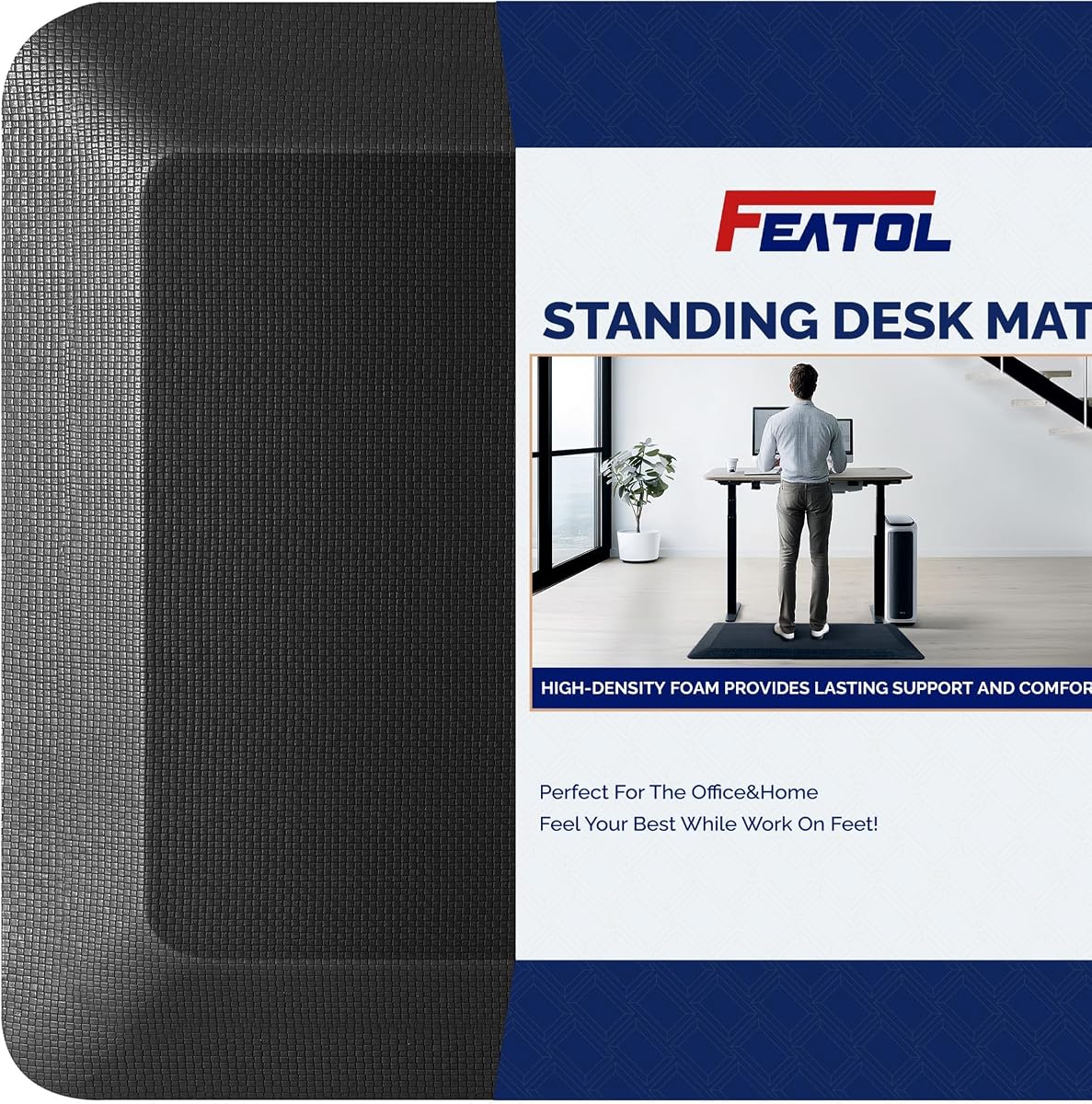


The FEATOL Anti Fatigue Mat is a 9/10-inch-thick standing floor mat with a 4.6 customer rating. It combines high-density memory foam with a PU leather top, making it a practical choice for people who want a noticeably cushioned surface beneath a standing desk or kitchen counter. Its most immediate advantage is the generous amount of material between the feet and hard flooring.
We may earn a commission when you buy through this link, at no additional cost to you.
The manufacturer says the high-density foam is designed to retain support and cushioning over extended use. A textured upper surface adds some traction, while the non-slip bottom is intended to keep the mat from moving. Seamless, angled edges taper toward the floor, reducing the abrupt vertical border that can catch a toe. The stain-resistant PU leather can be wiped with a damp cloth, making the mat practical for an office as well as a kitchen.
This is a relatively large, flat mat rather than a sculpted one, and its thick construction may take up more floor area than a compact workstation pad. A flat design also provides fewer cues for shifting weight than the dimensional terrain offered by some premium options. Nevertheless, the strong cushioning, low-maintenance surface, and careful beveling make it a sensible general-purpose choice.
Choose FEATOL if you want a deep, soft mat that can handle both work and household standing tasks. It is especially appropriate for hard floors, users who dislike the feel of thinner pads, and anyone who values simple wipe-clean care more than active terrain or compact portability. It is a strong all-around option, though the Topo models offer more deliberate movement support.
The 9/10-inch high-density memory-foam core gives this mat a substantially softer landing than a conventional rug. That extra depth can be useful on tile, laminate, or concrete where prolonged standing otherwise feels harsh.
The PU leather top is described as puncture-resistant, stain-resistant, and easy to wipe down. It is a practical finish for a shared office, home workstation, kitchen, or laundry area.
We may earn a commission when you buy through this link, at no additional cost to you.
Topo by Ergodriven is a premium standing desk mat with a 4.7 customer rating. Rather than presenting a uniformly flat cushion, it uses a calculated three-dimensional terrain intended to encourage small, natural shifts in foot and leg position. The result is a mat designed specifically for users who want more from a standing desk than basic floor padding.
We may earn a commission when you buy through this link, at no additional cost to you.
The sculpted surface is paired with ultra-thick comfort foam, creating a different experience from a conventional rectangular kitchen mat. A dedicated indentation can be grasped with a heel or toe, allowing the user to pull the mat out from beneath a desk and push it back without bending down. The product is also described as durable and PVC-free, while a seven-year manufacturer warranty offers added confidence.
The main drawback is the premium position in the market. Buyers accustomed to flat foam mats may need time to adjust to the raised and recessed terrain, and the sculpted design can be more noticeable underfoot. It is also unnecessary for someone who only wants a basic kitchen mat or who has very limited floor space. Even so, its deliberate ergonomic design is difficult for competing flat products to replicate.
Topo is the strongest recommendation for a dedicated standing workstation where user movement is a priority. It is particularly compelling for people who have tried flat kitchen mats and found them comfortable but static. If your main requirement is a soft landing and easy cleaning rather than terrain and repositioning, a less specialized model may be more economical.
The varied surface gives the feet different heights to explore, which may encourage subtle weight shifts while working. The manufacturer presents this as a way to help users move more often without interrupting their tasks.
Unlike a heavy flat mat that may require two hands, Topo includes a usable indentation. Hooking a heel or toe into it makes the mat easier to drag forward or pull away when you need access beneath the desk.
We may earn a commission when you buy through this link, at no additional cost to you.
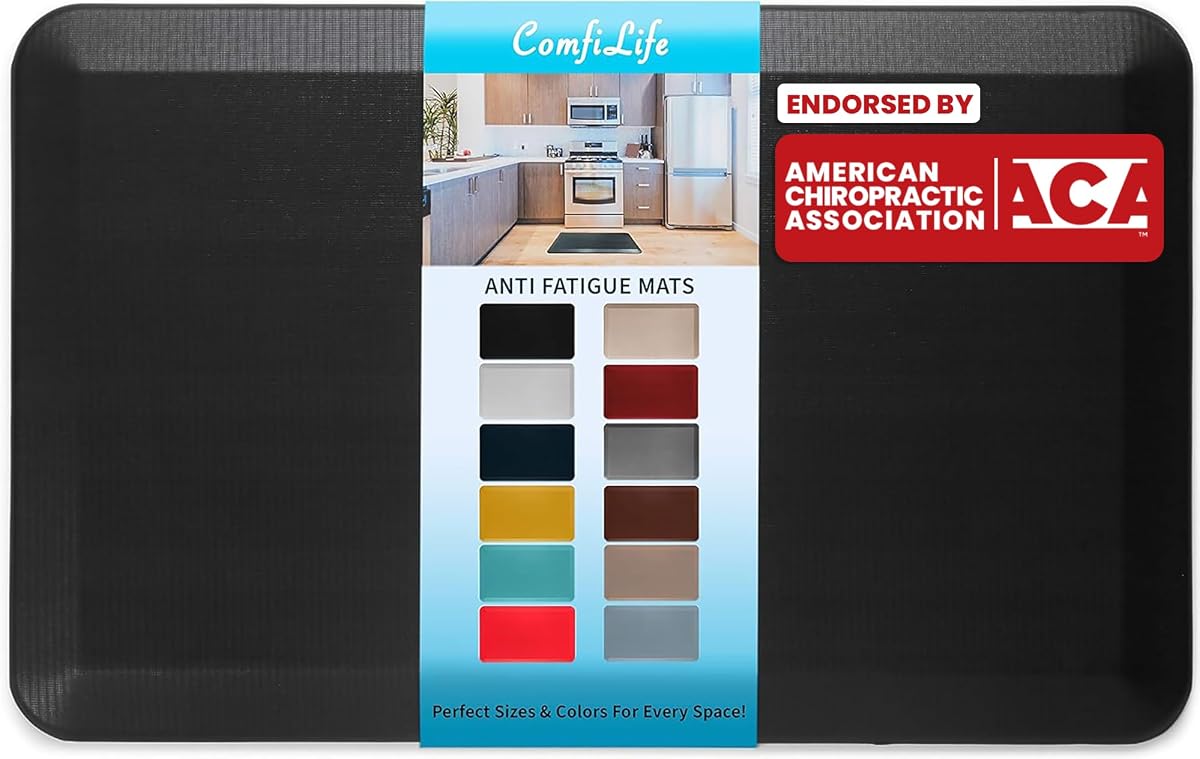
The ComfiLife Anti Fatigue Floor Mat has a 4.8 customer rating, the highest among the ten products in this guide. Its 20-by-32-inch size and 3/4-inch-thick high-density memory-foam core make it a versatile middle ground between compact pads and expansive kitchen mats. The shape fits naturally in front of many desks while covering a useful area for both feet.
We may earn a commission when you buy through this link, at no additional cost to you.
The core is engineered to cushion the feet, knees, legs, and lower back during extended standing, and the manufacturer emphasizes that it is intended to retain its support. A non-slip backing helps keep the mat in place, while the stain-resistant surface simplifies daily cleanup. Its versatility is another advantage: the same pad can serve a standing desk, kitchen, laundry room, garage, or workbench.
The straightforward rectangular design does not offer the active foot movement of a sculpted terrain mat, and it lacks a handle for fast transport. Those omissions are not serious for a mat intended to remain in one workstation. The 3/4-inch profile is also less deeply cushioned than some extra-thick competitors, but the stated density suggests a balanced, supportive experience rather than an excessively soft surface.
ComfiLife is the most versatile selection for readers who want one dependable mat for an office and other standing tasks. It is a strong choice where floor space is limited but twenty-by-thirty-two inches is sufficient, and where easy maintenance matters. Its top rating, supportive core, and practical dimensions make it the easiest overall recommendation in this roundup.
At 20 by 32 inches, the mat offers enough room to reposition your feet without becoming an oversized kitchen rug. It is a practical footprint for many height-adjustable desks and compact home offices.
The high-density memory-foam core is intended to soften contact with hard flooring while retaining its shape. The same construction makes the mat useful for cooking, laundry, garage work, and standing at a counter.
We may earn a commission when you buy through this link, at no additional cost to you.
Topo Mini by Ergodriven offers the same movement-oriented concept as the full-size Topo in a smaller package. It carries a 4.7 customer rating and uses ultra-thick premium comfort foam beneath a calculated, non-flat terrain. The compact format is especially relevant to desks with limited floor space or users who prefer a tighter working area.
We may earn a commission when you buy through this link, at no additional cost to you.
Like its larger sibling, the Mini is designed to prompt subtle movement by giving the feet varied contours to explore. Its indentation allows a user to pull the mat forward or reposition it with one foot. The product description also emphasizes durability and the absence of PFAs and PVC, separating it from some conventional foam-and-vinyl designs on material composition.
The compact size naturally limits how far apart you can place your feet or shift your stance. It may therefore be less accommodating for users with a wide stance or those who like to take frequent walking breaks around the desk. The premium market position also means it is not primarily a low-cost option. However, those limitations make direct sense for someone who prioritizes floor space and ergonomic contours over maximum coverage.
Topo Mini is best for compact standing desks, smaller home offices, and users who appreciate the Topo terrain but do not need a large mat. It offers a refined alternative to a basic flat pad for anyone seeking movement support in a reduced footprint. Buyers should weigh the size carefully against their typical stance and available desk area.
The Mini format reduces the amount of floor area occupied by the mat. That makes it easier to position in a tight office where a full kitchen-style rug would interfere with chair movement or foot placement.
It preserves the movement-promoting contours that distinguish Topo from ordinary flat anti-fatigue pads. The result is targeted support for users willing to work within a smaller foot zone.
We may earn a commission when you buy through this link, at no additional cost to you.
The Ergohead Standing Desk Mat is a portable 17-by-22-inch anti-fatigue mat with a 4.6 customer rating. It combines cushioned support with raised massage points and a built-in handle, giving it a more distinctive feature set than many basic rectangular pads. The product is aimed at users who need to move a standing mat between work areas or store it conveniently.
We may earn a commission when you buy through this link, at no additional cost to you.
The massage points are designed to promote blood circulation and muscle movement while the cushioning reduces discomfort associated with prolonged standing. Its ergonomic handle is sized to fit the fingers, allowing the mat to be carried or hung on a hook when not in use. A non-slip bottom helps limit sliding, while the stated multi-purpose design suits kitchens, bathrooms, laundry rooms, workshops, retail counters, and standing desks.
The compact 17-by-22-inch size is the main compromise. It can provide a comfortable central standing area, but it leaves less room for wide stances, frequent repositioning, or walking around the mat. The raised massage texture is also a personal preference: some users may find it stimulating, while others may prefer an uninterrupted surface. The supplied information does not specify the exact foam thickness, so the overall depth is less clear than for several competitors.
Ergohead is a compelling option for people who need portability, convenient storage, and a textured standing experience. It is especially useful for workers who split time between a standing desk and other tasks, or for anyone who wants a smaller mat that can be carried easily. Buyers should confirm that 17-by-22 inches provides enough movement room for their usual working position.
The integrated handle removes the need to crouch and pull a floppy mat from underneath furniture. It is useful for moving between a desk, kitchen, laundry room, garage, or workshop.
Raised massage points create small variations underfoot that may encourage movement. The feature adds a tactile element beyond the basic pressure-relief benefits of foam cushioning.
We may earn a commission when you buy through this link, at no additional cost to you.
This 1-inch-thick anti-fatigue mat has a 4.6 customer rating and combines a generous cushion with a practical 20-by-32-inch footprint. It is designed for people who want a visibly deep, soft pad for a standing desk, kitchen, laundry area, or workshop without paying for a sculpted premium model. The 1-inch profile is among the thickest options in this guide.
We may earn a commission when you buy through this link, at no additional cost to you.
The core uses high-density PVC foam intended to provide support, soften pressure, and resist long-term collapse. A slip-resistant backing grips most floor surfaces, while beveled edges help reduce the risk of catching a foot. The waterproof, stain-resistant upper surface can handle everyday spills and is wiped clean with a damp cloth. The stated dimensions suit a workstation without extending as far as a long kitchen runner.
The construction is flat, so it does not offer the varied contours of Topo or the raised massage points of the Ergohead model. PVC foam also may not align with environmentally focused purchasing preferences. Despite those points, the product’s combination of depth, stable base, manageable size, and easy cleaning makes it a strong value-oriented option for a standing workstation.
Choose this mat if deep cushioning and straightforward maintenance are your main priorities. It is a good fit for a home office where the floor is hard, for users who spend long periods cooking or folding laundry, and for anyone wanting substantial padding without a complicated ergonomic design. It is our best budget-focused top pick, while the ComfiLife option offers a more compact and versatile balance.
A full inch of foam provides a pronounced soft landing while remaining a straightforward flat mat. It is a useful option when pressure relief is more important than sculpted movement guidance.
The waterproof top is designed to resist water, oil, and food splatter. Wiping it with a damp cloth keeps maintenance simple in kitchens, offices, and laundry rooms.
We may earn a commission when you buy through this link, at no additional cost to you.
The UKISS 9/10-inch Extra Thick Cushioned Anti Fatigue Mat has a 4.6 customer rating. It combines deep foam cushioning with a 20-by-32-inch size, making it a credible standing desk mat as well as a kitchen-floor option. The emphasis is on dependable padding, stability, and uncomplicated cleaning rather than sculpted ergonomics.
We may earn a commission when you buy through this link, at no additional cost to you.
The high-density foam is intended to soften pressure on the feet, knees, and joints during long periods of standing. A non-skid bottom and beveled edge help the mat remain secure and reduce the chance of tripping. Its waterproof surface is listed for use around sinks, workstations, cash registers, salons, banks, restaurants, and other high-traffic areas. Dirt and oil splashes can be removed with a damp cloth or handheld vacuum.
As with most flat mats, the uniform surface provides less encouragement to move the feet than a terrain-based design. Its relatively deep construction and full rectangular footprint also may feel less convenient in a very small office. Those are modest limitations when compared with the benefits of high-density cushioning, a stable base, and a surface suited to frequent cleaning.
UKISS is a sensible pick for users who want a thick, waterproof mat that can serve several standing environments. It works well for kitchen-heavy households, shared work areas, and stationary jobs where the mat will stay in place. If active movement and easy one-foot repositioning matter most, a sculpted option is worth considering; otherwise, UKISS delivers useful core comfort.
The waterproof finish is useful around a sink, workstation, service counter, or other location where spills are likely. Routine cleaning can usually be completed with a damp cloth.
A non-skid base and beveled border address two common flat-mat concerns: sliding and abrupt edges. These details are especially useful where the mat remains in a fixed working area.
We may earn a commission when you buy through this link, at no additional cost to you.
The Amazon Basics 3/4-inch anti-fatigue mat has a 4.7 customer rating and follows a familiar, uncomplicated formula. Its 32-by-20-inch rectangular size suits standing desks, service counters, manufacturing environments, and other places where extended standing is part of the job. High-grade foam provides the primary source of support.
We may earn a commission when you buy through this link, at no additional cost to you.
The manufacturer describes the construction as durable and the mat as supportive, with the goal of reducing body and foot stress during long periods of standing. Maintenance is straightforward: a damp cloth is sufficient for routine cleaning. There is no mention of handles, massage contours, or specialized repositioning features, which keeps the product focused on delivering basic cushioning without extra complexity.
The flat profile offers fewer incentives for subtle foot movement than a sculpted ergonomic mat, and the 3/4-inch thickness is moderate rather than extreme. Some users may also want more detail about the surface material or backing system before purchasing. Even so, the product’s high customer rating, simple care requirements, and suitability for multiple professional settings support its position as a dependable general option.
Amazon Basics is a good choice for buyers who want a recognizable brand and a conventional anti-fatigue experience without specialized features. It is appropriate for a home office, retail counter, workshop, or service environment. Those prioritizing deeper cushioning can choose the one-inch models, while those wanting movement-focused terrain can consider Topo.
The mat is listed for standing desks, service counters, and manufacturing areas. That range of intended uses makes it relevant beyond a conventional office.
A damp-cloth cleaning routine is all the maintenance information provided. This simplicity makes the mat practical for settings where fast cleanup is important.
We may earn a commission when you buy through this link, at no additional cost to you.
This one-inch extra-thick anti-fatigue mat has a 4.7 customer rating and focuses on resilient PU cushioning with a wear-resistant leather surface. Its stated 140D high-pressure molded foam is designed to deliver stronger foot support, better rebound, and resistance to fatigue or long-term deformation, making it interesting for people who want a deep mat that does not feel disposable.
We may earn a commission when you buy through this link, at no additional cost to you.
The 1.2-millimeter leather cover is described as durable and easy to maintain with a damp cloth. Underneath, specially engineered anti-slip textures and micro-stick surface technology are intended to keep the mat secure. A beveled perimeter reduces trip risk, although the manufacturer recommends using the mat on a clean, dry floor for maximum grip. It is suitable for standing desks, offices, kitchen counters, laundry rooms, and workbenches.
The main practical drawback concerns shipping rather than use. The mat is rolled to protect it from creases and punctures, so it may arrive slightly curved. It needs to be laid flat for at least 24 hours, or warmed under sunlight for a short time, before reaching its original shape. This is manageable, but buyers who need the mat immediately should account for that settling period.
This product suits users who prioritize deep support, rebound, and a stable base over sculpted movement. It is a strong option for hard flooring and long kitchen or workstation sessions. Just allow adequate flattening time after delivery, and follow the clean-floor guidance to maintain the best possible grip.
The molded 140D PU foam is engineered to resist collapsing and recover well after compression. That makes it appealing for daily standing sessions where a thin, easily compressed pad may feel inadequate.
The bottom combines anti-slip textures with micro-stick technology. For reliable performance, the surface underneath should be kept clean and dry as the manufacturer recommends.
We may earn a commission when you buy through this link, at no additional cost to you.
The OSpringer Anti Fatigue Mat has a 4.7 customer rating and combines a 3/4-inch PU foam cushion with a 20-by-32-inch footprint. Its design emphasizes stable support, certified materials, and convenient delivery. The mat is positioned for standing desks, kitchens, offices, and laundry areas where users want a soft surface that resists movement.
We may earn a commission when you buy through this link, at no additional cost to you.
The core uses high-density recycled PU foam intended to absorb shock and retain support. A 1.2-millimeter PVC leather surface adds a soft-touch finish, while the backing uses more than 95 pairs of anti-slip ridges. A beveled, progressive ramp edge helps the mat remain secure and reduces the chance of a trip. The listed CP65 and GRS certifications provide additional information about the material claims.
The 3/4-inch profile is less deep than the one-inch and 9/10-inch options, and the flat surface does not encourage movement through varied terrain. The PVC leather top may also conflict with material preferences for buyers seeking entirely PVC-free construction. Nevertheless, the combination of resilient foam, pronounced backing ridges, certification details, and a progressive edge makes this a well-specified practical option.
OSpringer is worth considering for anyone who values stable construction and wants the mat to arrive flat and ready to position. It is well suited to a fixed office or kitchen standing area and should serve buyers who prefer traditional foam support with an easy-clean surface. Check the certification and material details on the current listing if those factors are central to your decision.
The backing’s 99-plus pairs of ridges are designed to improve contact with the floor and limit sliding. That is useful beneath a fixed desk where the mat is unlikely to be moved frequently.
Unlike rolled products that need time to settle, OSpringer is shipped flat. This reduces setup friction and avoids temporary curls or creases at the start of use.
We may earn a commission when you buy through this link, at no additional cost to you.
The most useful mat is one that combines appropriate cushioning, reliable grip, a workable footprint, and a surface that suits your working environment. These factors determine whether a product feels supportive or merely soft, remains secure during use, and works with your available floor space.
In short, choose a depth that feels comfortable without creating a step-like edge, and prioritize resilient support over an exaggerated initial softness.
In short, the best footprint covers your natural stance without making the mat difficult to work around or reposition.
In short, look for dense foam, rebound, and resistance to deformation rather than judging support from appearance alone.
In short, choose terrain when subtle movement is your priority, and choose a flat mat when simplicity, uniform footing, and easy cleaning matter more.
In short, secure grip and low-profile edges are essential, and the floor beneath the mat should be kept clean and dry when the manufacturer recommends it.
In short, a waterproof or stain-resistant surface with damp-cloth cleaning is the most convenient option for frequent messes.
In short, choose a handle, indentation, or suitable storage method when you expect to move the mat often rather than leaving it permanently in place.
In short, check the core and cover materials, any stated certifications, and your sensitivity to PVC or PFAs before finalizing your choice.
Start by placing the mat on a clean, level floor directly in front of the desk, with the working edge clear of chair wheels and footrests. Let the mat settle fully before using it if it arrived rolled or curved. Stand with your feet placed naturally rather than both heels fixed at the rear edge. You can change position, shift weight, and take short walking breaks as needed; the mat is meant to complement movement rather than require a rigid posture.
Wipe the surface regularly with a damp cloth and address spills promptly. Follow any product-specific cleaning instructions and avoid immersing foam cores or using harsh chemicals unless the manufacturer explicitly allows them. Clean the underside occasionally so dust or debris does not reduce traction. If the mat shifts, move it to a cleaner floor rather than adding an unapproved pad beneath it, which could change the stability and effective height.
Inspect the mat periodically for curling, splits, permanent compression, or a damaged backing. Rotate or reposition it if one area receives consistently heavier wear. For rolled products, allow the stated settling period and keep the mat away from sharp objects before it is fully flattened. With appropriate care, a well-chosen mat can provide a more comfortable and stable standing setup throughout the workday.
A 3/4-inch mat is a practical starting point for many users, while 9/10-inch and 1-inch options provide deeper cushioning on hard floors. Thickness alone does not determine comfort; foam density, rebound, and surface design also matter. Choose a profile that feels supportive without making the mat excessively bulky or creating an awkward step at the edge.
Yes, provided its dimensions suit your available floor space and the material is appropriate for the environment. Many kitchen mats use the same foam cores, wipe-clean surfaces, non-slip backing, and beveled edges favored in anti-fatigue desk products. A desk-specific sculpted mat may offer more movement cues, while a multipurpose kitchen mat often delivers simpler and flatter support.
A textured or sculpted mat may be preferable if you want varied contours that encourage subtle foot movement. A flat mat can still be effective for pressure cushioning and may feel more familiar or predictable. The best choice depends on your comfort preferences, footwear, and whether the raised texture feels supportive or distracting to you.
Look for a non-slip or non-skid backing, a textured base, and beveled edges. Keep the floor beneath the mat clean and dry, especially when the manufacturer gives that instruction, because dust, wax, oil, and moisture can reduce traction. Avoid placing an additional slippery layer under the mat unless it is specifically approved.
Wipe the mat whenever dirt or spills appear, and perform a more thorough routine cleaning according to the manufacturer’s directions. A damp cloth is the primary method cited for the leather-surfaced models in this guide. Prompt cleanup helps prevent stains and keeps the foam core from absorbing unnecessary moisture.
Allow it to lay flat for the manufacturer’s recommended settling period, which can be at least 24 hours for some rolled products. Avoid using it during that time because the edges may remain curled. Gentle warmth can help speed flattening, but do not use excessive heat, and keep the mat away from sharp objects while it is still vulnerable.
No. Width can provide more room to shift your feet and stance, but comfort depends more heavily on cushioning quality, core density, surface design, and stability. A compact mat may be ideal for a small desk, while a larger mat is useful if you naturally move your feet or stand in several positions.
Yes, many of the reviewed mats are marketed for kitchens, offices, laundry rooms, garages, workbenches, and other standing environments. A portable model with a handle is especially convenient, while a larger fixed mat may be better for a dedicated workstation. Choose a surface and size that suit both the primary and occasional locations.
The ComfiLife Anti Fatigue Floor Mat is the strongest overall choice because it combines the highest listed rating, dense 3/4-inch cushioning, a practical 20-by-32-inch footprint, non-slip backing, and simple care. Topo is the premium pick for users who want movement-focused terrain, while the one-inch TranquilMoments mat delivers deep cushioning and easy maintenance at a value-focused level.
Prioritize the features that affect your daily experience: sufficient footprint, resilient foam, a stable base, low-profile edges, and a surface you can keep clean. Choose sculpted terrain if active movement matters, a handle if you will carry the mat around, and extra thickness if your floor is particularly hard. Your stance, footwear, workspace, and tolerance for texture should guide the final decision.
Ratings, product details, availability, and prices can change over time, so review the current listing and seller information before purchasing. Compare the dimensions with your desk area, confirm the stated materials and care requirements, and verify that the mat’s shipping condition will fit your setup. Those final checks will help you choose an anti-fatigue mat that remains comfortable and practical in real use.