
Behringer Super-X Pro Cx3400
3.9Editor score
Multiple crossover operating modes
Linkwitz-Riley filtering
Individual output limiters
Switchable twenty-five Hz protection
Explore the 10 best audiophile active crossover options for home audio, studios, and cars, comparing filters, routing, controls, connectivity, power, and
An audiophile active crossover divides a full-range signal into frequency bands so each speaker or amplifier receives only the range it handles best. A capable unit can reduce driver stress, improve tonal control, clarify imaging, and help a carefully matched system sound more coherent and dynamic.
The products in this guide cover electronic rack crossovers, car-audio processors, home hi-fi crossovers, and a complementary super-tweeter with integrated filtering. We compared architecture, filter capability, input and output options, adjustment controls, power handling, installation needs, and suitability for different systems.
Each review explains what distinguishes the product, where it fits most naturally, and which compromises buyers should understand. Ratings and specifications reflect the supplied product information, while availability, configuration, and prices can change, so verify current listing details before purchasing.
3.9Editor score

5.0Editor score

4.5Editor score
The comparison below places each active crossover according to its real-world function, from fully analog home-hi-fi processing to balanced PA routing, vehicle-specific bass control, passive-style speaker integration, and high-frequency refinement.




The Marchand XM66 is a focused, fully analog two-way electronic crossover created for hi-fi and audiophile applications. Its supplied rating is 5.0, and the specification sheet centers on clean analog processing, a digital crossover-frequency display, RCA connections, optional balanced connections, and adjustable filter slopes. It is a refined choice when the system needs a transparent division between bass and treble rather than a large collection of vehicle-oriented controls.
We may earn a commission when you buy through this link, at no additional cost to you.
The most appealing feature is the stated fully analog signal path. Rather than relying on digital conversion for crossover work, the XM66 keeps its processing in the analog domain. Its crossover frequency can be adjusted from 20Hz to 4000Hz, giving an installer room to match the transition to different cabinets, drivers, and listening spaces. A twenty-hertz infrasonic filter and filter slopes reaching twenty-four decibels per octave add useful protection and control below the intended crossover region.
Its limitations are equally clear. This is a two-way unit, so it does not independently manage low, mid, and high bands in a three-way or four-way system. While RCA input and output are listed and balanced connections are available, buyers should verify the exact configuration received. A display-based frequency setting is convenient, but installation still demands careful measurement and comparison with the target speakers to avoid an abrupt or poorly integrated transition.
The XM66 suits listeners building a carefully engineered two-way hi-fi system, particularly those who value analog processing and discrete control over crossover frequency. It is also a sensible choice for an experienced installer who wants a dedicated audiophile-oriented crossover without a digital interface. For those needs, the Marchand is our Editor's Choice, offering the strongest combination of audiophile positioning, focused architecture, and documented adjustability in the list.
The fully analog architecture is the XM66's defining feature. It avoids digital crossover conversion, making the unit especially relevant to listeners who prefer an explicitly analog signal path in a high-end two-way system.
The 20Hz–4000Hz setting range accommodates many driver pairings, while the twenty-hertz infrasonic filter and up-to-twenty-four-decibel slopes help protect the intended high-frequency section.
We may earn a commission when you buy through this link, at no additional cost to you.
The Professional 2/3-Way Stereo & 4-Way Mono Audio Crossover is built for listeners who need one processor to support several kinds of amplified-speaker systems. Its 4.3 supplied rating reflects a versatile package that includes two-way or three-way stereo operation and four-way mono routing. Balanced XLR input and output are particularly valuable for studios, installed systems, live venues, and longer cable runs where noise rejection matters.
We may earn a commission when you buy through this link, at no additional cost to you.
Its most useful strength is adaptability. The same unit can divide a stereo monitor system, handle a three-band configuration, or provide dedicated control of low, low-mid, high-mid, and high frequencies in mono. Independent output-gain controls make it possible to balance each band without moving the main preamplifier, while phase-invert switches and forty-hertz low-cut filters offer practical correction tools. A front-panel LED matrix makes the active mode and signal status easy to identify.
The supplied information leaves some important technical questions unanswered, including exact crossover frequencies, filter slopes, maximum signal level, and output power. Those details are essential when matching a crossover to sensitive studio monitors, high-output PA speakers, or a precisely engineered home system. It is also not described as a specifically audiophile domestic product; its rugged professional enclosure and live-sound orientation make it more immediately suitable for installers, rehearsal spaces, small venues, and technical audio users.
Choose this crossover when topology flexibility and balanced connectivity matter more than a compact domestic footprint. It can simplify a system that might otherwise require several processors, while the band controls help the installer establish a practical working balance. For a fixed home listening room, the simpler Marchand may be more elegant, but for a multi-format studio or PA inventory, this model earns consideration as the most versatile professional option here.
Two-way and three-way stereo modes cover common monitor arrangements, while four-way mono mode creates separate low, low-mid, high-mid, and high channels for more demanding installations.
XLR connections support cleaner signal transfer and practical troubleshooting. Front-panel LEDs reduce uncertainty when changing modes or checking whether a signal is present.
We may earn a commission when you buy through this link, at no additional cost to you.
The Professional 2/3 Way Stereo/4 Way Mono Crossover combines flexible signal routing with detailed per-band control. Its supplied rating is 4.4, placing it among the stronger-reviewed products in this guide. The unit supports two-way stereo, three-way stereo, and four-way mono operation, making it appropriate for stages, studios, DJ systems, conference rooms, and installed venues where different speaker arrangements may need to be supported.
We may earn a commission when you buy through this link, at no additional cost to you.
The control layout is more granular than that of a basic frequency divider. Separate output-gain controls for each band allow levels to be balanced in the final system, individual phase-reverse switches can help resolve polarity problems, and a dedicated low-cut switch engages a forty-hertz, twelve-decibel-per-octave Butterworth high-pass filter. These tools are valuable because correct crossover frequency alone does not guarantee a balanced transition or a phase-compatible subwoofer.
The trade-offs concern installation and transparency. The unit is documented for 110-volt operation, which may require an appropriate power supply outside that environment. Exact selectable crossover points, maximum input level, and output headroom are not included in the supplied specifications, so installers should confirm them before purchasing. Its emphasis on rugged PA use also makes it less purpose-built for a minimalist domestic hi-fi chain than the Marchand XM66.
This crossover is a strong choice for a technically minded buyer who wants both stereo and mono flexibility without sacrificing independent band adjustment. Its phase controls and low-cut option are especially useful in systems that include a subwoofer. For a dedicated listening room where simplicity and analog refinement dominate, choose a more focused two-way unit; for stage, studio, or event work, this model offers a capable control set.
Independent output gains, phase reversals, and a selectable low-cut filter give the installer the tools needed to balance a system rather than merely divide its frequencies.
The front-panel LED matrix clearly shows the selected mode, helping operators move between stereo and mono configurations without guessing which routing is active.
We may earn a commission when you buy through this link, at no additional cost to you.
The 1 Way Crossover is a straightforward high-pass network for adding or replacing the tweeter section of a car, home-hi-fi, or professional speaker. It carries a supplied rating of 5.0 and targets a narrower job than the full electronic processors in this list: isolating the high-frequency range from approximately 2200Hz to 20kHz. That focus makes it approachable for installers who understand passive speaker wiring and want an easy integration path.
We may earn a commission when you buy through this link, at no additional cost to you.
The product uses 2.2µF and 2.5µF capacitors rather than a single-capacitor design, with the stated intent of creating a smoother, more natural high-frequency roll-off. A heavy-duty inductor is included to minimize signal loss, while the flame-retardant PCB, thick copper traces, and large solder points are designed to support durability. Pre-wired high-purity copper leads and screw-type connectors remove much of the assembly work associated with handmade crossover networks.
This is a passive-style one-way crossover rather than a rack-mounted electronic signal processor. It cannot create separate low- and high-frequency outputs, independently balance levels, or offer phase and subsonic controls. Its stated eighty-watt RMS capacity applies within the documented four-ohm to ten-ohm range, so users should not assume suitability for a different amplifier arrangement or an unrestricted speaker load.
The product is best for a listener replacing a single tweeter crossover, adding tweeters to compatible speakers, or creating a simple high-pass path in a car or home system. It is less appropriate for a full multi-way audiophile build because its scope is deliberately narrow. For a simple, guided installation with screw terminals and a purpose-built high-pass network, it offers a convenient solution.
Separate 2.2µF and 2.5µF capacitors support a more gradual high-frequency transition, helping the tweeter avoid receiving unwanted midrange and bass energy.
Pre-wired leads, screw terminals, heavy copper traces, and large solder points make this a practical choice for straightforward speaker upgrades and replacement networks.
We may earn a commission when you buy through this link, at no additional cost to you.
The Autotek ATK2 3X is a vehicle-oriented active crossover processor with a supplied rating of 4.2. It supports two-way and three-way operation, includes level adjustment, and is designed around the needs of a car audio system where the front stage, rear fill, and subwoofer may each need different treatment. The included remote bass control is a particularly relevant feature for daily driving.
We may earn a commission when you buy through this link, at no additional cost to you.
Its main benefit is control over how a subwoofer integrates with the rest of the system. The processor can optimize amplifier levels and frequency relationships, while a phase-shift switch reverses the subwoofer output by 180 degrees relative to the front and rear outputs. That capability can help correct a polarity problem introduced by placement, wiring, or driver orientation. The eight-point-five-volt output and adjustable crossover levels are also useful for matching different amplifier inputs.
As with most vehicle processors, the product requires careful installation and a compatible sound system. The supplied details do not state crossover frequency ranges, filter slopes, or the full input and output connector arrangement, so those points should be confirmed with the seller. It is also not a general home-theater processor: its strongest identity is vehicle bass management rather than neutral reference monitoring or fine-grained studio routing.
Buyers should consider the ATK2 3X when they want one vehicle processor to manage a subwoofer and multi-speaker arrangement, especially if dashboard remote bass control is important. It may suit a build with separate front, rear, and subwoofer channels. For a home stereo requiring a fully specified analog crossover, the Marchand provides a more clearly defined audiophile proposition.
The 180-degree phase shift can help align bass timing with the front speakers when physical placement or wiring would otherwise create a polarity mismatch.
Eight-point-five-volt output, level adjustment, and built-in crossover functions make the processor easier to integrate with the output stages of a multi-channel vehicle system.
We may earn a commission when you buy through this link, at no additional cost to you.
The Audiopipe XV-6-V15 is the most extensively featured vehicle crossover in the guide, with a supplied rating of 4.5. It is a six-way active crossover with separate front, rear, and subwoofer inputs, high-pass outputs for the front and rear, and a non-fade low-pass output for the subwoofer. That architecture suits a sophisticated car system in which several speaker groups need distinct frequency and level treatment.
We may earn a commission when you buy through this link, at no additional cost to you.
A multiplier switch allows the crossover frequency to be adjusted continuously, giving the installer more freedom than a fixed set of frequency switches might provide. The non-fade low-pass output is designed to create a smooth transition between the subwoofer and front speakers. Separate front and rear high-pass outputs keep lower frequencies away from those driver groups, while an adjustable low-pass gain and subwoofer bass boost provide additional low-end shaping.
Several thoughtful vehicle details distinguish it. A remote bass knob allows subwoofer level changes from the dashboard, and a ground-loop isolation input circuit is intended to reduce unwanted interference. The power LED provides a quick operating-status check, and four ISO mounting holes with a removable trim ring support custom installation. The stated total harmonic distortion is 0.04% at 1kHz, signal-to-noise ratio exceeds 105dB, and dimensions are 230 by 160 by 38 millimeters.
This is a premium choice for installers who need a centralized, multi-output vehicle processor rather than a simple home crossover. The number of bands and controls can be excessive for a basic two-way system, and correct setup demands careful matching. Even so, its combination of flexible routing, remote bass control, ground-loop isolation, and compact dimensions makes it a strong pick for a complex but well-planned automotive audio installation.
Separate front, rear, and subwoofer inputs support a more layered system than a standard two-way divider, while dedicated high- and low-pass outputs provide clear signal destinations.
The remote subwoofer knob, ground-loop isolation circuit, power indicator, and ISO mounting points focus on convenience and dependable integration in a real vehicle.
We may earn a commission when you buy through this link, at no additional cost to you.
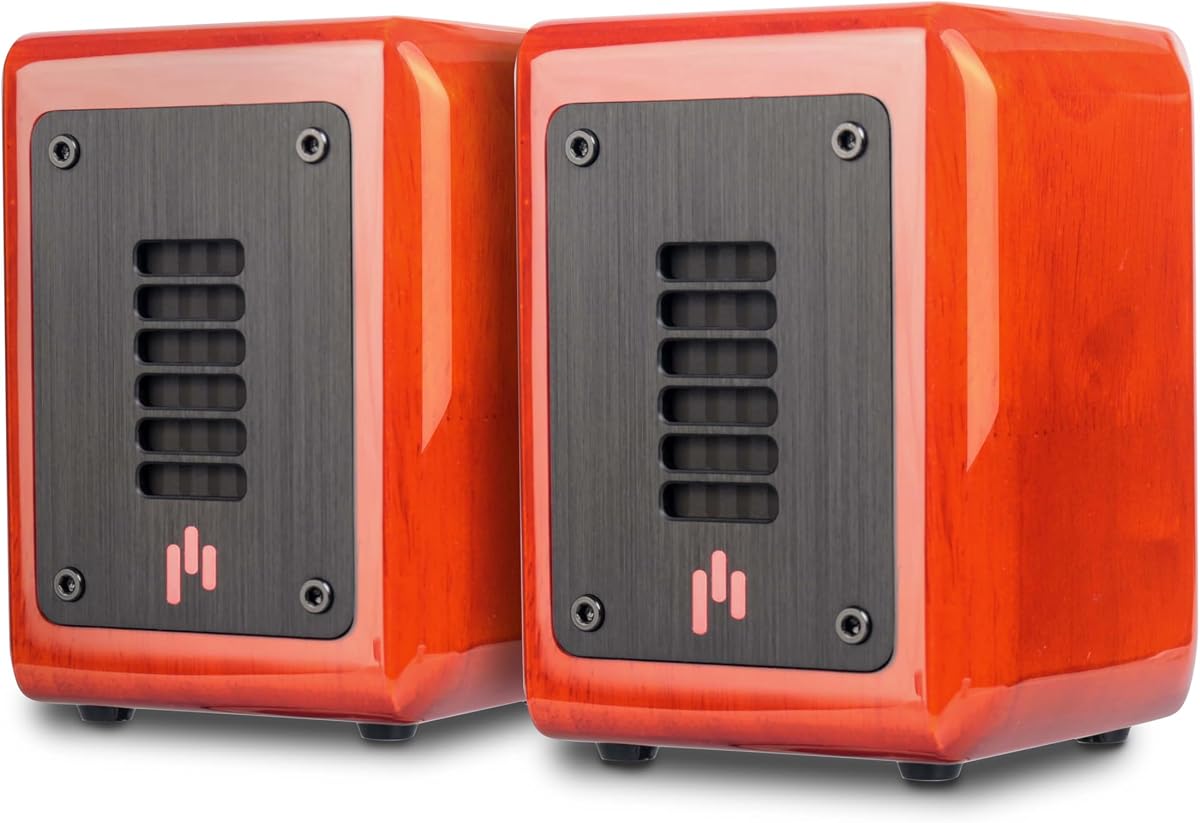
The Aperion Audio PST MKII is a matched pair of planar-ribbon super tweeters designed to extend and subtly refine the upper frequency range of an existing home-audio system. Its supplied rating is 4.0. Rather than functioning as a conventional full-system crossover, it complements compatible main speakers by adding coverage from approximately 8000Hz to 40000Hz through an integrated high-pass filter with five preset crossover points.
We may earn a commission when you buy through this link, at no additional cost to you.
The planar magnetic design offers a gentler alternative to a horn tweeter. Aperion describes the result as a delicate extension that can blend with many speaker brands, which is valuable for listeners who want a high-frequency upgrade without replacing an entire pair of loudspeakers. The super tweeters are designed to sit on top of the existing enclosures, creating a visually straightforward way to assess whether the added upper register improves the system.
Compatibility is the central constraint. The supplied guidance says the product works best with speakers having 85 to 93dB efficiency, and Aperion explicitly advises that the super tweeters are not intended to be extremely loud. They provide subtle reinforcement rather than serving as high-output main drivers. The five crossover presets are useful, but selecting a sensible blend requires listening and possibly comparing the super tweeters switched in and out.
The PST MKII is best for an audiophile who already owns a capable, efficient main pair and wants to investigate the subtle addition of very high frequencies. It is less suitable for low-efficiency speakers, extremely loud listening, or anyone seeking a full active crossover with low-, mid-, and high-band outputs. Buyers should check efficiency and compatibility carefully, then treat the product as a refinement rather than a guaranteed system upgrade.
The planar-ribbon super tweeter is designed to add a restrained sense of air and detail from 8000Hz to 40000Hz without behaving like a conventional high-output horn tweeter.
Five preset high-pass crossover points let the listener test several transitions between the main speakers and the super tweeters, making the addition easier to evaluate.
We may earn a commission when you buy through this link, at no additional cost to you.
The Four-Way Hi-Fi Crossover is a speaker-integrated frequency divider intended for home theaters and dedicated music rooms. Its supplied rating of 3.6 is the lowest in this group, but that figure should be considered alongside the product's unusual four-way design. It uses a dual-high and dual-low arrangement with an adjustable crossover around 2600Hz to 2650Hz, giving each of four driver groups a defined section of the spectrum.
We may earn a commission when you buy through this link, at no additional cost to you.
The stated power handling reaches 400 watts, and compatibility covers speaker impedances from two to six ohms. Its construction uses oxygen-free copper inductors in the two high-frequency channels, multiple specialty capacitors, and a routing switch for the tweeter circuit. Ten solderless terminals are intended to simplify installation by reducing the need for soldering when connecting the network to the drivers and amplifier channels.
The trade-offs are understandable from the supplied information. A nominal 400-watt capacity does not replace careful impedance matching, and the product listing does not detail every filter slope, resistance value, or attenuation level. It is also a passive-style network, so it cannot independently adjust the output level of each band, reverse phase, or accommodate a separate subwoofer amplifier in the way an electronic crossover can. The four-way topology demands a suitably planned cabinet and channel layout.
This crossover is most relevant to a builder creating a custom four-driver home-theater or hi-fi speaker system with dedicated high and low groups. Its solderless terminals and broad stated impedance support reduce wiring friction, while the high stated power capacity suits many conventional home systems. Buyers should compare the internal design with the drivers in advance and confirm that the intended cabinet architecture matches the network's requirements.
The stated 400-watt handling and two-to-six-ohm compatibility make the network relevant to powerful home-theater and music-room configurations, subject to correct channel matching.
Ten solderless terminals and a switchable tweeter route reduce assembly complexity while allowing the installer to adapt the upper-frequency wiring arrangement.
We may earn a commission when you buy through this link, at no additional cost to you.
The Taramps Crx4 is a compact electronic crossover processor designed around four RCA channels, low and high frequency routing, and an eight-volt RMS output level. Its supplied rating is 4.5. The product is particularly relevant to car-audio installations that need a centralized processor to distribute and shape signals among several amplified channels without using a large rack unit.
We may earn a commission when you buy through this link, at no additional cost to you.
Its appeal lies in straightforward integration and flexibility. Customizable sound adjustments give the installer control over the tonal balance, while the built-in bass boost adds a low-frequency option for a subwoofer channel. Four-channel RCA connectivity fits many aftermarket amplifier systems and makes comparison with the main processor options easier. The stated dimensions of 190 by 145 by 40 millimeters and weight of 560 grams reinforce its compact, installation-friendly design.
The documentation supplied is brief and does not identify exact crossover frequencies, filter slopes, input impedance, or the precise meaning of each control. It also describes the device as a car-audio processor with an equalizer and bass boost, which means it may be less transparent or less precisely specified than a minimalist audiophile crossover. Verification of the live controls and signal path is advisable before building a high-end installation around it.
The CRX4 is a good candidate for a compact four-channel vehicle system where the owner wants level control, frequency division, and bass enhancement in one box. It may be particularly convenient when the amplifier ecosystem is already designed around RCA interconnects. For a neutral home system, however, its vehicle emphasis and limited specifications make a more explicitly analog or professional unit easier to evaluate.
At 190 by 145 by 40 millimeters and 560 grams, the processor is easy to position in a vehicle installation where every centimeter and gram of wiring matters.
RCA inputs and outputs, eight-volt RMS output, adjustable levels, and bass boost provide a familiar foundation for conventional aftermarket amplifier systems.
We may earn a commission when you buy through this link, at no additional cost to you.
The Behringer Super-X Pro Cx3400 combines stereo two-way, stereo three-way, and mono four-way processing in a single unit. Its supplied rating is 3.9, but the specification list contains several features associated with professional crossover design: twenty-four-decibel-per-octave Linkwitz-Riley filters, flat summed amplitude response, zero phase difference, individual limiters, and phase-reverse switches for each output.
We may earn a commission when you buy through this link, at no additional cost to you.
Those details give it a broad operational range. The stereo modes suit standard multi-driver monitor or hi-fi arrangements, while mono four-way operation supports more elaborate professional systems. A switchable twenty-five-hertz subsonic filter can protect low-frequency drivers from infrasonic content. The unit also provides switchable equalization for constant-directivity horns, extending its usefulness in PA applications where horn behavior must be managed.
The primary concern is the limited information in the supplied listing. It does not state connector types, maximum signal levels, or exact frequency selections, and the presence of individual limiters means users should understand how those controls interact with downstream amplification. A crossover can only improve a system when its frequencies, levels, and phase relationships are properly matched; installing the unit is therefore only the first stage of setup.
The Cx3400 is our Best Budget pick because it delivers a meaningful set of professional crossover functions without asking the buyer to change architecture for every system. It is particularly useful for studios, rehearsal rooms, small venues, and home systems that may evolve from two-way to three-way or four-way operation. Choose it for flexibility and useful filter behavior, then verify current physical details and control labels before installation.
Twenty-four-decibel-per-octave Linkwitz-Riley filters are designed for precise separation, while the stated flat summed response and zero phase difference support coherent system integration.
Individual output limiters and a switchable twenty-five-hertz subsonic filter add useful safeguards for amplifier channels and low-frequency drivers when configured correctly.
We may earn a commission when you buy through this link, at no additional cost to you.
The right crossover depends on the speakers, amplifiers, signal path, installation environment, and degree of control required. Comparing architecture, electrical specifications, and practical features prevents an attractive feature list from masking an incompatible system design.
Choose a topology that matches your system rather than the most complex option available.
Prioritize documented filter behavior, slope, and phase characteristics over vague precision claims.
Use phase controls as part of a measured setup process, not as a substitute for correct wiring.
Verify connector compatibility, voltage requirements, and gain structure before ordering.
Choose protection features that are adjustable and can be aligned with your actual amplifier and drivers.
Treat stated power and impedance figures as limits tied to a specific design, not blanket permission for any speaker.
Choose a format that fits the physical equipment and will support the adjustments you expect to make.
Favor a clear signal path and relevant adjustments over a long list of functions you will never use.
Begin with a complete inventory of the system. Identify the source, preamplifier or processor, crossover, amplifiers, speakers, wiring, and room or vehicle placement. Note the impedance of every driver group and the required output connection. This prevents a configuration error from being mistaken later for a crossover problem, especially in multi-band systems where each band may use a different amplifier and filter setting.
Install the unit with power disconnected, support the chassis securely, route cables away from power leads, and observe the documented voltage requirement. Connect inputs and outputs according to the channel labels, set all gains to conservative starting positions, and confirm polarity. If the unit includes a subsonic filter, high-pass control, phase switch, limiter, or bass boost, leave it inactive during the first comparison so the uncorrected system can be heard clearly.
Choose an initial crossover frequency based on the manufacturer specifications for the drivers, then verify it through measurement and familiar recordings. Set relative band levels, correct phase, and add protection or bass enhancement only after the basic route is balanced. For a vehicle, use the remote only after the static balance is correct. Store the final settings, and make small, deliberate adjustments rather than changing several controls at once.
An active crossover splits an audio signal into frequency bands before those bands reach separate amplifier channels. Because filtering occurs before amplification, each power amplifier handles only its assigned frequency range. This can reduce the load placed on a single amplifier and allow the band levels, crossover points, and phase relationships to be adjusted more precisely.
Neither approach is automatically better. Passive networks are simpler and keep the crossover inside the speaker, while active crossovers provide more control over routing, levels, phase, and protection. Active systems require more channels, additional equipment, and careful configuration. They are most compelling when several driver groups need independent adjustment.
A two-way system needs separate low- and high-frequency paths, which is appropriate for a straightforward two-driver or conventional multi-driver speaker. Three-way and four-way arrangements provide additional band control but also require more drivers, amplifier channels, filters, and careful crossover design. Choose the band count required by the cabinet and driver plan rather than by the number of available controls.
Some products, particularly the professional stereo units in this guide, support two-way, three-way, and four-way modes. That flexibility can make one unit useful for changing installations, but the selected mode must match the amplifier channels and speaker wiring. For a permanent audiophile system, dedicated routing may be easier to operate and less prone to setup mistakes.
Phase controls reverse a selected output so it operates 180 degrees out of phase. They can correct a polarity mismatch between a subwoofer and main speakers or help align multiple drivers around the listening position. A phase switch is not a universal tone control, and the correct setting must be determined through listening and measurement.
Balanced connections can reduce noise and are especially useful with long cable runs, professional installations, and sensitive studio systems. They are not automatically essential for every home setup, particularly when the source, preamplifier, crossover, and amplifier sit close together. Connector compatibility and grounding practice matter more than the label alone.
The manufacturer's recommended range should be the starting point because drivers have different directivity, impedance behavior, and off-axis response. Room placement, cabinet design, amplifier response, and nearby boundaries can shift the ideal transition. Start with the documented value, then verify the result through measurements and listening rather than making a large change without evidence.
No. A super tweeter is a specialized high-frequency addition designed to complement compatible main speakers, and it often includes only a high-pass filter for its own output. It cannot replace the low-, mid-, and high-band routing of a full active crossover. Its usefulness also depends on speaker efficiency, system design, and the listener's preference.
The Marchand XM66 is the leading audiophile-focused choice in this guide, combining a fully analog two-way architecture, a 20Hz–4000Hz adjustment range, twenty-four-decibel slopes, and a clear frequency display. The Audiopipe XV-6-V15 stands out as the premium vehicle option, while the Behringer Super-X Pro Cx3400 delivers broad topology support and professional filter features at the budget end of the list.
Prioritize compatibility before features. Confirm the number of speaker bands, connector type, input and output level, power requirements, and installation environment. Then look for controls that solve a real problem: phase reversal for polarity, low-cut filtering for protection, independent gain for band balance, and remote bass control for a vehicle. Simpler does not mean less capable if it matches the system precisely.
Product availability, configuration, and prices can change, so check the current listing and manufacturer documentation before ordering. Confirm that the unit is electrically compatible with the amplifiers and drivers, and allow enough time for careful setup. A correctly selected crossover can provide cleaner band allocation, better integration, and a more convincing sense of control across the entire listening system.