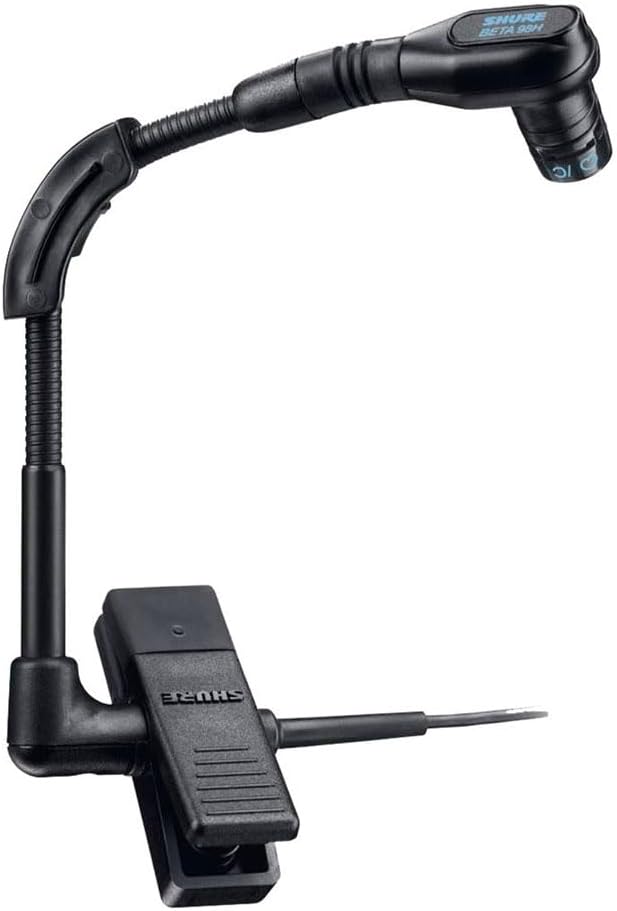
Shure BETA 98H/C
4.6Editor score
Tailored cardioid condenser response
Ten-foot attached XLR cable
Secure ratcheting gooseneck
Explore the best clip on saxophone microphones, comparing wireless range, sound pickup, clip design, battery life, latency, and instrument compatibility for
Clip on saxophone microphones make it easier to amplify, record, teach, and stream without leaving a stand in front of the instrument. The right model balances clean pickup with a secure, comfortable attachment, dependable wireless performance, and controls that remain useful on stage, in rehearsal, or during lessons.
The products in this guide were compared using the supplied specifications, customer ratings, wireless technology, transmission range, microphone placement, battery life, connection options, and supported instruments. The list includes wired condenser models, versatile UHF and 2.4G systems, and an accessory clip for players assembling their own recording setup.
Each review explains the strongest reasons to consider a particular microphone, along with its meaningful limitations. The overall rankings reflect the balance of the supplied features rather than an assumption that wireless is always preferable. As with all marketplace listings, availability and prices can change, so confirm the current details before purchasing.
4.6Editor score

4.3Editor score

3.6Editor score
The comparison below covers the ten supplied clip on saxophone microphone products, highlighting connection style, pickup characteristics, wireless capability, mounting approach, battery information, and supported instruments.


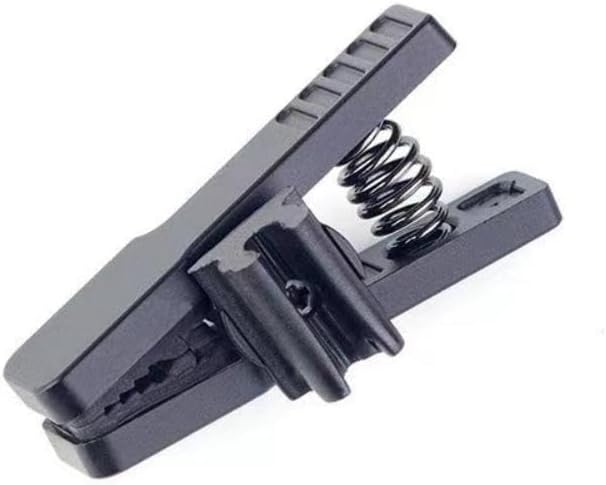


The SGPRO TR15 is a wireless clip on saxophone microphone system with a 4.3 customer rating and a broad collection of performance-oriented features. Its most appealing combination is a stable 196-foot stated transmission range, twenty selectable UHF channels, adjustable pickup, and a rubber-padded clip designed to grip a saxophone without the pressure associated with screw-on mounts.
We may earn a commission when you buy through this link, at no additional cost to you.
The included LCD provides practical information such as volume, RF and AF signal strength, channel, echo, sensitivity, and battery life. That level of feedback is useful when moving between rehearsal rooms, stages, and outdoor settings. A bronze gooseneck is designed to remain in position after adjustment, while the compact transmitter and receiver keep the overall setup manageable. The system also supports EQ and echo adjustments, giving players a way to refine the amplified or recorded result without relying entirely on downstream mixing.
Its main limitation is the stated four-and-a-half-hour battery endurance. That may cover a rehearsal, lesson, or ordinary performance, but it is less reassuring for long outdoor events or multi-set programs. The included charger can charge the transmitter and receiver together, although a phone charging adapter is not included. Region differences may also mean some units have an older detachable gooseneck configuration rather than the newer fixed version.
The TR15 is a strong recommendation for players who want one wireless package to cover saxophone, trumpet, French horn, tuba, and trombone while retaining useful onboard controls. It ranks first because it balances range, mounting protection, channel selection, sound-shaping features, and portability better than many similarly positioned systems.
Separate EQ and echo levels, along with visible signal and battery indicators, make the TR15 practical for quick setup and ongoing adjustment. The controls are particularly helpful for performers moving between different rooms or for teachers who need a repeatable way to monitor instrument levels.
Virgin rubber padding supports a firm grip while helping protect the instrument from marks. The steady bronze gooseneck reduces the need for repeated readjustment, an important benefit during rehearsals and live performances.
We may earn a commission when you buy through this link, at no additional cost to you.
This 2.4G wireless saxophone microphone system is the most budget-oriented complete solution in the group, combining a clip-on microphone, transmitter, receiver, and a stated 12-millisecond latency. Its 3.6 rating is the lowest among the listed products, so buyers should weigh its convenience and endurance against the greater experience implied by the higher-rated professional models.
We may earn a commission when you buy through this link, at no additional cost to you.
The setup is notably approachable. Powering on the units initiates automatic pairing without an app, complicated software, or a separate configuration process. Automatic frequency hopping is designed to maintain a stable connection and reduce interference, while the ability to use multiple sets at once is relevant for music classes, rehearsals, busking, and small performances where several wireless microphones may be active.
Its 15-hour stated battery life is the longest in this comparison, making it appealing for extended lessons or rehearsal days. A dual Type-C charging cable powers the transmitter and receiver together, and LED indicators provide battery status. The reinforced metal gooseneck offers 360-degree positioning, while quick-access receiver controls allow volume changes through single and double clicks. The clip can also serve flute and other acoustic instruments, extending its utility beyond brass.
This is a compelling choice for students, teachers, and performers who prioritize simple pairing, long operating time, and low latency. It is less compelling for someone who wants extensive manual channel control, a long UHF range, or the strongest established reputation among the listed wired and wireless alternatives.
Automatic connection removes the most intimidating part of operating a wireless system. A beginner can power on the units, connect the receiver, and focus on playing rather than navigating complex radio settings.
The stated 15-hour runtime comfortably covers full teaching days and extended rehearsals. Simultaneous charging and visible battery indicators further simplify long-term use.
We may earn a commission when you buy through this link, at no additional cost to you.
The Audio-Technica PRO 35 is a wired cardioid condenser clip-on instrument microphone and the highest-rated product in the supplied list at 4.7. It offers a direct, uncomplicated route from saxophone to recorder, mixer, or amplifier, avoiding radio pairing, batteries, and the possibility of wireless interference.
We may earn a commission when you buy through this link, at no additional cost to you.
Its cardioid polar pattern is the defining technical feature. By reducing pickup from the sides and rear, the microphone can isolate the intended instrument source and improve the signal presented to the recording or amplification system. The extended frequency response is intended to preserve subtle performance details, while the UniMount clip allows accurate placement, provides shock resistance, and protects the capsule.
The permanently attached six-foot cable is both the main limitation and the source of the product's reliability. A performer who moves constantly around the stage may prefer a wireless system, but a player working at a fixed station can use the PRO 35 without managing a bodypack, receiver, frequency channel, or battery. Its compact size also keeps attention on the instrument rather than a separate stand.
Choose the PRO 35 for studio recording, rehearsal tracking, amplified lessons, or any setup where a dependable cable is acceptable. It is especially attractive for users who want a known cardioid condenser approach without the complexity of a wireless package. For mobile performers, the TR15 or another wireless model is likely more convenient.
The directional pattern is useful in rooms where a microphone capturing the whole stage would make the saxophone harder to isolate. It supports cleaner monitoring and more focused recording without requiring wireless frequency management.
The shock-resistant UniMount holds the microphone at a deliberate angle and helps protect the element. Players can experiment with placement to find a useful balance of direct tone and room character.
We may earn a commission when you buy through this link, at no additional cost to you.
The HHLPRO Wireless System is built for players and ensembles that need more wireless capacity than a simple practice setup can provide. With a 4.3 rating, 260-foot stated transmission range, 32 built-in channels, and one-to-many pairing capability, it stands out for group rehearsals, sax orchestras, community bands, and other settings with several active performers.
We may earn a commission when you buy through this link, at no additional cost to you.
Its detachable architecture separates the lightweight microphone clip from the silicone-sleeved transmitter, which can attach to a strap or waist. This keeps more hardware away from the saxophone and is intended to preserve a natural playing posture. A 360-degree adjustable cardioid condenser microphone includes vibration-dampening, while automatic channel scanning and one-button pairing simplify the task of selecting an interference-free channel.
The system claims less than 5 milliseconds of latency and uses an external antenna for a stable connection. Dual independent volume controls provide separate output adjustment, and the included Shure-compatible XLR adapter broadens compatibility with common audio equipment. These details make the package more flexible than many entry-oriented wireless systems.
Battery life is listed at five to eight hours, and the supplied dual cable can charge both devices at once while the system operates. That makes it suitable for many rehearsals and performances, although users should still monitor the stated operating window. Overall, the HHLPRO is the most scalable option here for ensembles, educational groups, and working players who value channel capacity and flexible receiver deployment.
Thirty-two channels and one-to-many matching support more complex wireless arrangements than a typical single-performer package. Automatic scanning helps identify available channels quickly when several systems are operating nearby.
Separating the mic from the transmitter reduces the burden on the instrument. Moving the transmitter to a strap or waist can preserve a more comfortable posture during extended playing.
We may earn a commission when you buy through this link, at no additional cost to you.
The 164ft UHF Wireless System is a straightforward clip-on microphone package with a 4.6 rating. It focuses on the essentials of wireless performance: a compact transmitter, a clear receiver, UHF transmission, a stated operating range of 164 feet, and a clip-on gooseneck that can be positioned for saxophone, French horn, trumpet, or trombone.
We may earn a commission when you buy through this link, at no additional cost to you.
Its plug-and-play design requires no software or drivers. After powering on the transmitter and receiver, the user connects the receiver to a sound system and can begin playing. That simplicity makes the system attractive for churches, rehearsal rooms, outdoor events, gigs, and studio sessions where dependable operation matters more than a dense control panel.
The lightweight bodypack is designed to remain unobtrusive, and the adjustable gooseneck allows the microphone to be aimed after the instrument is in playing position. The listing describes the signal as interference-resistant and the sound as clear, which aligns with the purpose of a UHF system designed for live wireless use without tethering the player to a cable.
The supplied information does not specify battery duration, the number of selectable channels, or included charging details. Those omissions deserve attention when comparing it with more fully specified systems. Even so, its strong rating, broad instrument support, generous range, and uncomplicated setup make it a practical middle ground for a performer who wants wireless freedom without a complicated configuration process.
The direct power-on workflow is useful for players who do not want to manage menus, drivers, or complex pairing software. It also reduces the time required for a quick rehearsal or setup at an informal venue.
The adjustable gooseneck can be aimed at the bell of a saxophone or supported brass instrument. The universal clip approach makes it easier to use one system across different parts in a rehearsal or class.
We may earn a commission when you buy through this link, at no additional cost to you.
The Instrument Microphone Clip Mic Stand is an accessory rather than a complete saxophone microphone system. Its 4.5 rating reflects a focused purpose: providing a saxophone-oriented clip for players who already own a compatible microphone or who want to build a recording setup around separate components.
We may earn a commission when you buy through this link, at no additional cost to you.
Because the product does not include a microphone, transmitter, receiver, cable, or power system, it should be compared differently from the complete systems in this guide. Its value lies in the mount. Players can use it to position a compatible instrument microphone without placing a conventional stand near the saxophone, which can be helpful in rehearsal rooms, lessons, and recording sessions.
The main advantage is flexibility. A musician who prefers a particular wired microphone capsule, already owns a wireless instrument system, or needs a replacement clip can select this option without buying another complete package. The compact accessory format also keeps transport and storage simple.
The corresponding limitation is that compatibility details are sparse. The supplied description identifies it as an instrument microphone clip for saxophone but does not specify included adapters, thread sizes, supported microphone diameters, or exact mounting adjustments. Anyone considering it should confirm that its physical connections match the microphone and mounting hardware already in use. It is best viewed as a targeted accessory, not a ready-to-use microphone.
Players with separate microphone and wireless components can use a dedicated clip instead of a general-purpose stand. That creates a cleaner instrument-focused arrangement without requiring a complete new system.
Because the supplied details are limited, inspect the clip dimensions, mounting connection, and microphone interface before ordering. A replacement accessory is only useful when it matches the rest of the setup.
We may earn a commission when you buy through this link, at no additional cost to you.
The UHF Wireless Condenser Mic is a multi-instrument system designed for saxophone, trumpet, horn, cello, and other performance applications. Its 4.0 rating reflects a capable general-purpose package, and the combination of a high-sensitivity condenser head, rotating silicone clip, and 131-foot stated range is especially useful for players who need more than a single-purpose saxophone solution.
We may earn a commission when you buy through this link, at no additional cost to you.
The clip uses a steel collar and 360-degree silicone structure, allowing the microphone to be positioned at different angles while helping reduce shock. Its surface treatment is intended to resist corrosion. The receiver includes a 1/8-inch plug, while an added 1/4-inch plug broadens compatibility with mixers, amplifiers, and other audio equipment that may use the larger connection.
Automatic connection helps simplify operation. The supplied troubleshooting process explains how to reset and pair the transmitter and receiver if sound does not begin immediately. Multiple devices can be used simultaneously without interference according to the listed specifications, making the system relevant to ensembles and lessons, although the exact channel-management details are not provided.
The stated operating time is around four hours, with approximately three hours of charging required. That is the clearest weakness compared with the 2.4G system's 15-hour claim and the longer batteries in several other products. The included protective storage case and two-year warranty add practical value, but players with long schedules should prioritize charging access or choose a longer-running system.
The shared clip and condenser head make the system useful beyond saxophone, particularly for trumpet, horn, cello, live broadcasts, and amplified performance. One package can serve several parts of a group.
Both 3.5mm and 6.35mm receiver connections increase compatibility with different amplifiers, mixers, and speakers. The included adapter reduces the need for a separate connection accessory.
We may earn a commission when you buy through this link, at no additional cost to you.
The YXG Wireless UHF System combines a 4.3 rating with a feature set that feels more considered than a bare-bones wireless package. It offers a stated 100-foot range, 20 preset UHF channels, adjustable EQ and echo settings, and an LCD that reports volume, signal strength, channel, sensitivity, and battery status.
We may earn a commission when you buy through this link, at no additional cost to you.
Its eight-hour stated battery life is stronger than several competing systems and suitable for extended rehearsals, lessons, and many performances. The supplied charger can charge the transmitter and receiver together, and USB Type-C is used for charging. A Type-C cable is included, though a mobile phone charging adapter is not.
Instrument attachment is designed around a firm, rubber-padded saxophone clip intended to avoid the marks associated with screw-on alternatives. The bronze gooseneck is built to stay in the chosen position without excessive rebound. Together, these details address two frequent concerns in clip-on microphones: leaving marks on a valuable instrument and having the pickup angle shift during play.
The main limitation is range. At a stated 100 feet, the YXG is better suited to rehearsal spaces, classrooms, small stages, and nearby performance areas than large outdoor stages. Its stated 550-573 MHz frequency band may also be relevant where local radio rules or venue equipment need checking. Overall, it offers a well-balanced set of controls and battery features for a musician who does not need maximum transmission distance.
Preset EQ and echo levels make it possible to adjust the microphone's character before sending the signal onward. These controls are particularly useful for players who do not have extensive audio-engineering experience.
Rubber padding supports the saxophone and reduces contact concerns. The steadier gooseneck helps maintain a consistent pickup angle during a rehearsal or performance.
We may earn a commission when you buy through this link, at no additional cost to you.
The Shure BETA 98H/C is the premium wired choice in this guide, combining a 4.6 rating with a miniature cardioid condenser microphone and a permanently attached 10-foot XLR cable. Its tailored frequency response and directional pickup are designed to provide an open, natural rendering of brass, woodwind, and percussion sources.
We may earn a commission when you buy through this link, at no additional cost to you.
The high maximum sound pressure level makes it suitable for the dynamic range of loud brass instruments. Transformerless preamplifier circuitry is intended to improve linearity across the frequency range, while the cardioid pattern provides high gain before feedback and rejects unwanted noise. These are meaningful benefits for players feeding a mixer, amplifier, or recording interface in a controlled environment.
Mounting is carefully considered. A gooseneck, ratcheting swivel joint, and angle brace allow the microphone to be placed and held in position. The compact, lightweight construction also keeps visual distraction to a minimum. Its rugged construction and wired design eliminate battery concerns and radio interference, both meaningful advantages in permanent installations and recording sessions.
The trade-off is mobility. A 10-foot cable is shorter than many instrument leads and does not offer the freedom of a wireless system. Even so, the BETA 98H/C is a compelling premium choice for users who value reliable signal behavior, focused pickup, and precise placement over untethered performing. It is particularly well suited to serious rehearsal tracking, stage amplification with a stationary position, and professional-looking camera work.
The tailored frequency response is designed for natural sound reproduction, while the cardioid pattern supports gain before feedback and rejects unwanted noise. These qualities help create a controlled signal for mixers and live amplification.
The ratcheting swivel and angle brace make it easier to find a precise position and retain it. That stability is valuable during long sessions, where a drifting clip would alter the recorded balance.
We may earn a commission when you buy through this link, at no additional cost to you.
The 196ft UHF Wireless System is a feature-rich wireless option with a 4.0 rating. It combines a sensitive cardioid condenser microphone, UHF digital transmission, a stated 196-foot open-area range, and 200 adjustable channels. That channel count is particularly noteworthy for groups trying to avoid interference in crowded wireless environments.
We may earn a commission when you buy through this link, at no additional cost to you.
The microphone supports a 24-bit, 48 kHz sample rate and a stated audio frequency response from 30 Hz to 20 kHz. Infrared automatic pairing is designed to make the transmitter and receiver easy to connect, while a flexible gooseneck and anti-slip, rubber-padded clip with a shock-absorbing spring help maintain placement and protect the saxophone.
The receiver provides both 1/4-inch and 1/8-inch plug options, making it useful with a broad range of speakers, amplifiers, and other equipment. An LED display reports frequency, battery power, and volume. The transmitter and receiver can be charged together through the included two-in-one USB cable, and a portable case supports transport and storage.
Its stated battery runtime is six hours, which is acceptable for many rehearsals and performances but less generous than the longest-lasting alternatives. The product supports soprano, alto, tenor, and baritone saxophones as well as trumpet, French horn, tuba, and trombone, subject to the stated clip opening measurement. Overall, it is a strong choice for users who prioritize many channels, flexible connections, and detailed status display over a longer battery.
Two hundred adjustable UHF channels provide a large selection in busy venues. The broad channel range is especially useful for groups or locations where several wireless systems may be active.
Including both 1/4-inch and 1/8-inch receiver plugs reduces connection barriers across mixers, amplifiers, and speakers. The LED display also keeps key operating information visible during setup.
We may earn a commission when you buy through this link, at no additional cost to you.
A useful clip on saxophone microphone depends on the playing environment, movement level, audio equipment, and desired level of control. Consider wireless freedom, pickup control, mounting security, endurance, and compatibility before choosing.
Choose wired when immobility is acceptable and consistent signal behavior matters most. Choose wireless when the player needs freedom of movement, especially for stage performance, outdoor playing, streaming, or teaching from different locations.
Prioritize a focused cardioid pattern when you need the saxophone to stand out. Check placement guidance carefully, because a directional microphone can still miss the strongest source if aimed poorly.
Match range to the venue rather than choosing the largest number. Small rooms need far less reach, while outdoor stages and large ensemble setups benefit from extended range, stable antennas, and enough selectable channels for nearby radio activity.
For a solo player, automatic connection may be more valuable than a large channel bank. For ensembles, teachers, and churches, prioritize enough channels plus scanning or frequency-hopping features to avoid conflicts.
Read the dimensions and mounting method, then compare them with your instrument. A padded, stable clip is especially important for players who perform for extended periods or are sensitive to pressure on the body.
For all-day teaching, prioritize the longest stated runtime. For shorter sessions, a compact system that charges quickly and displays battery status may be more convenient than one with a very large battery specification.
Check the published latency when live timing matters. A low number is particularly useful for teaching and performance, while recording applications may be less sensitive to small delays.
Inventory your current equipment before buying. Confirm connector type, input support, required adapters, and whether your system accepts the supplied receiver output without additional hardware.
Begin by confirming that the microphone and receiver are compatible with your sound system. For a wired model, connect the attached cable to the correct input and set the channel or gain reasonably before placing the microphone. For a wireless model, charge both units, power on the transmitter and receiver, complete the specified pairing process, and connect the receiver to the amplifier, mixer, or speaker. Set a moderate output level before increasing the microphone sensitivity to avoid sudden peaks.
Attach the clip to a stable section of the instrument where it will not interfere with keys, finishes, or comfortable hand position. Leave enough room to rotate and reposition the gooseneck. Turn the instrument or compare an alternate placement while monitoring the direct sound, because small angle changes can materially affect balance and feedback. Keep the clip clear of unnecessary movement and avoid pulling on the cable or gooseneck when disconnecting equipment.
After use, switch off the wireless units and disconnect the receiver. Store rechargeable components in the supplied case when one is provided, and remove batteries from long-term storage if the manufacturer recommends it. Clean the clip and gooseneck with a dry, soft cloth rather than liquid cleaners that could damage padding, finishes, or electronics. Inspect the clip, cable, charging contacts, and connectors for strain, and recharge the system before an important session.
A clip on microphone can be more convenient for mobile players because it stays close to the instrument and removes the need for a separate stand. A stand can still be useful when precise placement, a fixed studio setup, or a particular room sound is preferred. The best choice depends on movement, space, feedback control, and how the microphone is being used.
A properly designed clip should not damage the instrument, but pressure and movement can still create marks or finish wear. Models with rubber or silicone padding, a secure grip, and a stable gooseneck are generally more reassuring. Check the fit, avoid overtightening any hardware, and inspect both the clip contact area and the instrument after extended use.
UHF systems operate in ultra-high-frequency bands and often provide more selectable channels, while the 2.4GHz system in this guide uses frequency hopping and automatic pairing. Neither frequency band guarantees a perfect signal in every environment. Venue size, nearby wireless equipment, local radio conditions, antenna placement, and correct setup all influence performance.
A classroom or small rehearsal room may need only a modest range, but a stage, outdoor performance area, or large ensemble setup benefits from a longer stated distance. Compare the range with the size of the performance space and consider the number of nearby wireless systems. Buildings, walls, people, and other obstructions can affect real-world reception.
A wired microphone can be preferable for fixed recording positions because it has a direct signal path and no battery or radio pairing concerns. Models with cardioid pickup, a tailored frequency response, and secure positioning can provide a controlled recording source. Wireless systems offer greater placement freedom and are useful when the performer must move while recording or streaming.
Choose a stable area that does not interfere with keys, mechanisms, or the player's hand position, and position the microphone where the desired direct sound can be captured. Different instruments and performers may require different placements, so listen and monitor while adjusting the gooseneck. Confirm that the clip does not press against a finish or move when the instrument is handled.
Keep the microphone aimed toward the desired sound source, use a directional pickup pattern when available, and lower the overall gain before raising the input on the mixer. Wireless systems with visible RF and AF signal information can also help identify setup issues. Feedback control depends on the microphone position, room acoustics, speaker direction, and amplifier settings working together.
Many of the listed systems support trumpet, trombone, French horn, tuba, and additional saxophones, while one also lists clarinet, flute, cello, and other acoustic instruments. Compatibility still depends on the clip opening and the physical size of the instrument. Check the stated instrument list and dimensions before using the microphone on a model outside the included examples.
The SGPRO TR15 is the strongest all-around wireless choice in this group because it combines a generous stated range, multiple channels, useful EQ and echo controls, a protective clip, and broad instrument support. The Shure BETA 98H/C stands out as the premium wired option, while the 2.4G system leads the value-focused category with automatic pairing, low stated latency, and an unusually long battery runtime.
Prioritize the requirements of the actual playing environment. A fixed recording position may be best served by a wired cardioid condenser, while movement calls for wireless freedom. Multi-player setups benefit from channel capacity, frequency hopping, or automatic scanning, and long teaching days reward a longer battery specification. Attachment comfort and correct placement should be considered just as carefully as transmission range.
Before ordering, confirm the supported instruments, output connection, receiver requirements, charging method, and current availability. Product specifications and marketplace prices can change over time, so checking the latest listing helps ensure that the selected clip on saxophone microphone still fits your equipment and performance plan.