
Dell Precision 7680
4.4Editor score
Powerful Intel Core i9
32GB DDR5 CAMM memory
Extensive workstation connectivity
A laptop for Hackintosh must balance traditional PC hardware with the specialized requirements of an unofficial macOS installation. Beyond processor performance, buyers need to consider graphics support, wireless compatibility, port layout, storage flexibility, display quality, and the availability of dependable technical support for their chosen macOS release.
This guide compares ten Windows-based business, workstation, and ultraportable laptops for their suitability as Hackintosh candidates. The assessment covers processor generation, memory, storage, screens, connectivity, chassis characteristics, and practical upgrade considerations. It also considers whether each configuration offers a balanced foundation for development, design, and everyday productivity.
Each review identifies the configuration's strongest qualities, honest limitations, and the user most likely to benefit from it. The top selections range from a premium mobile workstation to renewed business laptops and a modern ASUS Vivobook. Product availability, seller conditions, and prices can change, so verify the current listing and hardware details before purchasing.
4.4Editor score

4.7Editor score

4.8Editor score
As an Amazon Associate we earn from qualifying purchases.
The comparison below places all ten candidates side by side, highlighting their processors, memory, storage, displays, and major connectivity features. These specifications reveal which systems are best suited to intensive development, portable work, large-screen productivity, or value-conscious Hackintosh experimentation.



The Dell Precision 7680 is the strongest premium candidate in this guide for a Hackintosh used by developers, engineers, designers, or content creators. It pairs a 13th-generation Intel Core i9-13950HX processor with 32GB of DDR5 CAMM memory, a 1TB PCIe NVMe SSD, and a 16-inch FHD+ display. Its listed 4.4 rating reflects a capable, expandable workstation rather than a conventional ultraportable.
We may earn a commission when you buy through this link, at no additional cost to you.
The processor is the centerpiece. With boost speeds reaching up to 5.5GHz, it offers ample headroom for compiling software, running containers, editing media, and handling complex professional applications. The 32GB of DDR5 memory is particularly useful for developers working with virtual machines, large browser sessions, and memory-intensive creative suites. Fast NVMe storage also helps keep project files and operating-system tasks responsive.
Connectivity is another major strength. Two Thunderbolt 4 ports, USB-C, two USB-A ports, HDMI, Ethernet, and an audio combination jack create a versatile workstation. The system can support as many as three external 4K displays at 60Hz without a docking station, making it useful for code, timelines, virtual machines, and reference material spread across multiple screens. Wi-Fi 6E and Bluetooth are also included.
The main compromises are its premium acquisition cost and the physical bulk associated with a 16-inch mobile workstation. Its 1920-by-1200 panel is crisp, but creative users seeking deeper color accuracy may prefer a higher-resolution option. Even so, the 7680 offers the best balance of performance, memory, connectivity, and expandability here, making it the top recommendation for a high-end Hackintosh project.
The i9-13950HX and 32GB DDR5 combination provides considerable headroom for compiler workloads, virtualized environments, large project files, and multitasking. It is the most ambitious processor configuration among these business-focused candidates.
Thunderbolt 4, HDMI, USB-A, and Ethernet simplify a multi-monitor setup. The ability to drive three external 4K displays makes the system particularly practical for development and production environments.
We may earn a commission when you buy through this link, at no additional cost to you.
The HP EliteBook 840 G7 is a compact renewed business laptop that deserves consideration for developers who prioritize memory capacity and portability. It combines a 14-inch 1080p display with 32GB of DDR4 RAM, a 256GB NVMe M.2 SSD, and an Intel Core i5-10310U processor. Unlike many listings in this roundup, it does not provide a usable published customer rating.
We may earn a commission when you buy through this link, at no additional cost to you.
Its strongest feature is the amount of memory for a compact business system. Thirty-two gigabytes provides comfortable room for browser tabs, code editors, virtual machines, and communication tools, while the NVMe drive supports fast file access. The supplied information also notes a fresh, activated Windows 11 installation without bloatware, which makes the transition to a Hackintosh setup more straightforward for users who want to retain Windows.
Thunderbolt 3 and HDMI provide useful external-display and peripheral options. A built-in webcam supports remote collaboration, while the 14-inch Full HD display offers enough workspace for code and documents without the footprint of a larger notebook. The i5-10310U can reach 4.4GHz turbo frequency, although it is considerably less capable than the Core i9 models in this list.
This is most attractive to mobile developers who need generous RAM in a smaller chassis. Its limitations are the modest storage capacity and older processor platform, and the absence of a customer rating means buyers should inspect seller feedback carefully. For a portable, memory-rich Hackintosh candidate, it remains a sensible option, especially for users comfortable with a renewed system.
The combination of a 14-inch chassis and 32GB of RAM favors developers who need to travel while retaining enough memory for several major applications. It is a more practical portable choice than a larger workstation.
Windows 11 is freshly installed and activated without bloatware. Dual-booting with macOS may therefore be easier than starting from a system burdened by unnecessary trial software.
We may earn a commission when you buy through this link, at no additional cost to you.
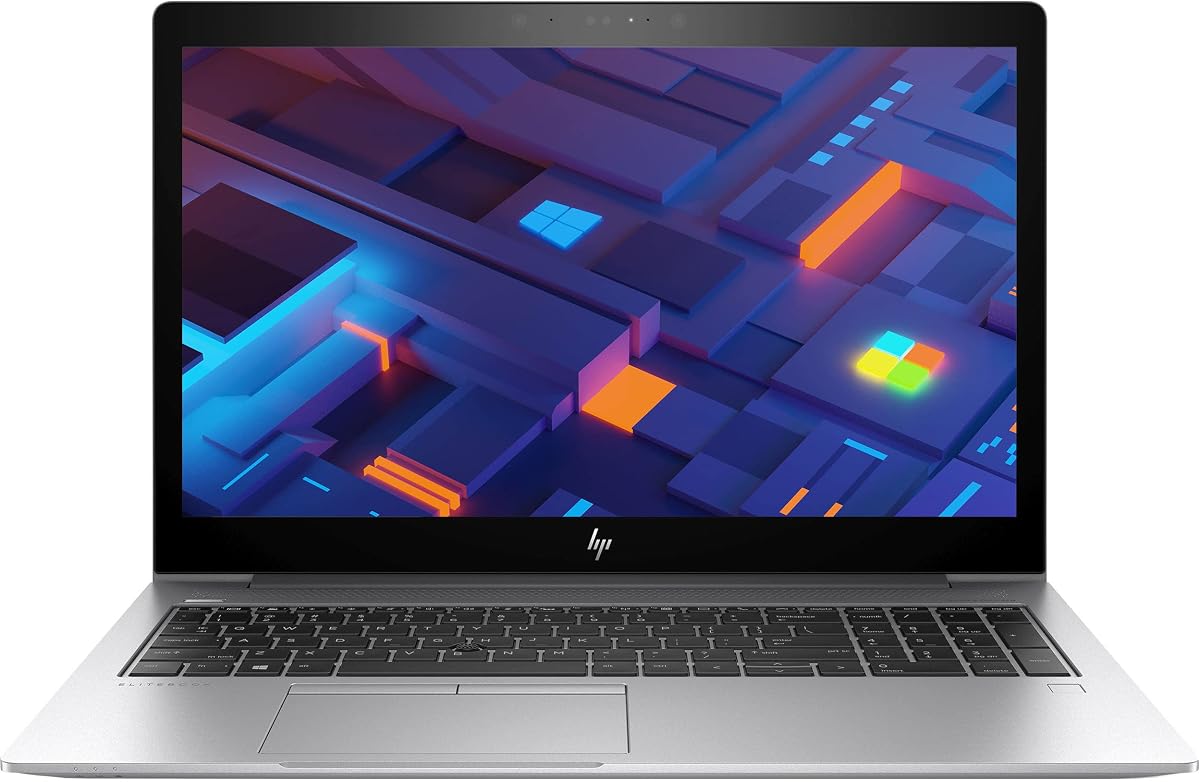
The HP EliteBook 850 G5 is a renewed, large-screen business laptop that offers a balanced set of specifications for a value-oriented Hackintosh project. It carries a 4.3 rating, an Intel Core i7-8650U processor, 16GB of DDR4 memory, and a 512GB NVMe M.2 SSD. Its 15.6-inch 1080p LCD provides more workspace than a compact 14-inch model.
We may earn a commission when you buy through this link, at no additional cost to you.
The 512GB drive is one of the most useful features for macOS use. It provides room for the operating system, development tools, package caches, virtual machines, and project files without immediately requiring external storage. The supplied description also notes a thin, lightweight design, along with USB-C Thunderbolt 3, HDMI, and a webcam, which covers the essentials for a mobile workstation.
Its processor belongs to the eighth generation, and 16GB of memory is less generous than several other choices here. Hackintosh compatibility should therefore be researched against the intended macOS version and specific wireless hardware. The business-oriented design remains appealing, but buyers should expect to perform more careful compatibility planning than they would with a newer platform.
This model fits users who want a larger display, more storage, and an established business-laptop format without moving to a premium workstation. It is a sensible option for web development, lightweight Xcode alternatives, and learning macOS-on-PC setups, provided the installer is prepared to address model-specific drivers. It works best for users who prioritize usable storage and display size over cutting-edge processing power.
The 512GB NVMe drive is roomy for development tools and test environments. Fast storage improves application launches, project switching, and general responsiveness despite the older processor.
A 15.6-inch Full HD display offers useful room for browser-based consoles, code, and documentation. It balances that workspace with a thin and lightweight chassis.
We may earn a commission when you buy through this link, at no additional cost to you.
The ASUS Vivobook 16 stands out for unusually generous memory and storage in a large consumer notebook. It pairs a 13th-generation Intel Core i9-13900H processor with 40GB of DDR4 RAM, 1TB of internal SSD storage, and a docking-station package that adds another 1TB. The 16-inch WUXGA panel has a 1920-by-1200 resolution, while the listing does not include a published customer rating.
We may earn a commission when you buy through this link, at no additional cost to you.
The i9-13900H provides strong performance for intensive multitasking, complex applications, and development environments. Intel Iris Xe integrated graphics should handle routine graphics tasks without a discrete GPU. More importantly for a Hackintosh, 40GB of memory gives users substantial room for virtual machines and parallel workloads, making this one of the most flexible configurations in the roundup.
The storage package is unusual but useful. Users can keep the operating system and primary projects on the internal SSD while moving larger archives, virtual disks, or media to the docking-station storage. The included 7-in-1 dock also adds peripheral connectivity, while the backlit keyboard, fingerprint reader, and 1920-by-1200 screen support everyday productivity.
This Vivobook is ideal for users who want abundant working memory and storage without moving to a workstation-class chassis. The opened seal for upgrades, lack of a published rating, and split-storage arrangement warrant careful review before purchase. Hackintosh users should also verify the exact wireless adapter and supported macOS release, but the underlying configuration is among the strongest for development.
Forty gigabytes of DDR4 RAM is especially helpful when running virtual machines, containers, browsers, and an IDE simultaneously. It reduces pressure to close active projects during memory-heavy tasks.
The dock, additional storage, multiple USB ports, HDMI, and included accessories create a flexible workstation. It is especially useful when the laptop spends much of its time on a desk.
We may earn a commission when you buy through this link, at no additional cost to you.
The HP EliteBook 850 G7 combines a large Full HD display with 32GB of DDR4 memory and a 512GB NVMe SSD. Its Intel Core i7-10610U is a 10th-generation chip, and the listing carries a 3.9 rating. The renewed configuration is aimed at users who value the business chassis, storage, and memory more than the newest possible processor.
We may earn a commission when you buy through this link, at no additional cost to you.
The included memory is a major strength. Thirty-two gigabytes allows developers to maintain several applications, browser profiles, and virtual environments without immediately approaching a 16GB limit. The 512GB NVMe drive adds enough room for tools and project assets, while the 15.6-inch anti-glare screen is practical for office work and mobile presentations.
Security is another distinguishing feature. The supplied details mention HP Sure Start, a fingerprint reader, and TPM 2.0, which can appeal to users who also need Windows for corporate work. A fresh Windows 11 installation with a genuine digital license reduces setup friction and allows a dual-boot arrangement if the storage can be partitioned appropriately.
The main drawback is the older processor and the 3.9 rating, the lowest numeric score among the products with published ratings. Renewed systems can also vary in cosmetic condition and battery health. This is still a compelling memory-and-storage option for a portable Hackintosh, particularly for developers who can work with a mature macOS release and prioritize security features over maximum processing speed.
HP Sure Start, a fingerprint reader, and TPM 2.0 make this a practical choice for users who need secure Windows access. Those features also support a productive dual-platform workflow.
The 32GB RAM and 512GB SSD pairing is well suited to development and general productivity. It provides more flexibility than typical entry-level business configurations.
We may earn a commission when you buy through this link, at no additional cost to you.
The Dell Precision 3560 is a certified refurbished mobile workstation with a 4.1 rating. It includes an Intel Core i7-1165G7 quad-core processor capable of 4.7GHz, 16GB of memory, a 512GB SSD, and a 15.6-inch 1920-by-1080 display. Windows 11 Pro is included, making it a useful system for users who want a capable PC with a clean starting point.
We may earn a commission when you buy through this link, at no additional cost to you.
The workstation identity is a notable advantage over ordinary consumer laptops. Its construction and component selection are intended for professional workloads, and the processor provides sufficient power for code development, technical applications, and multitasking. The 512GB SSD also offers useful space and responsive everyday performance, although it may become tight for users running several large virtual machines.
The refurbishment process includes functionality testing, basic cleaning, inspection, and repackaging. The listing also states that the computer may arrive in a generic box and includes a minimum 90-day warranty. These are important considerations for buyers who want a workstation at a lower acquisition cost but do not need factory-sealed packaging.
For Hackintosh users, the 3560 is worth considering as a sturdy development platform, provided the exact wireless card, ports, and firmware details are confirmed before installation. Its 16GB memory is the primary configuration limitation, and buyers may need to verify whether the installed modules are upgradeable. Overall, it provides a solid workstation foundation with a practical certified-refurbished proposition.
Certified refurbishment involves functionality testing, cleaning, inspection, and repackaging. This offers more defined preparation than an uncertified used system, although appearance may not be factory-new.
The Precision platform provides a durable foundation for technical work. Its processor, 512GB SSD, and Full HD display cover the essential needs of most developers.
We may earn a commission when you buy through this link, at no additional cost to you.
The HP EliteBook 850 G8 is the best-balanced selection in this guide, combining a 4.7 rating with a modern processor, fast storage, and a practical 15.6-inch display. It features the Intel Core i7-1185G7, 16GB of DDR4 memory, and a 512GB NVMe M.2 SSD. The renewed system also includes Windows 11 Pro, Thunderbolt 4, HDMI, a webcam, and a 1080p Full HD panel.
We may earn a commission when you buy through this link, at no additional cost to you.
The Core i7-1185G7 is a familiar platform for Hackintosh research because many 11th-generation Intel business laptops have well-documented community configurations. That does not guarantee compatibility with every macOS release, but it offers a more manageable starting point than an unusual modern processor. The processor itself is efficient enough for general development, web tooling, and daily productivity.
Storage and connectivity make the system especially appealing. A 512GB NVMe drive provides adequate room for a macOS partition, development tools, and selected project files. Thunderbolt 4 expands display and peripheral options, while HDMI provides a straightforward path to an external monitor. The 15.6-inch Full HD screen offers enough area for code and documentation without the footprint of the 16-inch Precision models.
The 16GB memory configuration is the most important limitation, and buyers should verify upgrade availability. Because this is a renewed product, they should also examine the cosmetic condition, warranty, battery expectations, and exact installed wireless adapter. Even with those caveats, its 4.7 rating and balanced hardware make the EliteBook 850 G8 the most convincing all-around option here.
The i7-1185G7 belongs to a widely discussed business-laptop generation. Community research can make driver planning easier, though the precise model and installed adapter still require verification.
A 512GB SSD and 15.6-inch Full HD screen provide a productive balance for code, documentation, and external peripherals. The laptop is suitable for both desk-based and mobile work.
We may earn a commission when you buy through this link, at no additional cost to you.
The ASUS Vivobook 15 is a modern, high-performance alternative for users who want current processing power and 32GB of memory in a familiar consumer notebook. It carries a 4.5 rating and combines the Intel Core i9-13900H with a 1TB PCIe M.2 SSD, a 15.6-inch 1080p display, and Windows 11 Pro. The listing also includes Wi-Fi 6 and a physical webcam shield.
We may earn a commission when you buy through this link, at no additional cost to you.
The 14-core processor provides strong multitasking performance for compilers, browsers, virtual machines, and creative applications. Thirty-two gigabytes of DDR4 memory is a substantial upgrade over many business laptops, while the 1TB NVMe drive offers enough capacity for a dedicated macOS partition and a substantial development library. The 1920-by-1080 non-touch display provides a sharp, practical workspace.
Privacy and convenience features are useful additions. The physical webcam shield blocks the camera without relying on software, the fingerprint reader streamlines secure login, and the backlit keyboard improves low-light use. Connectivity includes USB-C, two USB-A 3.x ports, another USB 2.0 port, HDMI, and a 3.5mm audio connection.
The main issue is that a current consumer platform may have a less predictable Hackintosh history than some older business laptops. The included cooler may also be important if the processor is regularly driven under sustained load. The original seal has been opened for the stated RAM and SSD upgrade, with coverage described for the upgraded components. Subject to wireless-card verification, this is a powerful contemporary choice.
The Core i9-13900H and 32GB RAM combination handles demanding multitasking efficiently. It is a strong foundation for compiling, containers, and virtualized development environments.
A physical webcam shield and fingerprint reader support secure daily use. These details are particularly useful for a dual-purpose computer used for work, calls, and personal projects.
We may earn a commission when you buy through this link, at no additional cost to you.
The Apple MacBook Pro with a 2.6GHz Intel Core i7 is included as a native-macOS alternative rather than a true Hackintosh candidate. It has a 4.0 rating and comes with 16GB of memory, a 256GB SSD, a 15-inch Retina display with True Tone, Touch Bar, Touch ID, and Radeon Pro 555x graphics with 4GB of video memory.
We may earn a commission when you buy through this link, at no additional cost to you.
Its major advantage is simplicity. macOS is designed for the hardware, so users do not need to build an installer, manage EFI partitions, troubleshoot drivers, or locate a compatible wireless adapter. Four Thunderbolt 3 ports provide modern connectivity, while the Force Touch trackpad and Retina display create a polished native computing experience.
The limitations reflect the age of this Intel-based design. Storage capacity is modest, onboard memory is not user-upgradeable, and the system represents an older macOS architecture. While it can serve certain development tasks, compatibility with the newest Apple tools may be limited. A renewed condition also calls for attention to battery wear, display condition, and warranty coverage.
Readers whose primary objective is simply using macOS should consider this laptop instead of attempting an unofficial installation. It is better suited to a buyer who values a stable native system than to a committed Hackintosh enthusiast. Its inclusion helps clarify an important distinction: a MacBook Pro may provide the desired operating system, but it does not deliver the customization and community-driven experience of a genuine Hackintosh build.
The operating system and hardware are designed as one platform. Users avoid most of the installation effort associated with Wi-Fi, graphics, audio, sleep, and other driver components.
The Retina display, True Tone support, and Radeon Pro 555x graphics provide a strong visual foundation. These features suit design, media, and general creative workflows.
We may earn a commission when you buy through this link, at no additional cost to you.
The Dell Latitude 5420 is the best budget-oriented selection in this guide, combining a 4.8 rating with 32GB of DDR4 memory and a 512GB NVMe SSD. It uses the Intel Core i7-1185G7, has a 14-inch 1920-by-1080 display, and ships with Windows 11 Pro as a renewed business laptop. It also includes Thunderbolt 4, HDMI, Wi-Fi, Bluetooth, a webcam, and USB-C connectivity.
We may earn a commission when you buy through this link, at no additional cost to you.
The combination of processor, memory, and storage is particularly well balanced. Thirty-two gigabytes of RAM is unusually generous for a value-focused notebook, while the 512GB SSD is enough for a macOS partition, core development tools, and active projects. The Core i7-1185G7 can reach 4.8GHz turbo frequency and belongs to a generation with extensive Hackintosh community research.
Its 14-inch chassis is easier to carry than the 15.6- and 16-inch alternatives. The Full HD panel offers a practical balance of detail and compactness, and the combination of Thunderbolt 4, HDMI, USB-C, Wi-Fi, and Bluetooth supports a range of external accessories. The renewed format allows buyers to obtain an established business design without paying for a new premium workstation.
As with any renewed system, cosmetic wear, battery condition, included accessories, and warranty terms deserve review. The listing does not specify a fingerprint reader, and 512GB may require additional storage for large virtual machines or media libraries. Even so, the 4.8 rating, 32GB memory, modern processor, and compact design make the Latitude 5420 the strongest value recommendation here.
Thirty-two gigabytes of memory is the standout specification at this tier. It supports heavy multitasking and gives development projects more room than a typical 16GB notebook.
The 14-inch Full HD display keeps the system manageable while preserving a useful work area. Its selection of modern ports supports displays, storage, and everyday peripherals.
We may earn a commission when you buy through this link, at no additional cost to you.
Choosing a laptop for Hackintosh requires more than comparing processor speed and screen size. The most important factors are macOS compatibility, wireless hardware, graphics support, memory, storage layout, and whether you are comfortable troubleshooting an operating system outside its intended hardware environment.
Begin with the macOS release you intend to install. Every supported processor generation has a different level of community knowledge, driver maturity, and feature availability. Intel Core i7 systems from the 11th generation, such as the HP EliteBook 850 G8 and Dell Latitude 5420, have well-established discussion around compatible laptops. Newer 13th-generation Core i9 systems can offer stronger performance, but buyers should verify the specific board, graphics, and audio configuration against current installer guidance. Older Intel-based models may support legacy macOS releases more readily while lacking features or application compatibility available on later systems.
Wi-Fi and Bluetooth are among the most frequent sources of Hackintosh frustration. The product listing may identify standard Wi-Fi or Bluetooth support without naming the exact adapter, so check the device identifier before purchase. Some broad compatibility lists exist, but firmware revisions and module suppliers can produce differences. A workaround using a compatible USB or Thunderbolt adapter may be necessary, adding cost and reducing convenience. For that reason, wireless hardware should be treated as a core selection criterion rather than a detail to resolve after the laptop has arrived.
Integrated Intel graphics are common in business laptops and may benefit from established community support, but display behavior still varies. Look for a system with a clear history of working display output, and note whether the internal panel is driven through the integrated graphics path. External displays can introduce additional variables, including connector compatibility, refresh rates, and whether the port arrangement supports the intended dock. The Dell Precision 7680 offers extensive connectivity, while the Latitude and EliteBook models include modern Thunderbolt 4 or Thunderbolt 3 options for flexible external setups.
Memory has a direct effect on how comfortably a developer can run browsers, editors, containers, and virtual machines. Sixteen gigabytes remains useful, while 32GB provides more comfortable headroom for intensive multitasking. The Dell Latitude 5420, HP EliteBook 840 G7, and HP EliteBook 850 G7 pair 32GB configurations with business laptops, whereas the ASUS Vivobook 15 also offers 32GB. Confirm whether memory is soldered, how many slots are available, and what maximum capacity the manufacturer supports. A well-supported platform with 16GB and easy upgrades can still be preferable to a newer system with fixed memory.
A separate macOS partition requires space for the operating system, applications, caches, updates, and development tools. A 512GB NVMe drive is a practical minimum, while 1TB is more comfortable for multiple environments or large projects. The HP EliteBook 850 G5, 850 G7, 850 G8, Dell Latitude 5420, and Dell Precision 3560 include 512GB SSDs. Check whether the drive uses M.2 NVMe, whether a second bay exists, and whether the wireless card is physically separate. Users who want to preserve Windows should plan partitioning before creating or restoring the macOS installation.
The right display size depends on whether the computer is primarily a desk-based development machine or a portable system. The 14-inch Dell Latitude 5420 and HP EliteBook 840 G7 minimize weight and footprint, while the 15.6-inch HP EliteBook models and ASUS Vivobook 15 provide more visible workspace. The 16-inch Dell Precision 7680 and ASUS Vivobook 16 suit users who regularly connect external monitors. Resolution also matters: 1080p is serviceable, while 1920-by-1200 offers a little more room. Consider readability, scaling, glare, and your preferred desk size rather than screen size alone.
Many viable Hackintosh candidates are renewed business machines because they combine mature platforms, useful ports, and replaceable storage. Renewed does not automatically mean poor, but battery age and cosmetic condition can vary. Ask for battery health information, inspect the display and keyboard, and confirm the included warranty. A durable chassis and comfortable keyboard remain important because an unofficial installation can require additional troubleshooting. The EliteBook and Latitude models prioritize portability, while the Precision models offer workstation construction. Whichever format you choose, preserve the original Windows installation and make a complete backup before making disk-level changes.
Hackintosh success depends on documentation more than any single specification. Before purchasing, search for the exact laptop model, processor board, wireless adapter, and display configuration in current community resources. A guide may describe a general model family, but motherboard variants, adapters, and OEM changes can alter the outcome. Favor a platform with active troubleshooting discussions and clearly documented EFI configurations. Native Apple hardware is simpler, as demonstrated by the included MacBook Pro alternative, but it lacks the customization and community-driven experience that attracts many users to a Hackintosh.
Start by documenting the hardware before making changes. Record the processor, graphics, Ethernet, audio, card reader, camera, keyboard, touchpad, and wireless adapter identifiers. Test Windows networking, Bluetooth, displays, audio, sleep, and external ports, then create a full backup or recovery image. These steps provide a working baseline and make it easier to distinguish a macOS issue from a pre-existing hardware problem.
Plan the storage layout before installing macOS. Decide whether you want a separate partition, a second internal drive, or an external boot drive. Shrink Windows carefully, use reliable partitioning software, and keep recovery media available. Follow a current compatibility guide for the precise model, download the required installer, and keep the original matching macOS version available in case a later release introduces unsupported hardware.
After installation, update selectively rather than applying every available update immediately. Test networking, sound, graphics acceleration, sleep, displays, and input devices, then create a separate user account and maintain a documented backup. Keep the EFI partition backed up, use surge protection for prolonged operation, avoid fully discharging the battery regularly, and clean vents without blocking airflow. Periodic maintenance will make the dual-platform setup more reliable and easier to recover.
Owning a general-purpose computer and installing an operating system on it is generally treated differently from circumventing protections on commercial software. The legal situation can vary by location and contract, particularly regarding the macOS license terms. This guide is intended for educational and compatibility information, not legal advice. Review the relevant software agreement and local rules before creating an installation.
There is no single universally best processor because compatibility depends on the target macOS version, motherboard, graphics, and wireless adapter. Intel Core i7 systems from the 11th generation, including the Dell Latitude 5420 and HP EliteBook 850 G8, have substantial community knowledge. Newer Core i9 systems offer more performance but should be researched at the exact model level before purchase.
Sixteen gigabytes can support ordinary code editing, web development, and several applications, but 32GB is more comfortable for virtual machines, containers, large browser workloads, and creative software. The Latitude 5420, EliteBook 840 G7, and EliteBook 850 G7 offer 32GB configurations. The best amount still depends on your projects and whether the memory can later be expanded.
Wireless support is often one of the most important obstacles because macOS drivers are tied closely to specific adapters. Some Intel laptops work with built-in wireless hardware, while others require replacing the module or using a supported USB or Thunderbolt adapter. Verify the exact card identifier, not just the broad Wi-Fi standard, before purchasing or beginning the installation.
Yes, the usual approach is to partition the internal SSD, install macOS in a separate volume, and choose the operating system at startup. You can also use an external NVMe drive for macOS or create bootable installation media without changing the existing Windows installation. Back up Windows first, confirm that the drive layout is correct, and avoid adjusting partitions until recovery media is ready.
Renewed business laptops can be excellent because they often provide mature Intel platforms, useful ports, solid construction, and replaceable storage. This roundup includes several renewed EliteBook, Latitude, Precision, and MacBook Pro systems. The main concern is condition variability, so review battery wear, cosmetic quality, warranty, and the exact installed components before ordering.
A 14-inch model is easier to carry and works well for travel or frequent external-monitor use. A 15.6-inch panel provides more local workspace and can make code, terminals, and documents easier to view without an external screen. The Dell Latitude 5420 and HP EliteBook 840 G7 prioritize portability, while the 15.6-inch EliteBook models offer a larger display for users who work away from a desk.
Many useful configurations rely on integrated Intel graphics, which can have established community support. Discrete graphics add complexity because both the hardware and macOS release must be compatible, and some systems require special handling for display output. The models in this guide emphasize integrated graphics and business or workstation designs, so buyers should review the exact graphics configuration before attempting installation.
The Dell Precision 7680 is the premium choice for maximum processing power, 32GB DDR5 memory, expansive connectivity, and multi-monitor support. The HP EliteBook 850 G8 is the most balanced recommendation, pairing a 4.7 rating with an 11th-generation Core i7, 512GB NVMe storage, and Thunderbolt 4. The Dell Latitude 5420 delivers the best value, combining a compact 14-inch chassis with 32GB of memory and the highest listed rating.
Before choosing, prioritize the exact macOS release, processor board, and wireless adapter rather than relying on a brand or model family alone. AMD processors are entirely absent from this particular list, while the selected Intel laptops range from older Core i5 and Core i7 platforms to modern 13th-generation Core i9 systems. A mature, well-documented configuration is often more valuable than headline processing power if it delivers dependable networking and graphics.
Finally, check current prices, seller information, warranty terms, return conditions, and exact component identifiers before purchasing. Renewed systems can differ considerably in battery condition and cosmetics, while upgrade configurations may have opened seals. Product listings and availability change, so the linked offer should be reviewed at the time of purchase to confirm that the advertised processor, memory, storage, display, and ports still match your needs.