
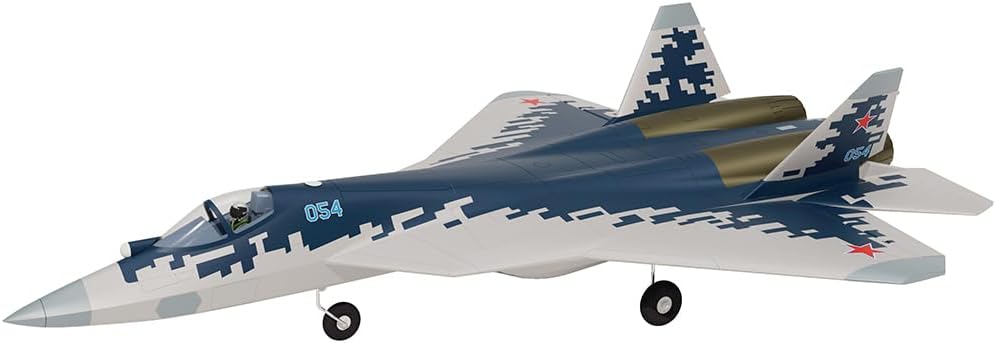
RC Plane Remote Control Airplane for Kids, Adults, Foam Fighter Jet Drone
4.5Editor score
Three selectable speed modes
Altitude hold and headless mode
Two rechargeable batteries included
Guarded propeller and LED lights
Discover the best Rc Fighter Jet Plane options for beginners, intermediate pilots, and experienced hobbyists, compared for features, control, durability, and
Remote-control fighter jets range from forgiving foam models designed for children and new pilots to compact EDF aircraft built for experienced RC enthusiasts. A useful jet depends on your skill level, available equipment, field space, and how much assembly and setup you are willing to manage before each flight.
We compared all ten models by examining their control systems, propulsion, durability, stability aids, battery requirements, special features, and readiness for flight. The guide covers both complete beginner-friendly packages and PNP or BNF aircraft that require compatible radio-control and power equipment.
Each review shows what a model does best, where its limitations matter, and who it suits. Ratings and availability can change over time, as can pricing and included accessories, so verify the current listing and package contents before making a purchase.
4.5Editor score

4.1Editor score

4.1Editor score
The table below compares every model by format, power system, control features, and pilot experience, making it easier to distinguish ready-to-fly foam aircraft from hobby-grade EDF jets that need additional equipment.




The 2CH F-22 RC Glider is a lightweight foam aircraft built for children and beginners who want a straightforward introduction to remote-control flight. Its 3.9 rating reflects a balance of approachable handling and practical features, including a built-in self-stabilization system designed to make basic flight easier to manage.
We may earn a commission when you buy through this link, at no additional cost to you.
The most useful feature is the combination of lightweight foam construction and assisted stability. The aircraft can be controlled in four directions—up, down, left, and right—through a 2.4GHz radio system. It also permits two or more planes to operate without mutual signal confusion, making it suitable for shared play sessions when suitable field space is available.
The trade-off is that this is a glider-style trainer rather than a high-speed, aerobatic EDF model. Its simple two-channel format and comparatively modest rating do not translate into the same advanced performance as the twin-fan aircraft in this list. Buyers should also read the manual, follow local flight guidance, and inspect the foam structure after crashes.
This is a sensible choice for a first RC plane, a younger pilot working on basic control skills, or anyone who values durability and straightforward operation over scale-model detail. The aircraft warranty and battery warranty add some reassurance, while the stated technical support may help new owners resolve setup or operating questions.
The self-stabilization system and lightweight foam construction reduce the intimidation factor for new pilots. Four-direction steering keeps the learning curve manageable while retaining enough response to make the aircraft feel responsive.
The 2.4GHz control system allows two or more planes to fly together without mutual confusion. This makes the glider a practical choice for family practice, provided pilots maintain safe separation and use an appropriately open flying area.
We may earn a commission when you buy through this link, at no additional cost to you.
The RC Plane Remote Control Airplane for Kids, Adults, Foam Fighter Jet Drone is the most approachable complete package in this roundup. It earns a 4.5 rating and combines a durable EPP foam airframe with one-key takeoff and landing, three speed modes, altitude hold, headless mode, and a collection of programmed maneuvers.
We may earn a commission when you buy through this link, at no additional cost to you.
Its versatility stands out. A 360-degree flip, auto rotation, and circle fly expand the experience beyond basic steering, while LED lights make the aircraft more visually engaging in different conditions. Altitude hold provides a stable hover at a fixed height, and headless mode helps maintain directional orientation during flight. Three speed levels let users progress gradually rather than starting with the fastest response.
Two 3.7V 1200mAh rechargeable Li-Po batteries are included, along with over-charge protection. The stated support is up to 16 minutes of flight, while low-battery and out-of-range alerts help users land before power or signal becomes an issue. The aircraft is not a true high-speed EDF jet, and its foam construction and modest flight duration will not satisfy pilots seeking scale-model performance.
This model is ideal for children, adults new to RC flying, gift buyers, and families seeking a ready-to-use aircraft. It needs no assembly and can move quickly from unboxing to takeoff. Full-side propeller guards and CPSC-tested construction add family-friendly appeal, although adult supervision and responsible outdoor flying remain essential.
Altitude hold, headless mode, and one-key takeoff and landing make this foam jet especially approachable. These assists allow beginners to concentrate on directional control while gradually becoming familiar with the aircraft's flight characteristics.
Two rechargeable batteries and a stated flight time of up to 16 minutes offer more playing time than many entry-level kits. The 2.4GHz system also supports multiple planes without crossing signals, making it suitable for family races and group practice.
We may earn a commission when you buy through this link, at no additional cost to you.
The XFLY-MODEL F-15 is a visually ambitious PNP aircraft aimed at hobby pilots who want a true-to-scale fighter appearance and the performance of a twin 40mm EDF setup. Its 4.1 rating pairs well with a streamlined design, substantial thrust, and quick assembly, although the package does not include a transmitter, receiver, or battery.
We may earn a commission when you buy through this link, at no additional cost to you.
The twin power system is designed to deliver enough thrust for fast climbs, rolls, and loops. Its fitted landing gear supports smooth takeoff and landing operations, while components can be assembled quickly without glue. The streamlined, scale-inspired exterior helps it stand apart from bright foam trainers and makes it an appealing centerpiece for a capable RC collection.
This is not a ready-to-fly package for a complete beginner. A compatible radio system, receiver configuration, 4S battery, and appropriate charging equipment must already be available or purchased separately. The recommended battery range is 1300–2600mAh, and the stated flight time is only three to eight minutes, which is typical for compact high-performance EDF aircraft.
Choose the F-15 if you already understand RC equipment and want a scale F-15 model with confident climbing and aerobatic capability. It is a strong fit for intermediate pilots moving from foam aircraft into EDF jets, as well as experienced hobbyists who value appearance, quick assembly, and twin-fan performance.
The true-to-scale design gives the F-15 a convincing fighter-jet profile, while the glue-free component installation reduces workshop time. It remains a hobby-grade model, but assembly is considerably less involved than building a detailed scale aircraft from individual components.
The twin 40mm EDF arrangement provides the thrust required for fast climbs, rolls, and loops. That performance is most rewarding for pilots who can manage takeoff distance, orientation, altitude, and landing procedures with confidence.
We may earn a commission when you buy through this link, at no additional cost to you.
The XFLY-MODEL F-14 differentiates itself with functional variable-sweep wings and full-flying stabilizers, giving it a more mechanically interesting appearance and control layout than many conventional compact jets. Its 3.7 rating is the lowest in the group, so buyers should assess the model carefully against their experience and expectations.
We may earn a commission when you buy through this link, at no additional cost to you.
The twin 40mm EDF power system is designed for fast climbs and loops. High-torque, efficient servos provide the control authority needed for the moving wings, while fixed landing gear and a steerable nose wheel support ground handling. Recommended batteries are 4S Li-Po packs in the 1300–2200mAh range, with a stated flight time of three to six minutes.
The F-14 requires a transmitter, receiver, and battery, none of which are included. That makes it less convenient for beginners and more expensive in total for someone starting from nothing. Its moving components and low rating also call for careful inspection before flights and conservative handling during initial orientation and takeoff.
This model makes the most sense for intermediate or experienced pilots who specifically value working sweep wings and want a distinctive F-14-style aircraft. It is a collector-worthy choice with purposeful visual and mechanical features, but it is less broadly approachable than the foam models or factory-assembled BNF aircraft.
Functional variable-sweep wings distinguish the F-14 from conventional models with fixed fins and surfaces. High-torque servos are intended to keep those movements crisp and controlled, adding both visual interest and a more involved flying experience.
Fixed landing gear and a steerable nose wheel give pilots more control during taxiing, takeoff, and landing. The arrangement remains useful in a compact jet where precise ground handling can make a meaningful difference.
We may earn a commission when you buy through this link, at no additional cost to you.
The XFLY-MODEL F-22 Raptor is a strong all-around choice for pilots seeking scale styling and genuine EDF maneuverability. Its 4.1 rating is supported by a streamlined, true-to-scale design, twin 40mm power system, low wing load, and full-flying stabilizers that improve high-alpha capability.
We may earn a commission when you buy through this link, at no additional cost to you.
The aircraft's power configuration provides abundant thrust for fast climbs, rolls, and loops. Its full-flying stabilizers improve control authority as the aircraft slows and changes attitude, which is especially valuable during aggressive aerobatics. Fitted landing gear supports smooth takeoff and landing, while molded-in finger grips make hand-launching more practical than relying on a separate launch device.
The PNP designation is important: a transmitter, receiver, and battery are not included, and the title identifies it as a 4S model. A pilot without compatible equipment should account for those additional purchases before selecting it. The compact EDF format also implies relatively brief flights compared with larger fixed-wing aircraft, and the low 4.1 rating suggests some room for individual experience variation.
The F-22 is our Editor's Choice because it combines an attractive scale profile, capable twin propulsion, high-alpha control features, and convenient launch design. Intermediate and experienced pilots can use those traits to enjoy aerobatic EDF flight without moving to a much larger and more demanding aircraft.
Full flying stabilizers and the low wing-load design provide useful control when the aircraft is flying slowly or at a high angle of attack. These features make the F-22 more engaging for pilots interested in loops, rolls, and demanding attitude changes.
Molded-in finger grips simplify hand-launch preparation, while fitted landing gear supports conventional runway or smooth-surface operations. The result is a package that feels thoughtfully designed for repeated hobby flying rather than basic toy use.
We may earn a commission when you buy through this link, at no additional cost to you.
The E-flite UMX F-86 Sabre is a factory-assembled compact EDF aircraft based on one of the world's first jet-powered fighters. Its 3.6 rating is tied to the shared rating of several models in this list, but the product remains attractive for pilots seeking a convenient, scale-inspired introduction to EDF flight.
We may earn a commission when you buy through this link, at no additional cost to you.
A 30mm fan is paired with a more powerful 4S-compatible outrunner motor and ESC, providing a modernized propulsion system in a small airframe. SAFE Select flight-envelope protection is optional, allowing the aircraft to be flown with additional assistance when appropriate while retaining conventional control for pilots who prefer it. The factory assembly means there is no major construction process before the first flight.
The BNF package does not include the transmitter, battery, or charger, so it is only ready to fly if compatible equipment is already available. Even SAFE Select cannot compensate for an unsuitable radio system or inadequate pilot preparation. Because this is a compact model, pilots should expect a short operating window and focus on a clear approach to every landing.
The F-86 works best for an intermediate pilot who wants a factory-built EDF jet and useful flight-envelope protection without moving directly into a more complex PNP assembly. It is also attractive to experienced pilots seeking a smaller scale fighter for local flying, provided their radio, battery, and charger are compatible.
The F-86 arrives completely factory-assembled and ready for the appropriate setup and flight checks. This is a major convenience for buyers who want a functioning scale model without spending time assembling components and troubleshooting fit.
SAFE Select flight-envelope protection can make the transition to a powered jet more manageable. Because it is optional, pilots can gradually reduce reliance on the assistance as their control skills improve.
We may earn a commission when you buy through this link, at no additional cost to you.
The XFLY-MODEL SU-57 V2 is a capable PNP twin EDF jet aimed at hobby pilots who want fast climbs and aerobatic performance in a relatively approachable package. Its 3.9 rating reflects a solid feature set, including twin 40mm propulsion, full-flying stabilizers, fitted landing gear, and assembly that does not require glue.
We may earn a commission when you buy through this link, at no additional cost to you.
The efficient twin power system produces enough thrust for fast climbs, rolls, and loops. Full-flying stabilizers are designed to provide good high-alpha capability, giving the aircraft a more purposeful feel during aggressive maneuvers. Its stated flight time is three to eight minutes when using a recommended 4S battery in the 1800–2600mAh range.
The package excludes a transmitter, receiver, and battery. This is a significant barrier for a true beginner and requires careful compatibility planning. The aircraft also needs adequate space, a clear operating area, and attention to battery condition and range. As with the other PNP jets, the compact EDF format prioritizes excitement and scale appearance over endurance.
The SU-57 V2 is a good match for intermediate and experienced pilots who want twin-fan aerobatics and high-alpha handling without a complicated build. It is less suitable for anyone seeking a complete beginner package, but it may be the most straightforward choice here for a hobby pilot already equipped for 4S PNP aircraft.
The combination of twin propulsion and full-flying stabilizers supports fast climbs, rolls, loops, and controlled high-angle attitudes. It is a good configuration for pilots who want to practice more than straight-and-level circuits.
Components can be assembled quickly without glue, saving time for owners who already own a compatible radio system and battery. The trade-off is that a complete first-time setup still requires additional purchases and configuration.
We may earn a commission when you buy through this link, at no additional cost to you.
The E-flite UMX Me 262 is a compact EDF warbird with a distinctive historical identity. Modeled after the world's first jet-powered fighter aircraft, it offers dual 30mm fans, a factory-assembled airframe, and a Spektrum receiver with 2.4GHz DSMX technology and fly-by-range telemetry.
We may earn a commission when you buy through this link, at no additional cost to you.
Two 3S-compatible outrunner motors spin the 30mm fans, creating a multi-engine appearance and a sound and visual experience that differs from single-fan trainers. The receiver supports 600–850mAh Li-Po batteries, allowing pilots to choose from a range of battery sizes and corresponding performance characteristics. The factory construction removes the need for a major build process.
The package is BNF rather than RTF, meaning the transmitter, battery, and charger are not included. Its 3.6 rating also suggests that experiences may vary, and buyers should consider the demands of operating a compact twin-fan aircraft. Flight time will be limited, and pilots should plan every landing before the batteries reach low voltage.
Choose the Me 262 for its unusual twin-engine layout, early jet-fighter appearance, and Spektrum telemetry. It suits intermediate and experienced pilots with compatible equipment, especially those who want a distinctive model without undertaking a full-scale construction project.
The paired 30mm motors give the Me 262 a distinctive multi-engine profile and sound. That visual identity is a major reason to choose it over a more conventional single-fan compact jet.
The Spektrum receiver includes fly-by-range telemetry and 2.4GHz DSMX technology when paired with a compatible transmitter. This can help pilots monitor range and aircraft status during flight rather than relying entirely on visual judgment.
We may earn a commission when you buy through this link, at no additional cost to you.
The E-flite Viper 30mm EDF is a compact jet designed for intermediate to experienced pilots who want an everyday EDF aircraft rather than a detailed replica of a specific historical fighter. Its 3.6 rating reflects the small-format category's potential limits, but the 4S-compatible power system and optional SAFE Select protection provide meaningful capability.
We may earn a commission when you buy through this link, at no additional cost to you.
The aircraft is scaled down from larger 64mm, 70mm, and 90mm E-flite jets, creating a smaller and potentially less demanding platform. A 30mm fan is driven by a powerful 4S-compatible outrunner motor and ESC. SAFE Select can be used when appropriate, while AS3X capability provides a more conventional mode for pilots who are ready to manage the aircraft directly.
The BNF package excludes a transmitter, battery, and charger, so it is not a complete setup. E-flite explicitly positions the Viper as a first-ever or everyday EDF choice for intermediate and experienced pilots, which means the product description should not be interpreted as a toy-grade beginner promise. The factory-assembled construction saves build time but not equipment costs.
This is a strong selection for a pilot moving into compact EDF aircraft and wanting a practical everyday jet with both assisted and direct handling options. It is less suitable for a family seeking a foam toy or a beginner who wants everything needed for immediate flight in one package.
The Viper adapts the operating concept of larger 64mm, 70mm, and 90mm models into a 30mm package. That makes it attractive for pilots who want a jet experience without the footprint, equipment demands, and operating demands of a larger aircraft.
Optional SAFE Select protection and AS3X capability let pilots choose an assisted or more direct control experience. This flexibility makes the aircraft useful during skills development as well as normal recreational flying.
We may earn a commission when you buy through this link, at no additional cost to you.
The E-flite UMX A-10 Thunderbolt II combines a recognizable attack-aircraft profile with a reinforced airframe and practical telemetry. Its 3.8 rating makes it one of the stronger-rated compact BNF jets in the list, and the factory-assembled aircraft is especially appealing to pilots who want a durable model without a lengthy build.
We may earn a commission when you buy through this link, at no additional cost to you.
A carbon-fiber-reinforced fuselage and nose improve the strength of critical areas, while the Spektrum receiver provides 2.4GHz DSMX technology and real-time battery voltage telemetry when used with a compatible transmitter. The aircraft fits 450–850mAh Li-Po batteries, offering a broad choice of pack sizes and allowing pilots to tune performance and endurance to their preferences.
A transmitter, battery, and charger are not included. Those omissions make the package less convenient for someone beginning from nothing, and even experienced pilots must confirm radio compatibility before ordering. The compact 30mm EDF format also means that flight duration will be shorter than on many propeller-driven RC aircraft, and careful battery management remains important.
The A-10 is best for intermediate pilots who want a distinctive military jet, a factory-assembled setup, and a strengthened structure. It also suits experienced pilots who value battery telemetry and the flexibility to use several suitable Li-Po battery sizes.
The strengthened fuselage and nose are meaningful improvements for a compact EDF aircraft that may experience hard landings or bumps. The reinforced construction supports repeated use while preserving the lightweight characteristics needed for efficient jet-style performance.
Real-time battery voltage telemetry helps compatible pilots monitor power during flight, while support for 450–850mAh Li-Po packs allows the aircraft to be matched to different performance preferences. A suitable charger remains the pilot's responsibility.
We may earn a commission when you buy through this link, at no additional cost to you.
The right RC fighter jet depends on skill, equipment, and intended use. Start with the level of support you need, then compare propulsion, package format, handling features, airframe durability, and the practical limits of the flying area.
A foam glider or complete foam jet is usually the most accessible starting point because lightweight construction tolerates minor impacts and features such as self-stabilization, altitude hold, headless mode, and selectable speed reduce the initial learning curve. These aircraft are especially appropriate for children, beginners, and pilots who want stable circuits and uncomplicated handling. Compact EDF jets offer more visual realism and aerobatic capability, but they demand better throttle control, spatial awareness, and careful approach planning.
Match the model to your current ability rather than to the appearance you hope to master. Intermediate pilots may prefer a small EDF with optional flight-envelope assistance, while experienced pilots can focus on twin fans, moving wings, high-alpha capability, and sport-oriented handling.
RTF or complete packages generally include the aircraft, transmitter, and often the required battery and charger, making them the most convenient options. BNF aircraft are factory-assembled but exclude a transmitter, battery, and charger. PNP aircraft generally arrive assembled but still need a compatible transmitter, receiver, battery, and appropriate charging support. The PNF models in this guide specifically omit a transmitter, receiver, and battery, while the BNF models also leave the main operating equipment to the buyer.
Choose a complete package if convenience and immediate learning are the priority. Select BNF or PNP only if you already own equipment that matches the model's control system, voltage, and connector standards.
Foam aircraft and simple gliders generally use lighter propulsion systems designed for forgiving response and lower operating demands. EDF jets use one or more ducted fans to produce jet-like thrust and sound. A twin-fan configuration can provide abundant thrust, strong climb performance, and a distinctive appearance, but it also increases the aircraft's power requirements and can create more demanding energy management during flight.
A first jet should emphasize controllability and predictable response. Experienced pilots may prefer twin 40mm EDF systems for rolls, loops, and fast climbs, while beginners may benefit more from adjustable speed modes and altitude assistance.
Battery voltage, capacity, connector type, physical size, and discharge rating must all be compatible with the aircraft. The XFLY-MODEL jets generally call for 4S Li-Po batteries, with the F-15 accepting a recommended 1300–2600mAh range, the F-14 accepting 1300–2200mAh, and the SU-57 V2 accepting 1800–2600mAh. The E-flite Me 262 fits 600–850mAh batteries, the A-10 fits 450–850mAh, and the Viper uses a 4S-compatible system.
Do not assume a battery that fits physically is electrically suitable. Follow the model's instructions, use a reliable charger designed for the chemistry, and confirm the transmitter or receiver can safely operate with the selected pack.
Flight aids can make a major difference when a pilot is learning. The 2CH F-22 uses a self-stabilization system and simple four-direction control, while the foam jet adds altitude hold, headless mode, three speed settings, and one-key takeoff and landing. E-flite's F-86 and Viper offer optional SAFE Select assistance, and the A-10 and Me 262 support AS3X or DSMX-oriented equipment suited to experienced pilots.
Assistance is useful but should not replace basic preparation. Learn the aircraft's orientation, controls, range behavior, and landing procedure before relying heavily on automated features.
Lightweight EPP foam and foam glider structures are forgiving when a new pilot makes a mistake. Compact EDF aircraft may use reinforced fuselages, carbon-fiber components, fitted landing gear, and stronger control servos, which can improve longevity under regular hobby use. The A-10 specifically has a carbon-fiber-reinforced fuselage and nose, while the E-flite models arrive completely factory-assembled.
Durability should be matched to the environment. A tougher airframe still cannot prevent damage from an uncontrolled high-speed impact or a landing on rough ground, so inspect the airframe, landing gear, propeller or fan assembly, and moving surfaces after every significant mishap.
Full-flying stabilizers, high-alpha capability, and responsive aerobatic power can make an EDF jet enjoyable for sport-oriented pilots. The F-22 and SU-57 V2 emphasize high-alpha handling, the F-15 focuses on fast climbs, rolls, and loops, and the F-14 adds functional variable-sweep wings with a steerable nose wheel. These features offer more control range and visual interest but require a pilot who can manage speed and orientation.
For beginners, stable hovering, predictable turns, adjustable speed, and an easy launch method matter more than maximum aerobatic capability. For experienced pilots, maneuver envelope and mechanical detail may be the deciding factors.
Foam aircraft can often be enjoyed in a relatively open park or field, although local regulations and safe distances still apply. EDF jets benefit from a smooth runway, ample open space, and a clear approach for landing. Compact models offer exciting performance but usually provide only a few minutes of flight, so chargers, spare batteries, and a disciplined turnaround plan can make a substantial difference.
Check the aircraft's recommended launch method, landing requirements, and local restrictions before each outing. A clear field and a responsible flight plan are more valuable than carrying every possible upgrade.
Begin with a complete equipment check. Confirm that the transmitter is powered on and connected correctly, install a fully charged battery with the correct polarity, verify the control surfaces, and check that the propeller or EDF fan is secure. For foam models, inspect the body, wings, and protected propeller area. For hobby-grade jets, confirm the receiver, servo connections, fan mounting, landing gear, and control direction before applying power.
Fly in a clear, open area that matches the aircraft's capabilities. Launch into a safe direction, keep the model within visual range, maintain conservative altitude, and avoid crowded areas, roads, trees, power lines, and people. Use the aircraft's assistance features as intended, but do not assume they can correct poor orientation or an unsafe approach. Land while battery power remains sufficient and pay special attention during the final turn and descent.
After each flight, disconnect the battery and inspect for cracks, loose panels, damaged control surfaces, bent landing gear, and fan or propeller damage. Clean foam aircraft gently and avoid moisture entering electronics. Store Li-Po batteries in a fire-resistant location at the storage guidance provided by the battery or aircraft manufacturer. Replace damaged components and follow the manufacturer's instructions before returning the aircraft to the field.
The RC Plane Remote Control Airplane for Kids, Adults, Foam Fighter Jet Drone is the most beginner-oriented option in this guide because it includes two batteries and provides altitude hold, headless mode, three speed settings, and one-key takeoff and landing. Its foam construction is also more forgiving than a compact EDF jet. New pilots should still begin in a large open area and learn the controls gradually.
Usually, yes. The BNF and PNP models in this roundup exclude a transmitter, and the listed PNF aircraft also exclude the receiver and battery. A complete foam package may include its controller, while the 2CH glider is described as a two-channel 2.4GHz aircraft. Confirm the exact package contents and radio compatibility before buying additional equipment.
A foam jet uses a lightweight foam airframe and simpler onboard electronics, which makes it approachable and tolerant of minor crashes. An EDF jet uses electric ducted fans to create jet-style thrust, sound, and aerobatic performance. EDF aircraft generally require more careful throttle management, more flying skill, and compatible radio and battery equipment.
They can be. The F-15, F-14, F-22, and SU-57 V2 provide enough thrust for fast climbs, rolls, and loops, but that performance requires proper orientation, speed control, and landing planning. New pilots should learn on a stable trainer or foam aircraft first, or choose a compact EDF with optional flight-envelope assistance such as the E-flite F-86 or Viper.
The 2CH F-22 and the foam fighter jet both use 2.4GHz systems that allow multiple planes to operate without mutual signal confusion. Pilots should still maintain wide separation, agree on a communication plan, and avoid simultaneous takeoffs or close passes. A modern frequency system does not remove the need for spatial awareness.
Use a Li-Po battery with the cell count, capacity, connector, and discharge characteristics specified in the aircraft instructions. Recommended ranges vary among the models in this guide, so a battery approved for one jet should not automatically be assumed suitable for another. Use a compatible Li-Po charger and follow the manufacturer's storage and charging guidance.
No. Headless mode is designed to help maintain directional control by reducing the effect of the aircraft's physical orientation during flight. SAFE Select is an optional flight-envelope assistance system that can help limit certain attitudes or movements depending on the equipped aircraft. Neither feature replaces pilot awareness, battery management, or a safe approach to landing.
Flight time varies with battery type, capacity, weight, conditions, and throttle use. The listed XFLY-MODEL jets generally state flight times of three to eight minutes, while the complete foam package supports up to 16 minutes. Pilots should plan an early landing and avoid testing endurance near the point where the battery can no longer provide dependable control.
The foam fighter jet stands out as the best budget choice for beginners because it combines three speed modes, altitude hold, headless mode, aerobatic maneuvers, protected propellers, and two batteries in one approachable package. The XFLY-MODEL F-22 earns the Editor's Choice for its balance of true-to-scale styling, twin 40mm thrust, high-alpha handling, and convenient hand-launch design, while the F-15 is the strongest premium-style option for pilots who prioritize scale fidelity and classic twin-fan performance.
Your priority should match your experience. Choose lightweight foam when forgiveness, simple controls, and family use matter most. Choose a factory-assembled BNF jet with optional assistance when you want scale appearance but prefer minimal assembly. Choose a PNP EDF model only when you already have compatible radio equipment and can manage takeoff, high-alpha maneuvers, battery consumption, and landings with confidence.
Before ordering, verify the current listing, package contents, radio compatibility, battery requirements, and available accessories. Product configurations, ratings, and pricing can change over time, so the latest seller information is essential. Use a clear flying area, inspect the aircraft before every session, and select the model that matches both your skill and the equipment you already own.