
JBL Charge 6
4.6Editor score
AI Sound Boost bass processing
IP68 waterproof dustproof design
28-hour extended playtime claim
Auracast multi-speaker linking
Explore the best Bluetooth speakers with low bass, comparing bass depth, output, portability, battery life, durability, and connectivity for every listening
Bluetooth speakers with low bass need to produce more than volume. They should deliver deep, controlled low frequencies that add weight to music without making voices, guitars, and cymbals sound muddy. The right model depends on whether you listen at home, host gatherings, travel outdoors, or want a compact speaker for everyday use.
This guide compares ten portable Bluetooth speakers using the information supplied for each model, including low-frequency design, rated output, wireless range, battery life, water resistance, controls, pairing options, and portability. It covers compact units, app-controlled speakers, rugged designs, and larger models intended to fill open spaces with powerful sound.
Each numbered review explains the strongest qualities and practical trade-offs of its speaker, while the comparison table makes the major differences easier to scan. The recommendations highlight how bass emphasis, room-filling output, endurance, and practical features relate to different priorities. Availability and pricing can change, so confirm current details before purchasing.
4.6Editor score

4.7Editor score

4.5Editor score
The comparison below organizes all ten speakers by their most important bass-related, output, endurance, portability, and connectivity features, helping you identify the model that best matches your listening environment.
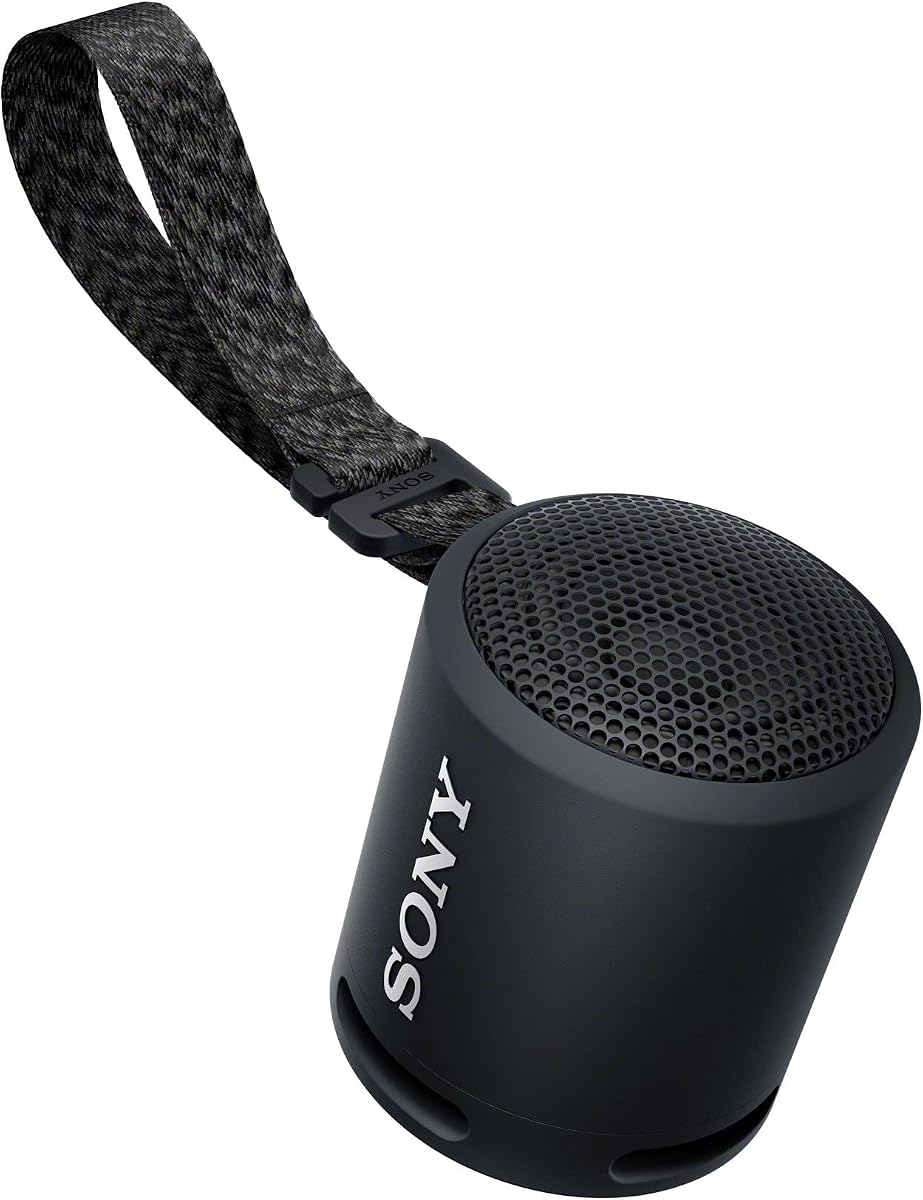


The Sony SRS-XB13 Extra Bass is a compact wireless speaker created for listeners who want a deeper low end without carrying a large entertainment system. It carries a 4.5 rating and stands out for its combination of passive-radiator bass support, sound-distribution processing, durable construction, and straightforward portability. Its restrained size makes it a natural choice for desks, patios, bedrooms, and packed travel bags.
We may earn a commission when you buy through this link, at no additional cost to you.
Its sound architecture combines a full-range speaker, a passive radiator, and an Extra Bass processor. According to the supplied information, that arrangement produces deep, rich bass while preserving clear vocals. The battery can last for up to 16 hours, and a smartphone battery indicator makes it easier to monitor remaining use. Two SRS-XB13 speakers can also be connected for wider-ranging stereo surround sound.
The principal limitation is scale. Although its bass emphasis is purposeful, the SRS-XB13 is not designed to project the same amount of sound as the 30-watt Tribit XSound Plus 2, the 80-watt Soundcore Boom 2, or the JBL Charge 6. It also lacks app-based equalization and the more expansive multi-speaker linking found in more advanced models. Those omissions are understandable for a compact, simple speaker but limit its appeal for elaborate audio systems.
Buy the SRS-XB13 when portability, durability, and immediate bass enhancement matter more than maximum volume or deep customization. It is particularly useful for small spaces, travel, showers, picnics, and other situations where a larger speaker would be inconvenient. For a compact model whose core purpose is clearly communicated low-bass performance, it remains a well-balanced recommendation.
The passive radiator and Extra Bass processor give this small speaker a fuller low-frequency presentation than many similarly portable alternatives. That makes it useful for listeners who want noticeable weight in kick drums and bass lines without adding a large cabinet to their bag.
Its IP67 protection, detachable strap, 16-hour stated playtime, and stereo-pairing option make it easy to move from indoor listening to outdoor use. The simple feature set also reduces setup friction for everyday listening.
We may earn a commission when you buy through this link, at no additional cost to you.
The Anker soundcore 2 is a portable 12-watt Bluetooth speaker aimed at listeners who want bold low frequencies in a relatively simple package. It has a 4.5 rating and distinguishes itself through BassUp technology, a patented spiral bass port, dual neodymium drivers, IPX7 protection, and a stated battery life of up to 24 hours. Those features make it a practical choice for home, camping, beach trips, and smaller gatherings.
We may earn a commission when you buy through this link, at no additional cost to you.
The supplied description emphasizes enhanced bass from the dual drivers and an advanced digital signal processor designed to maintain a powerful presentation at higher volume levels. BassUp processing targets low-end frequencies, while the spiral bass port helps the enclosure move more air. A 5,200mAh lithium-ion battery supports the headline endurance claim, and wireless stereo pairing lets you connect two compatible units for a wider presentation.
Soundcore 2 does not provide the app controls, adjustable EQ, RGB lighting, or multi-speaker flexibility offered by models such as the Tribit XSound Plus 2 or Soundcore Boom 2. Its stated 12-watt output also sits below the larger speakers in this guide, so it is better suited to intimate rooms and moderate gatherings than expansive outdoor areas. Buyers seeking a feature-heavy control system may find it too straightforward.
Choose the soundcore 2 when you prioritize punchy bass, long portable runtime, and straightforward operation over elaborate personalization. It is a compelling daily speaker for bedrooms, patios, small apartments, and trips where weather resistance matters. Its combination of 12-watt output, a bass-focused port, and dependable outdoor protection makes it one of the most approachable compact choices in the roundup.
Rather than relying on bass enhancement alone, the soundcore 2 combines dual neodymium drivers, a DSP, BassUp processing, and a spiral bass port. Together, those elements are designed to add low-end impact while keeping the overall sound vibrant across different listening situations.
The 5,200mAh battery and stated 24-hour runtime suit full-day listening, while IPX7 protection adds confidence around splashes and water vapor. Its simple controls and wireless stereo pairing keep the user experience approachable.
We may earn a commission when you buy through this link, at no additional cost to you.
The Tribit XSound Plus 2 is the most complete all-around option in this guide for listeners seeking pronounced low bass alongside wireless convenience. It has a 4.7 rating, 30-watt output, neodymium full-range drivers, advanced DSP and amplification, and the patented XBass algorithm. It also supports Bluetooth 5.3, a stated range of up to 150 feet, a 24-hour battery, app-based settings, and one-click stereo teaming.
We may earn a commission when you buy through this link, at no additional cost to you.
This model is unusually flexible for a portable speaker. The supplied information describes three button modes, six default app settings, and extensive customization options. A Traditional EQ setting is available after updating both the speaker firmware and the TRIBIT app, allowing listeners who prefer a more conventional tonal balance to adjust the XSound Plus 2 accordingly. It can also pair with a StormBox Flow speaker, adding another option for building a larger system.
The main trade-off is that its richer feature set requires more attention than a basic speaker. New users should update the firmware and app if they want the Traditional EQ, and some listeners may find a dedicated button-controlled model less convenient. It is also larger and more powerful than ultra-compact speakers, so maximum portability is not its primary strength. Even so, the combination of output, bass processing, range, and customization is hard to dismiss.
The XSound Plus 2 is the strongest general recommendation for a home, travel, and outdoor speaker that must deliver serious low end without abandoning clarity or control. It works particularly well for listeners who want to begin with bass-forward sound and refine it later. For the broadest balance of bass depth, useful customization, and portable power, this Tribit model leads the field.
XBass raises the emphasis on low frequencies, but the app-based controls and Traditional EQ prevent the character from having to remain fixed. That combination is useful for balancing bass-heavy tracks with spoken content, acoustic music, or podcasts.
Bluetooth 5.3, a claimed range of up to 150 feet, one-click stereo teaming, and the stated 24-hour playtime make the XSound Plus 2 comfortable for both indoor and outdoor use. Firmware and app updates ensure the available sound modes stay current.
We may earn a commission when you buy through this link, at no additional cost to you.
The JBL Flip 6 is a portable two-way speaker with a 4.7 rating and a reputation for balancing forceful bass with clear treble. Its racetrack-shaped woofer handles low frequencies and midrange, while a separate tweeter produces crisp highs. Two optimized passive radiators extend the low-end performance, giving the Flip 6 a fuller and more engaging presentation than a typical small speaker.
We may earn a commission when you buy through this link, at no additional cost to you.
The Flip 6 also offers IP67 waterproof and dustproof protection, up to 12 hours of stated playtime, and a portable form that can stand vertically or horizontally. PartyBoost allows two compatible JBL speakers to be paired for stereo sound, while multiple PartyBoost-compatible units can be linked to expand the sound at a gathering. These features make it particularly practical for parties that begin in one area and move outside.
Its trade-offs are the relatively modest 12-hour battery claim and the lack of a detailed app equalizer in the supplied specifications. The Flip 6 relies on its driver and passive-radiator design to deliver the characteristic sound rather than offering the granular control found on the Tribit XSound Plus 2. It also provides less raw output than the 80-watt Soundcore Boom 2 or the larger JBL Charge 6. Those limitations are not severe for most portable uses, but they matter for prolonged events or large open spaces.
Pick the Flip 6 when you want a portable speaker that produces convincing bass without sacrificing vocal clarity or treble detail. It is a strong choice for picnics, poolside listening, small parties, and travel. Its flexible orientation, rugged protection, and PartyBoost compatibility make it especially adaptable, while its balanced sound gives it broad appeal across different music genres.
Separating the woofer and tweeter allows the Flip 6 to handle bass, midrange, and high frequencies more deliberately than a basic single-driver speaker. The result should feel more balanced when moving between bass-heavy music and detail-oriented tracks.
Its compact shape, upright or horizontal placement, IP67 rating, and PartyBoost linking make it easy to carry and scale for social listening. The main limitation is its stated 12-hour runtime, which is shorter than several alternatives here.
We may earn a commission when you buy through this link, at no additional cost to you.
The OontZ Angle 3 Gen 4 is a compact, lightweight speaker that earns a 4.5 rating by delivering a surprising amount of low-bass character for its size. Its triangular enclosure houses dual precision acoustic drivers and a downward-facing passive radiator, creating a 12-watt system that the manufacturer describes as suitable for home, outdoor, travel, and small-gathering listening.
We may earn a commission when you buy through this link, at no additional cost to you.
The passive radiator is the key feature for bass-focused shoppers because it is intended to add richer low frequencies while the main drivers preserve balanced mids and crisp highs. Battery life reaches up to 24 hours at the specified two-thirds volume level, and the advanced antenna supports a claimed wireless range of up to 100 unobstructed feet. A 3.5-millimeter AUX input, speakerphone microphone, and USB Type-C charging cable broaden its practical appeal.
This is not the most rugged model in the collection. Its IPX5 rating is intended to handle splashes, light rain, and gentle spray, but the supplied information explicitly says it is not designed for partial or full submersion. It also has a stated 100-foot range, shorter than the Tribit XSound Plus 2's claimed 150 feet. Because it has 12 watts of output, it is better for close-range and small-group listening than for filling a large outdoor area.
The Angle 3 Gen 4 is a strong selection for anyone seeking a light, inexpensive-feeling portable speaker that does not ignore the low end. It is especially convenient for travel, showers, poolside areas away from direct water, bedrooms, and casual gatherings. Its 10-ounce weight, 24-hour stated playtime, and passive-radiator bass make it an especially convincing budget-oriented answer to the keyword.
The downward-firing passive radiator gives the triangular enclosure a dedicated route for low-frequency movement. Paired with dual precision drivers and 12 watts of output, it offers a more pronounced bottom end than a similarly small conventional speaker.
At only 10 ounces, the speaker is easy to place in a backpack, while the claimed 24-hour playtime supports extended listening. Bluetooth, AUX, a built-in microphone, and USB Type-C charging make it useful with both wireless and wired sources.
We may earn a commission when you buy through this link, at no additional cost to you.
The Sony SRS-XB100 is a lightweight portable speaker aimed at people who want a compact enclosure with a deeper low-frequency presentation. It carries a 4.4 rating, the lowest among the ten products listed, but its strengths remain easy to appreciate: an improved driver for low-end tones, a sound-diffusion processor, IP67 protection, and up to 16 hours of stated playback.
We may earn a commission when you buy through this link, at no additional cost to you.
Sony describes the XB100 as compact but surprisingly capable, with a DSP-based diffuser intended to spread sound through a space. Its improved driver emphasizes deeper bass, while the processor creates a wider and more expansive presentation. A specially engineered strap makes the unit convenient to carry, and the USB Type-C port provides a modern charging connection. A built-in microphone with echo cancellation supports hands-free calling, and two units can be paired for stereo sound.
The XB100 has fewer advanced features than several higher-ranked alternatives. There is no app-based equalization in the supplied details, nor is there a multi-speaker system as broad as PartyBoost or Auracast. Its stated 12-hour-class portability advantage is also limited by the absence of the extended runtime offered by the Charge 6, Boom 2, XSound Plus 2, soundcore 2, and Angle 3 Gen 4. The 4.4 rating is relevant but should not be treated as a complete measure of sound quality or usefulness.
This Sony model makes sense for listeners who prioritize portability, improved deep bass, and simple operation. It is a natural fit for a small apartment, office, bathroom, travel kit, or everyday portable speaker. Choose it when you want the XB100's compact footprint and Sony processing without needing extensive EQ controls or very high output for large gatherings.
The improved low-frequency driver and sound-diffusion processor work together to produce deeper bass and a more spacious presentation. This focus makes the XB100 a practical alternative for users who cannot accommodate a larger speaker.
The IP67 rating, UV coating, detachable strap, 16-hour stated playtime, USB Type-C charging, and echo-canceling microphone cover many everyday needs. Stereo pairing adds a simple way to widen the sound when a second compatible unit is available.
We may earn a commission when you buy through this link, at no additional cost to you.
The Sony ULT Field 1 gives bass-focused listeners a direct and uncomplicated way to increase low-frequency impact. Its 4.7 rating reflects a strong overall proposition, while the dedicated ULT button provides an obvious alternative to spending time adjusting menus. The speaker combines that control with DSP-based sound diffusion, a rugged construction, and a compact form suited to travel and outdoor use.
We may earn a commission when you buy through this link, at no additional cost to you.
Its supplied specifications describe the ULT button as a way to boost bass and feel greater sound power. Sony also lists the Field 1 as waterproof, rustproof, dustproof, and shockproof with an IP67 rating, making it well suited to demanding environments. A detachable multi-way strap supports several carrying styles, and stereo pairing can add left-right separation when another compatible speaker is available.
The main limitations are its stated 12-hour battery life and lack of a detailed app-based equalizer in the supplied information. The Tribit XSound Plus 2 provides more comprehensive sound customization, while the JBL Charge 6 and Soundcore Boom 2 offer greater output for large spaces. Buyers who want detailed tonal control may therefore prefer the Tribit, whereas the Sony ULT Field 1 is better for fast, tactile bass adjustment.
Choose the ULT Field 1 when you want an unmistakable low-bass option without navigating a complex control system. It is ideal for parties, workouts, outdoor gatherings, and trips where a rugged and compact speaker is needed. Its high rating, dedicated ULT function, and durable construction make it one of the most direct answers for someone who specifically wants to hear more bass.
The ULT button provides immediate access to the speaker's bass-boosted character. That physical control is useful in changing social settings where adjusting an app would add unnecessary friction.
An IP67 rating, added shock resistance, rust and dust protection, a multi-way strap, and stereo pairing support a mobile lifestyle. The stated 12-hour battery is adequate for many outings, though it trails several longer-running competitors.
We may earn a commission when you buy through this link, at no additional cost to you.
The Soundcore Boom 2 is the clear high-output choice in this roundup, using 80 watts of amplification, a dedicated subwoofer, and BassUp 2.0 technology to create deep, punchy low frequencies. Its 4.6 rating, rugged exterior, floatable IPX7 design, and stated 24-hour battery make it a strong option for patios, campsites, backyards, and other open environments.
We may earn a commission when you buy through this link, at no additional cost to you.
The dedicated subwoofer is the central reason this speaker can project more bass than the compact models in the guide. BassUp 2.0 adds further low-frequency processing, while smart tuning is intended to preserve clear highs, detailed mids, and balanced overall output as the volume rises. A customizable Pro EQ in the Soundcore app lets listeners shape that character, and built-in RGB lighting adds visual impact around a campfire or evening gathering.
Power and portability are always a trade-off. The Boom 2 has a larger physical footprint than the XSound Plus 2, Flip 6, OontZ, and Sony models, making it less convenient for a small bag or limited storage. It also requires the Soundcore app for the stated Pro EQ adjustments. Although the built-in power bank can charge a phone, the speaker itself still needs regular recharging, and real-world playtime varies with volume and content.
Buy the Boom 2 when your priority is unmistakable bass and enough output to cover an open area. It is particularly well suited to outdoor parties and spaces where a compact speaker would feel too restrained. The combination of a dedicated subwoofer, 80-watt output, floatable construction, app-based equalization, lighting, and phone-charging backup gives it a feature set designed for active, social use.
The dedicated subwoofer gives the Boom 2 a structural advantage when producing low frequencies. Combined with BassUp 2.0 and 80 watts of amplification, it is better suited to open spaces than the smaller portable options in this guide.
The floatable IPX7 body, RGB lights, 24-hour stated playtime, and built-in power bank make the Boom 2 useful beyond standard indoor playback. The app-based Pro EQ adds control, although it introduces a small amount of setup overhead.
We may earn a commission when you buy through this link, at no additional cost to you.
The JBL Charge 6 is a premium portable speaker that combines JBL's established low-frequency character with modern sound analysis and outstanding stated endurance. It has a 4.6 rating, an IP68 waterproof and dustproof design, drop protection, fast charging, and up to 28 hours of playback when Playtime Boost is included. It is built for buyers who want a durable, feature-rich speaker without moving into a permanently installed system.
We may earn a commission when you buy through this link, at no additional cost to you.
AI Sound Boost analyzes music in real time and is designed to deliver larger bass, crisper highs, and improved acoustic performance with reduced distortion. The Charge 6 also retains a traditional charging role: its built-in power bank can recharge a phone while music continues. Fast charging is stated to provide up to 150 minutes of playback from a ten-minute connection, making it practical when power outlets are unavailable.
For larger listening arrangements, Auracast supports stereo pairing of two Charge 6 speakers and wireless linking of multiple compatible JBL speakers. That flexibility exceeds basic two-speaker pairing. On the other hand, the Charge 6 is not the lightest option, and the supplied specifications do not mention a dedicated physical bass-boost button or a detailed equalizer. Buyers who want direct tactile control may prefer the Sony ULT Field 1, while those wanting granular EQ may favor the Tribit XSound Plus 2.
The Charge 6 is a strong premium recommendation for travelers, families, and outdoor listeners who prioritize battery life, ruggedness, and powerful bass together. Its real-time processing, charging flexibility, and Auracast linking create a more complete package than most compact speakers. Choose it when you want one durable device that can handle extended playback, phone charging, and scalable group listening.
AI Sound Boost analyzes incoming music to increase bass impact and maintain clarity as the performance develops. This automated approach is convenient for mixed playlists because it avoids requiring the listener to constantly revisit manual equalizer settings.
A stated 28-hour runtime, Playtime Boost, fast charging, and a built-in power bank make the Charge 6 useful away from outlets. Its IP68 protection, drop resistance, and Auracast support reinforce its suitability for travel and group use.
We may earn a commission when you buy through this link, at no additional cost to you.
The TREBLAB HD77 combines 30 watts of output, deep bass, and synchronized RGB lighting in a portable outdoor design. Its 4.5 rating reflects a well-rounded feature set, including dual full-range drivers, TWS stereo pairing, IPX7 waterproof protection, a 20-hour stated battery, Bluetooth 5.0, AUX input, and a built-in microphone.
We may earn a commission when you buy through this link, at no additional cost to you.
The HD77's dual full-range drivers are described as delivering detailed highs and deep bass across the frequency range with low distortion at high volume. Pairing two units creates true left-right wireless stereo, which can make the sound feel wider and more convincing than a single compact enclosure. The RGB lighting changes and pulses with the music, adding a strong visual element to evening gatherings, and the lights can be turned off to conserve battery.
Its IPX7 certification covers submersion up to three feet for 30 minutes, while the rugged mesh body is intended to resist drops, sand, and outdoor elements. Bluetooth 5.0 provides a claimed range of 100 feet, which remains practical but is shorter than the Tribit XSound Plus 2's stated 150 feet. The 20-hour battery also falls behind several competitors, and the supplied information does not mention app-based equalization. The 30-watt figure also should not be assumed to match the output characteristics of every competing wattage rating.
Choose the HD77 when low bass, colorful lighting, and rugged construction are central to your outdoor listening plan. It is well suited to camping, beach trips, poolside gatherings, and parties where a visual light show adds atmosphere. For listeners who want broad controls or the newest wireless standard, a more advanced model may be preferable, but the HD77 delivers a distinctive combination of bass, lighting, portability, and stereo flexibility.
The HD77's deep low-frequency presentation is reinforced by RGB lighting that pulses with the music. Turning the lights off preserves battery life when a more understated setup is desired.
IPX7 protection, a rugged mesh body, 20 hours of stated playback, AUX connectivity, and TWS pairing make the HD77 adaptable to many outdoor situations. Bluetooth 5.0 and the claimed 100-foot range are practical, though they are not the newest or longest specifications here.
We may earn a commission when you buy through this link, at no additional cost to you.
A good low-bass speaker should add weight, rhythm, and impact without obscuring vocals or producing uncontrolled distortion. The right choice depends on cabinet size, driver design, processing, output, portability, weather resistance, battery life, and how much control you want over the sound.
Low bass depends heavily on the physical design of the enclosure, not merely on a bass mode printed on the box. Passive radiators move air in response to low-frequency energy and can make a compact speaker sound deeper. Spiral ports, downward-firing radiators, and dedicated subwoofers serve similar broad purposes but differ in implementation. A model such as the TREBLAB HD77 uses dual full-range drivers, the Sony SRS-XB13 pairs a full-range driver with a passive radiator, and the Soundcore Boom 2 goes further with a dedicated subwoofer. Digital signal processing can extend the perceived low end, but it cannot reproduce the same bass volume and extension as a substantially larger cabinet. Consider whether you want a portable boost or enough physical low-end output to fill an outdoor area.
The stated output figures among these products range from 12 watts to 80 watts, although wattage alone does not define perceived loudness or sound quality. The OontZ Angle 3 Gen 4 and Anker soundcore 2 are designed around 12-watt portable output, while the Tribit XSound Plus 2 and TREBLAB HD77 use 30-watt systems. The Soundcore Boom 2's 80-watt figure corresponds with a larger outdoor-oriented design and a dedicated subwoofer. Match expected volume to the environment. A small room, desk, and quiet patio may be served well by a compact speaker, while a backyard, campsite, or open-air party benefits from greater output. Also consider weight, cabinet size, and carrying handles because additional bass capability often comes with a less convenient footprint.
Bass-heavy does not need to mean muddy. The best models preserve clear mids and articulate highs while giving kick drums and bass lines additional weight. The JBL Flip 6 separates low and mid frequencies into a racetrack-shaped woofer and uses a dedicated tweeter for highs. The Tribit XSound Plus 2 adds customizable EQ and a Traditional EQ option for listeners who want to moderate its bass-forward character. Sony's sound-diffusion processors on the SRS-XB13 and ULT Field 1 are intended to create a wider presentation. If you listen to spoken content, acoustic music, jazz, or classical recordings alongside electronic music, look for tonal control rather than selecting solely on the strongest bass claim.
Bluetooth range affects how freely you can move around a room, patio, campsite, or party. The Tribit XSound Plus 2 leads the supplied specifications with Bluetooth 5.3 and a claimed range of up to 150 feet. The Sony SRS-XB13 also uses Bluetooth 5.3, although the supplied information does not state a numerical range for that model. The OontZ Angle 3 Gen 4 and TREBLAB HD77 claim up to 100 unobstructed feet using advanced antenna or Bluetooth 5.0 technology. Real-world range can vary because of walls, interference, battery levels, and device capabilities. For an indoor speaker, connection stability will usually matter more than the largest advertised number. For a large outdoor area, modern Bluetooth, careful antenna placement, and a clear line of sight are more valuable than an extreme range claim.
Battery life determines how comfortably a speaker can support a full outing or gathering. The supplied playtime claims range from 12 hours for the JBL Flip 6 and Sony ULT Field 1 to 28 hours for the JBL Charge 6 when Playtime Boost is used. The Tribit XSound Plus 2, Anker soundcore 2, OontZ Angle 3 Gen 4, and Soundcore Boom 2 advertise up to 24 hours, while the TREBLAB HD77 states up to 20 hours. These figures depend on volume and content, and the OontZ measurement is specified at two-thirds volume. USB Type-C is convenient across many of the models. The JBL Charge 6 and Soundcore Boom 2 can also recharge a phone, adding utility when outlets are scarce. Consider whether the stated runtime matches your expected use and how frequently you will need to carry a charging cable.
Water-resistance ratings describe specific environmental protections, and the numbers should not be treated as interchangeable. The OontZ Angle 3 Gen 4 has an IPX5 rating for splashes, light rain, and gentle spray, but it is not designed for submersion. The Anker soundcore 2, Tribit XSound Plus 2, Soundcore Boom 2, and TREBLAB HD77 provide IPX7 protection. Sony lists IP67 ratings for the SRS-XB13, SRS-XB100, and ULT Field 1, adding dust protection, and the ULT Field 1 is also described as shockproof. The JBL Charge 6 has IP68 protection and drop resistance, with the supplied information noting survival from one-meter drops and submersion up to 1.5 meters under lab conditions. Choose the rating that matches the real risks of your activities rather than assuming every outdoor speaker can handle water or impact equally.
If you plan to listen with another person or expand the sound at a gathering, pairing support can be a decisive feature. Most of the models support two-speaker stereo pairing, including the Sony SRS-XB13, Sony SRS-XB100, Sony ULT Field 1, Anker soundcore 2, and TREBLAB HD77. The Tribit XSound Plus 2 offers one-click teaming and can also pair with a StormBox Flow. JBL PartyBoost on the Flip 6 supports stereo pairs and links multiple compatible speakers, while JBL Auracast on the Charge 6 can stereo-pair two units or connect a larger compatible network. Check compatibility carefully: a general Bluetooth connection does not guarantee that two models will provide synchronized stereo or function as part of a multi-speaker system.
The best control system is the one you will actually use. Some speakers emphasize physical interaction, such as the Sony ULT Field 1's dedicated ULT bass button, while others place more emphasis on app-based adjustment. The Tribit XSound Plus 2 provides three button modes, six default app settings, and extensive customization, with a Traditional EQ available after firmware and app updates. The Soundcore Boom 2 includes a customizable Pro EQ and built-in RGB lighting. The TREBLAB HD77 offers synchronized lighting that can be disabled to conserve battery. Basic controls are sufficient for many listeners, but app control can be useful when moving between genres, spoken content, and different environments.
Start by charging the speaker fully and placing it on a stable, level surface with its rear or underside vents unobstructed. Bass ports and passive radiators need room to move air, so avoid pushing the speaker tightly against a wall, placing it inside a tight shelf cavity, or covering it with a cloth. Keep the device within the charging and operating conditions described in its documentation, and use the included or approved charging cable when available.
Pair the speaker by opening Bluetooth settings on your phone, tablet, or computer, selecting its model name from the available list, and confirming the connection. Begin with moderate volume and adjust the physical controls or available EQ mode gradually. If a dedicated bass or ULT button is present, compare it with the normal setting on several track types. If a Stereo or PartyBoost feature is planned, check compatibility before purchasing another unit, and position paired speakers appropriately for a balanced left-right presentation.
For outdoor use, inspect the charging-port cover, controls, and housing for grit or moisture before charging, and do not assume a water-resistance rating permits charging while wet. After exposure to sand, salt, or dirty water, wipe the exterior with a soft, lightly dampened cloth and allow the speaker to dry fully. Do not open the cabinet, use abrasive cleaners, or submerge a model unless its documentation specifically permits that action. Cleaning the ports and storing the speaker in a dry location helps preserve sound quality and battery health.
The Soundcore Boom 2 is the strongest match for maximum bass and open-space output because it combines 80 watts of stated power with a dedicated subwoofer and BassUp 2.0 processing. The JBL Charge 6 and Tribit XSound Plus 2 offer a more refined premium approach, while compact models such as the Sony SRS-XB13 and OontZ Angle 3 Gen 4 emphasize portability over sheer output. The right interpretation of strong bass also depends on whether you value volume, depth, or tonal control.
A compact speaker can produce convincing low-bass emphasis, but it cannot create the same air-moving capacity as a large model with a dedicated subwoofer. Passive radiators, downward-firing drivers, bass ports, and digital processing help smaller speakers sound fuller. The Sony SRS-XB13 and OontZ Angle 3 Gen 4 are effective portable examples, while the Tribit XSound Plus 2 adds more output and customization. For filling large outdoor spaces, a larger model remains more appropriate.
A bass button can make low frequencies more prominent, but better does not always mean more. Strong bass can expose distortion or obscure vocals on recordings that were not bass-heavy to begin with. The Sony ULT Field 1 offers direct one-button control, while the Tribit XSound Plus 2 provides app-based EQ and a Traditional EQ setting for a more neutral option. Comparing both settings with different music is the best way to determine which presentation suits you.
They are designed to offer specific levels of water protection, but care is still required. IP67 models generally tolerate dust-tight enclosure protection and temporary immersion under defined conditions, while IP68 indicates a greater level of water resistance. Ratings do not mean every unit can be submerged indefinitely or that it is safe to charge while wet. Always check the model's instructions, close any port covers, dry the speaker before charging, and avoid exposing it to salt water or high-pressure jets unless expressly permitted.
Pairing can create a wider stereo image and greater perceived output, making two smaller speakers more useful for a group. Compatibility matters: the Tribit XSound Plus 2, Soundcore Boom 2, and TREBLAB HD77 use their respective pairing systems, while JBL offers PartyBoost and Auracast depending on the model. A pair of compact speakers will not automatically equal one large dedicated-subwoofer system, so compare the intended use, placement, and available space before buying.
A speaker advertised for 12 to 24 hours may not deliver the stated runtime at maximum volume, so actual use depends on audio content and power settings. The JBL Charge 6 has the longest supplied claim at up to 28 hours with Playtime Boost, while the Tribit XSound Plus 2, soundcore 2, OontZ Angle 3 Gen 4, and Soundcore Boom 2 state up to 24 hours. For a phone-charging backup, the Charge 6 and Boom 2 offer especially useful power-bank functions.
Prioritize balanced sound if you listen to vocals, acoustic instruments, jazz, classical music, or spoken content. Bass-forward speakers work best for electronic music, hip-hop, dance tracks, and outdoor parties where impact matters more than subtle detail. The JBL Flip 6 and Tribit XSound Plus 2 are strong choices for a balance of bass and clarity, while the Soundcore Boom 2 and Sony ULT Field 1 lean more directly toward powerful low-frequency emphasis.
Place the speaker on a stable surface with clearance around its bass port or passive radiator, and begin with moderate volume before engaging a bass-boost mode. Pairing two compatible units can widen the presentation and increase useful output for a gathering. Keep the listening distance reasonable, use the available EQ to balance bass with vocals, and avoid pushing the volume so far that distortion overwhelms the low end. Placement and correct pairing often make a greater practical difference than small changes between bass-processing modes.
The Tribit XSound Plus 2 is the strongest all-around recommendation because its 30-watt output, XBass processing, 24-hour stated playtime, Bluetooth 5.3, and detailed app customization offer an excellent balance of low-end impact and control. The Soundcore Boom 2 is the most compelling choice for powerful outdoor bass, while the JBL Charge 6 stands out for advanced sound analysis, exceptional stated endurance, durable construction, and phone-charging flexibility.
Prioritize the use environment before the size of the bass feature. Choose a larger, subwoofer-equipped model for open spaces and parties; choose a compact passive-radiator design for travel; and select an app-controlled speaker when you want to adjust bass across different genres. Weather resistance, stereo linking, battery runtime, and physical bass controls can be decisive, but they should complement rather than replace a clear plan for where and how the speaker will be used.
Finally, check the current product details, compatibility, and pricing before making a purchase. Speaker technology, firmware, app features, and promotional availability can change over time. Comparing the current model with the strengths established in this guide will help you choose a Bluetooth speaker with low bass that remains practical for your space, routines, and preferred type of music.