
White-Rodgers 760-401 Flame Sensor
4.6Editor score
Universal fit design
Remote burner mounting
Kanthal flame rod
Discover the best Flame Sensor for Heater options by comparing furnace compatibility, construction, dimensions, installation ease, and safety features.
A flame sensor for a heater is a small but essential safety component in a gas-fired furnace. It verifies that the burner is producing a flame, allowing the system to operate normally while shutting off the gas valve if flame is not detected. The right replacement depends heavily on furnace brand, model number, and the shape of the existing sensor.
This guide compares ten replacement flame sensors based on the supplied compatibility information, part numbers, physical specifications, materials, ratings, installation guidance, and intended furnace applications. It covers options for Goodman, Amana, Kenmore, Rheem, Ruud, Trane, American Standard, York, and universal hot-surface ignition systems, with an emphasis on matching the correct part.
Each review explains the standout features, practical trade-offs, and best-fit applications of the selected sensor. The top picks highlight strong combinations of fit, rating, and utility, while the full list provides a broader look at available options. Product availability and pricing can change, so confirm current details and furnace compatibility before buying.
4.6Editor score

4.6Editor score

4.7Editor score
The table below compares all ten sensors by furnace fit, key dimensions or part numbers, connection details, and the most useful feature for installation planning.




This three-pack replacement targets the 0130F00010 and B11726-06 family of furnace flame sensors. Its supplied rating is 4.5, and its defining advantage is compatibility breadth: the listing names Goodman, Amana, Kenmore, and a long list of replacement part numbers and furnace model series.
We may earn a commission when you buy through this link, at no additional cost to you.
The practical strength is preparation. A three-pack gives a homeowner or service technician spare sensors if a rod is damaged during handling, contaminated, or later fails. The stated construction combines wear-resistant metal and ceramic materials, while the description emphasizes rapid ignition, high-temperature resistance, and flame detection intended to address immediate flameouts and repeated shutdowns.
The tradeoff is that the product description sometimes uses flame-sensor and igniter language interchangeably, which may make the listing more confusing than it needs to be. Its 4.5 rating is also the lowest among the ten products, so buyers should not rely on the broad claims alone. The furnace model, existing part number, physical shape, and electrical connection still need to be verified.
This is a sensible choice for a technician who services compatible Goodman-family furnaces and wants multiple units on hand. It may also appeal to a homeowner who has confirmed the extensive cross-reference list and wants backup components. It is less appropriate for someone choosing a sensor solely by furnace brand without checking the model number.
Because three sensors are included, this option can support more than one repair or provide two spares after installation. That makes it particularly useful for maintenance professionals working on compatible furnaces.
The extensive replacement-number list is valuable when the original label is damaged or difficult to read. Buyers should still compare the model number and physical dimensions with the failed component.
We may earn a commission when you buy through this link, at no additional cost to you.
This replacement is built around one especially useful identifier: appliance part 62-23543-01. It is presented as an OEM-style upgraded replacement for a Rheem furnace flame sensor, and its supplied rating of 4.7 places it among the strongest-rated options in this guide.
We may earn a commission when you buy through this link, at no additional cost to you.
Its focused design is appropriate for buyers who already know the part number required by their furnace. Matching a clearly identified original part is often less complicated than selecting a universal option, especially when the furnace uses a distinctive rod shape, mounting position, or electrical termination. The original-version format may also appeal to users seeking a direct-looking replacement rather than a multi-purpose kit.
The main limitation is the sparse specification information. The supplied listing does not provide detailed dimensions or material construction, so compatibility depends heavily on confirming part 62-23543-01 and the original sensor's shape. A high rating and OEM-style description cannot replace checking the model number and the physical part being removed.
This is our Editor's Choice for a straightforward Rheem replacement where the required part number is known. It combines a strong rating, clear application, and minimal compatibility guesswork. It is best for a homeowner or technician who has verified that 62-23543-01 is printed on the failed component or listed in the furnace service documentation.
This option works best when the old sensor can be removed and its part number checked. A confirmed 62-23543-01 identification removes much of the uncertainty involved in cross-referencing several different manufacturers.
Rather than attempting broad universal coverage, the product stays focused on one identified part. That focus makes it a logical choice for a Rheem system that explicitly uses that component.
We may earn a commission when you buy through this link, at no additional cost to you.
This 62-23543-01 sensor is described as a genuine OEM furnace burner flame sensor with an exact fit. Its supplied 4.6 rating reflects a generally favorable customer reception, while the product's greatest appeal is its focused fit for a recognized original part.
We may earn a commission when you buy through this link, at no additional cost to you.
The listing highlights durable, wear-resistant metal and says the sensor detects the presence of a flame. It also explains the safety chain: when no flame is detected, the associated system can shut off the gas valve, helping prevent unprocessed gas from entering the home. This is an important distinction for readers who want to understand the part's role beyond simply restoring heat.
Compared with an aftermarket multi-reference option, this is a narrower purchase with a cleaner ownership proposition. The disadvantage is equally clear: it is intended for Rheem-compatible equipment and is not a universal answer for other furnace brands. The supplied information also omits detailed dimensions and termination measurements, making the part number the primary compatibility check.
Choose this sensor when its stated part number matches the component on your Rheem furnace and you prefer a genuine-OEM designation. It is well suited to a direct repair that preserves the original product type. If the failed sensor has a different number, choose an option whose listed cross-references and dimensions match instead.
A flame sensor confirms combustion rather than creating heat. When it cannot detect a flame, the furnace can close the gas valve, which explains why a failed rod may lead to a no-heat condition or repeated startup attempts.
The genuine-OEM positioning is useful for buyers who want the same specified part type as the original equipment. Verify the number, shape, and mounting requirements before ordering.
We may earn a commission when you buy through this link, at no additional cost to you.
The SEN01114 replacement is aimed at Trane and American residential furnaces and carries a supplied rating of 4.6. Its most helpful feature is the list of compatible identifiers, including SEN337, SEN0337, SEN441, SEN0441, SEN491, SEN00491, SEN1114, PSE-T19, and B340888-2.
We may earn a commission when you buy through this link, at no additional cost to you.
That cross-reference range makes the option useful when a furnace's documentation lists an older or alternate sensor number. The listing describes a direct replacement for many compatible residential models and emphasizes that the part was made from durable material and tested by the manufacturer. Installation is positioned as straightforward, provided the replacement matches the furnace.
As with any rod that must sit in a specific burner flame, exact fit matters. The listing wisely directs buyers to consult the machine manual before ordering. The absence of dimensions, rod angle, and terminal information means that visual comparison and model-number checking should be completed before purchase. Its compatibility claims are broader within the stated brands, but not universal across all furnace makes.
This is a strong selection for a Trane or American Standard furnace when one of the listed sensor numbers appears on the failed part or in the service literature. It is particularly attractive to a technician who recognizes several legacy references. For an unidentified system, however, do not rely on brand name alone; confirm the complete furnace model and the required sensor configuration.
The alternate numbers expand the chance of finding a match for older Trane and American equipment. They should be treated as a search aid, not a substitute for checking the manual.
The part is described as a direct replacement for many compatible residential furnaces. Confirming model, sensor number, bend, and mounting position helps preserve that simplicity.
We may earn a commission when you buy through this link, at no additional cost to you.
This TOMOON multipack supplies three 62-23543-01 burner flame sensor rods for Rheem, Ruud, and Weatherking residential gas furnaces. Its supplied rating is 4.6, and the detailed dimensional and electrical information gives it a practical advantage over listings that provide only a part number.
We may earn a commission when you buy through this link, at no additional cost to you.
The stated construction combines wear-resistant metal and ceramic, while the fitting details include a 1/4-inch male quick connect, a 90-degree sensor offset, and a design intended for gas HVAC systems. The product is also presented as easy to install, with explicit instructions to disconnect electrical power, shut off the gas supply, and wear work gloves.
The tradeoff is that this is not a generic sensor. Its exact terminal, angle, and part number create a more specialized fit. Although the brand list includes three names, a buyer should verify that the furnace uses the specified configuration rather than assuming every sensor from these brands is interchangeable. The three-pack may also be more than a single homeowner needs.
This option makes sense for a technician or property maintainer responsible for several compatible Rheem-family furnaces. It is also useful when a spare can prevent a second service trip after a future failure. For one furnace, select it when the three-pack offers practical value and the listed dimensions match the existing sensor.
The 1/4-inch male termination and 90-degree offset make it possible to compare the replacement with the old rod before purchase. Those details are especially valuable in equipment cabinets with limited working clearance.
Keeping multiple matched sensors on hand can be useful for a technician or landlord responsible for several similar furnaces. The installation precautions should still be followed every time.
We may earn a commission when you buy through this link, at no additional cost to you.
This 0130F00010 replacement stands out for its unusually specific geometry: a stated 3.8-inch total length, 2.5-inch rod drop below the bracket, and 1.3-inch mounting base. It is intended for Goodman, Amana, Kenmore, Janitrol, and Daikin systems, and its supplied rating is 4.6.
We may earn a commission when you buy through this link, at no additional cost to you.
Construction details reinforce its suitability for furnace service. The listing identifies a high-grade stainless steel sensing rod rated to withstand operating temperatures up to 1800°F, paired with an alumina ceramic porcelain insulator intended to prevent grounding and crack-related failures. The part is also marketed for short cycling, failure to heat, and flame-sensor error codes.
The potential issue is complexity. A long model list can look reassuring, but fit still depends on the complete furnace model, mounting style, and rod geometry. This is not a universal repair for every gas furnace. The exact measurements are an advantage because they allow comparison with the original, yet a mismatch in bend, drop, or mounting base can still prevent proper installation.
This is a compelling choice when the existing Goodman-family sensor measures and identifies as 0130F00010 or B11726-06. Its precise specifications are particularly helpful for diagnosing marketplace confusion over incorrect bend angles and short rods. Confirm all dimensions and part references before ordering, and follow the stated requirement to disconnect power and close the gas valve.
The total length, mounting base, and rod drop give a buyer concrete points of comparison. Measuring the failed sensor can be more reliable than judging compatibility from a photograph alone.
The stainless steel rod and ceramic insulator are designed for the high-temperature burner environment. Their value is especially apparent when replacing a heat-damaged or contaminated original component.
We may earn a commission when you buy through this link, at no additional cost to you.
This replacement is designed specifically for York systems and uses the part number 025-37499-000. Its supplied rating of 4.6 reflects positive customer feedback, while the product's central selling point is a focused exact fit for the identified furnace component.
We may earn a commission when you buy through this link, at no additional cost to you.
The listing describes durable, wear-resistant metal construction and emphasizes the sensor's safety function. By detecting whether a flame is present, it allows the furnace control to respond appropriately and can shut off the gas valve when flame is not detected. That explanation helps buyers understand that the rod is a safety and supervision component rather than an ignition source itself.
Its limitations are mainly informational. The supplied data does not include measurements, rod angle, or termination details, and the listing is explicitly York-focused. A buyer should inspect the old sensor and compare it physically, even if the part number matches. This approach may not suit someone searching for a universal product to fit several different furnace brands.
Choose this sensor when the failed component or service documentation identifies 025-37499-000 for a York furnace. It is a straightforward, brand-specific answer with a favorable supplied rating. Confirm the physical shape before installation, and treat the existing system manual as the final authority on compatibility.
A single-brand replacement reduces the number of variables when the correct part number is known. It is a better fit for a York repair than a universal option selected only by a rough visual match.
The sensor's flame-detection role explains why a dirty, bent, or heat-damaged rod can affect furnace operation. Replacement is appropriate after the underlying cause has been addressed.
We may earn a commission when you buy through this link, at no additional cost to you.
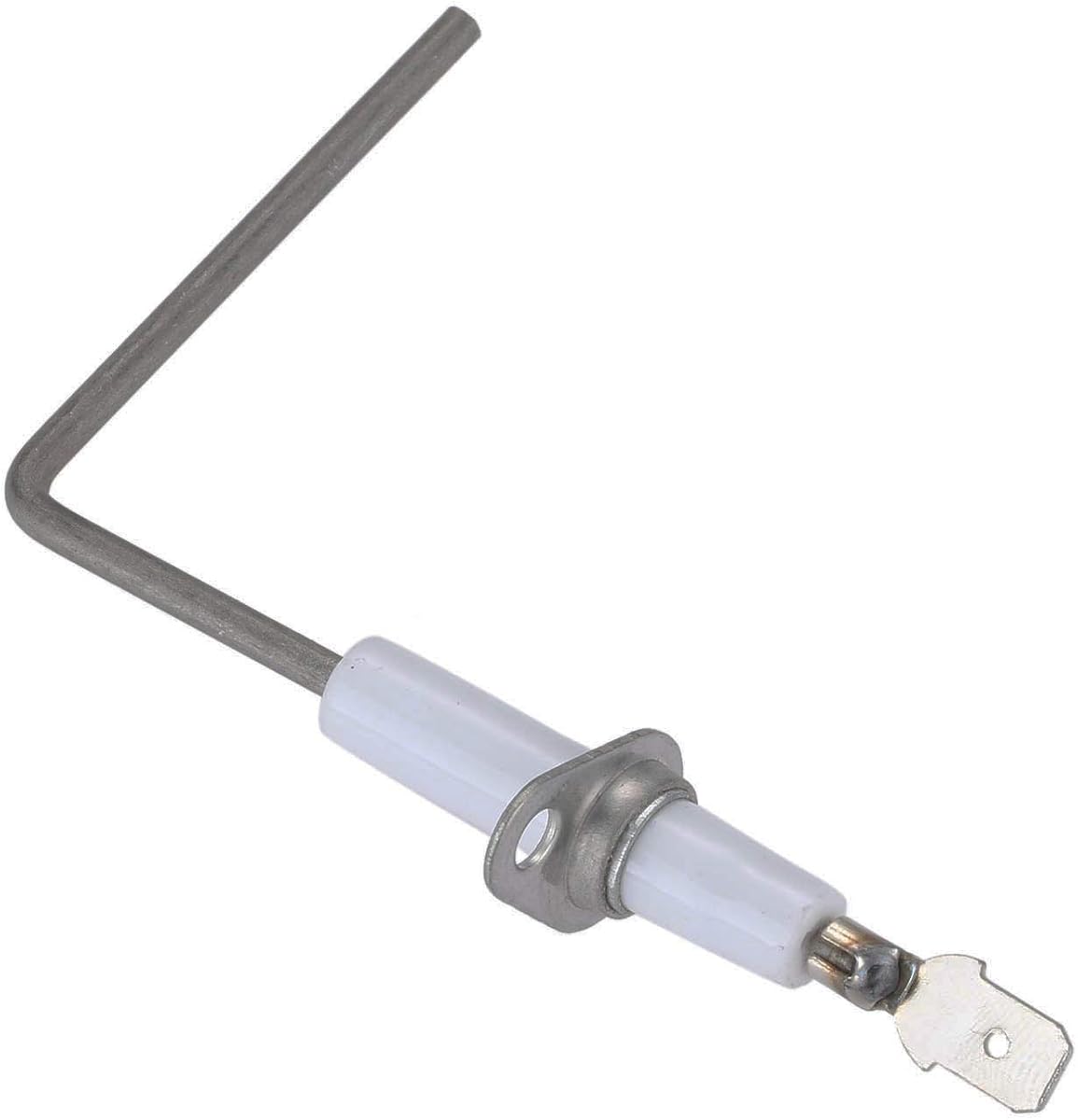
The White-Rodgers 760-401 offers a different approach from the brand-specific replacement sensors. It is designated as a universal fit for hot-surface ignition systems, can be mounted remotely or on multiple burners, and carries a supplied rating of 4.6.
We may earn a commission when you buy through this link, at no additional cost to you.
Its most useful features are the 30-inch lead, the 1/4-inch female spade terminal, and the use of high-temperature Kanthal flame rod material rated to withstand 1800°F. Remote mounting flexibility is particularly useful where the original sensor location is awkward, and the longer lead may make routing easier around burners and cabinet components.
Universal fit should not be confused with fit without verification. The electrical connection, rod geometry, mounting requirements, and furnace's hot-surface ignition design all matter. This option may require more adaptation or confirmation than an exact OEM-style part. Its broad orientation can also make it a less obvious first choice for a homeowner who already knows the precise original part number.
This is our Best Budget pick for a DIY-conscious buyer or technician who understands hot-surface ignition systems and can confirm the connection. It offers useful mounting flexibility and a long lead, making it attractive when the original sensor cannot be reproduced in a conventional furnace bracket. Do not select it solely because it says universal; compare the terminal and furnace requirements first.
Remote or multiple-burner mounting can make the sensor easier to position in a crowded burner compartment. The furnace design must still permit safe flame detection and an appropriate connection.
The 30-inch lead provides more routing flexibility than many short replacement rods. The 1/4-inch female spade terminal should be compared with the furnace wiring before installation.
We may earn a commission when you buy through this link, at no additional cost to you.
The Protech 62-23543-02 is one of the highest-rated products in this guide at 4.7. It also supplies unusually clear dimensional information: a 1/4-inch male quick-connect termination, 2.5 inches from mounting flange to sensor tip, a sensor offset of 1-9/16 inches, and a 90-degree offset angle.
We may earn a commission when you buy through this link, at no additional cost to you.
Those details make cross-checking a replacement unusually straightforward. A technician can compare the flange, overall reach, terminal, and bend with the failed rod before ordering. The part is presented as a precise sensor rather than a broad universal component, which helps reduce the risk of choosing a visually similar but mechanically unsuitable replacement.
The tradeoff is specificity. A 90-degree offset, particular mounting length, and 62-23543-02 identifier mean the product is best for equipment designed around that configuration. The product data does not provide a broad list of compatible furnace brands, so the user must identify the required sensor from the furnace documentation or existing hardware.
We selected this as the Best Premium option because its strong rating and exact physical specifications provide an excellent balance of confidence and specificity. It is a particularly strong choice for a technician who needs a 62-23543-02-style rod and can measure the original. Confirm the part number, terminal, and angle before purchase.
The listed flange-to-tip length, offset, angle, and terminal allow buyers to perform a complete physical check. A tape measure and visual comparison can rule out an incompatible rod quickly.
The 62-23543-02 designation and 90-degree geometry favor precision over universal use. That specificity is beneficial when it matches the furnace and limiting when it does not.
We may earn a commission when you buy through this link, at no additional cost to you.
This Goodman-family replacement is listed for part 0130F00010 and B11726-06, with compatibility also cited for Kenmore and Amana. It carries a supplied rating of 4.6 and offers a stated total length of 3.8 inches with a 95-millimeter probe.
We may earn a commission when you buy through this link, at no additional cost to you.
The description emphasizes stable flame detection and addresses common symptoms such as failure to shut off, immediate shutdown after startup, and systems that will not heat. It identifies wear-resistant metal and ceramic construction and provides a long list of model numbers and replacement references. The supplier also says furnace model information can be submitted for compatibility confirmation.
Some promotional claims, including cycle-life and ignition-speed comparisons, are not supported by detailed test data in the supplied information, so they should be treated cautiously. The product description also occasionally calls the part an igniter, which reflects imprecise terminology rather than a change in its listed identity as a flame sensor. Physical verification remains necessary.
This is a good option for a Goodman, Amana, or Kenmore furnace whose failed sensor matches 0130F00010, B11726-06, or one of the listed references. The clear dimensions make comparison more practical, while the compatibility-support offer adds another way to check uncertain fit. Always disconnect power and turn off the gas supply before work.
The offer to check a furnace model can help when a homeowner is unsure which label corresponds with the installed part. It supplements rather than replaces verification against the service manual.
The stated total length and probe measurement give shoppers measurable points for comparison. They are especially helpful when distinguishing among several sensors with similar shapes.
We may earn a commission when you buy through this link, at no additional cost to you.
The right flame sensor depends on exact furnace compatibility, electrical connection, physical geometry, and the failure being addressed. Reviewing these factors before ordering helps avoid an incompatible rod and unnecessary repeat repairs.
Start with the furnace nameplate rather than the household's HVAC brand. A Goodman, Rheem, Trane, American Standard, York, Ruud, Weatherking, Amana, or Kenmore furnace may use different sensor designs, even when the brands share related parts. The complete model number lets you check the service documentation and determine which sensor number the manufacturer specified.
Use the furnace model, original part number, and physical appearance together. Brand compatibility alone is not enough, and a long cross-reference list does not make every listed model interchangeable without confirming the mounting and connection.
In short, identify the exact furnace and its specified sensor before comparing products.
The part number printed on the old sensor is often the most reliable starting point. Products in this guide cover identifiers such as 0130F00010, B11726-06, 62-23543-01, 62-23543-02, 025-37499-000, and SEN01114, along with several cross-references. Read the marking carefully, including hyphens and leading zeros.
A listing can include multiple numbers, but that does not mean every identifier is guaranteed for every model. Confirm that the number matches the furnace documentation and that the replacement's geometry agrees with the original component.
In short, match the old part number first, then validate every other fit detail.
Flame sensors must be positioned so the sensing section reaches the flame without touching the burner or other hot components. Total length, mounting-flange-to-tip distance, offset, and bend angle all affect whether a replacement can be installed without modification. The 3.8-inch and 2.5-inch measurements, 1-9/16-inch offset, and 90-degree geometry shown by several products are useful comparison points.
Measure the old rod if its label is missing, and compare the mounting base rather than relying only on the sensor itself. A rod that is too short may not detect flame reliably, while one that is too long or bent differently may not mount or may contact nearby parts.
In short, matching length and bend is essential for reliable flame detection.
The sensor must connect correctly to the furnace's control system. Options here include a 1/4-inch male quick connect and a 1/4-inch female spade terminal. These are not interchangeable descriptions, so compare the actual connector, wiring arrangement, and service instructions for your furnace.
For universal-style parts, terminal compatibility deserves particular attention because the product may need to work with a wiring configuration different from the one on the failed sensor. When uncertain, have a qualified technician verify the connection.
In short, confirm the connector and wiring method before ordering or installing.
A suitable sensor should detect the burner flame consistently and provide a stable signal to the control board. Material choices matter in a high-temperature environment: the White-Rodgers model uses Kanthal rod material rated for 1800°F, while the Goodman 0130F00010 option specifies a stainless steel rod and ceramic porcelain insulator.
Do not judge a replacement solely by claims about ignition speed or cycle life. More credible buying evidence includes the correct material, appropriate dimensions, verified compatibility, and construction suited to the burner environment.
In short, prioritize a stable, correctly positioned sensor over unsupported performance superlatives.
Most of the products are intended for residential gas furnaces, while the White-Rodgers 760-401 is specifically described for hot-surface ignition systems and can serve multiple burners. The TOMOON option names gas HVAC systems and Rheem, Ruud, and Weatherking residential furnaces. These distinctions help narrow the field before comparing part numbers.
Do not assume a furnace flame sensor is interchangeable with a standalone gas-stove part, even when a listing uses similar terms. Equipment design, ignition sequence, mounting, and control wiring can differ significantly.
In short, match the replacement to the heating system, not merely to the word sensor.
A multipack can be useful for a technician, landlord, or homeowner responsible for several compatible furnaces. It can also provide a spare for future replacement. For one system, a single sensor may be more practical unless the multipack provides a meaningful convenience or backup advantage.
Storage conditions matter because rods can be damaged by bending or impact. Keep spare sensors flat and protected, and do not modify the rod to make it fit.
In short, choose a multipack when you have a clear need for multiple units or a reliable spare.
Every replacement involves a gas-fired appliance and live electrical connections. The supplied guidance repeatedly recommends disconnecting power and shutting off the gas supply before installation, as well as wearing work gloves. Those precautions are essential and should never be skipped because the repair appears simple.
A flame sensor is one part of a larger ignition and safety system. If the furnace continues to lock out, shows a flame-sensing fault, or has burner problems, investigate wiring, contamination, burner condition, and control-board faults rather than repeatedly replacing the rod.
In short, isolate energy sources and diagnose the fault before installing a new sensor.
Before replacing the sensor, identify the furnace model and the failed part number, then compare the connector, mounting base, length, and bend with the new component. Disconnect the electrical power and shut off the gas supply before touching the furnace. If the service documentation calls for additional lockout or verification procedures, follow those instructions as well.
Remove the old sensor carefully because the rod can be fragile and may be coated with soot. Compare its condition with the new part, inspect the wiring and connector for damage, and make sure the replacement is clean and dry before installation. Mount it in the intended position without forcing or reshaping the sensing rod, then reconnect the wiring according to the furnace documentation.
After restoring power and gas, follow the furnace's normal startup sequence and confirm that the burner establishes flame, the igniter stops when it should, and the system operates without an immediate lockout. If the problem continues, stop repeated cycling and investigate the igniter, gas supply, wiring, burner, control board, or another failed component. Keep spare sensors flat and protected from bending, moisture, and impact.
A flame sensor confirms that the burner is producing a flame after ignition. Its signal allows the furnace control to continue the heating sequence and can cause the gas valve to shut off when a flame is not detected. It is a safety-monitoring component rather than the part that creates the initial spark or flame.
Frequent shutdowns, a brief startup followed by an immediate lockout, repeated ignition attempts, or a no-heat condition can point to a faulty flame sensor. A dirty or contaminated rod can behave much like a failed sensor, so inspect the part and burner area before ordering a replacement.
No. Similar appearance does not guarantee matching length, bend, mounting, terminal, or control-system requirements. Use the part number and furnace manual as the primary guide, then compare the physical specifications. A mismatch may prevent proper flame detection or make installation impossible.
Look for a number printed or stamped on the old sensor, and check the furnace data plate and service documentation. Cross-reference any of the numbers supplied with the replacement listings, but confirm the manufacturer guidance. If the old label is unreadable, provide the complete furnace model to a parts supplier or qualified technician.
No, not merely because both are used in gas furnaces. The products in this guide fit different part-number families, such as 0130F00010 or B11726-06 for Goodman-family equipment and 62-23543-01 for certain Rheem-compatible systems. Match the exact furnace and original component.
Disconnect the electrical supply and shut off the gas before beginning work. Wear protective gloves and follow any additional lockout or verification instructions in the furnace manual. If you are uncertain about gas connections, electrical wiring, or burner access, have a qualified HVAC professional perform the replacement.
Handle a new sensor so the sensing rod remains clean and undamaged, but do not use a file, grinder, or other tool to alter the rod. If the old sensor was contaminated, determine what caused the residue and clean the surrounding burner area according to the service instructions. Do not install a bent or damaged replacement.
The flame sensor may not have been the only failed component. Possible causes include an igniter problem, wiring fault, dirty burner, improper sensor position, gas-supply issue, or a control-board fault. Persistent lockouts should be diagnosed systematically instead of repeatedly changing the sensor.
The Rheem 62-23543-01 genuine OEM sensor stands out as the Editor's Choice when the required part number is known, while the White-Rodgers 760-401 offers flexible mounting for compatible hot-surface ignition systems. The Protech 62-23543-02 earns the Best Premium distinction because its strong rating and exact measurements make physical matching especially clear.
Across all ten options, compatibility should come before convenience. Confirm the furnace brand and full model, locate the original part number, compare length and bend, and verify the electrical termination. For Goodman-family systems, the 0130F00010 and B11726-06 options provide extensive cross-references, while Rheem, Trane, American Standard, and York owners should focus on the specific identifiers listed for their equipment.
A correct sensor can resolve a flame-detection fault, but it cannot correct every furnace problem. If shutdowns continue, investigate contamination, wiring, the igniter, burner, and control system. Product availability and pricing change over time, so check the current listing, seller information, customer feedback, and service documentation before making the final purchase.