
Loop Detector Vehicle Sensor
4.3Editor score
Universal 12/24V power support
Adjustable auto-boost sensitivity
Audible and visual feedback
Gate loop detector guide comparing ten options for gate systems, highlighting compatibility, power options, sensitivity, diagnostics, and installation features
A gate loop detector senses vehicles through an inductive loop buried in the pavement, allowing connected operators to open, hold, or close gates at the right moment. The best unit must suit the operator, power source, loop layout, and traffic pattern rather than simply offer the longest feature list.
We compared all ten products by examining stated compatibility, supported power inputs, sensitivity controls, operating modes, diagnostic features, and installation format. The list includes universal controllers, LiftMaster plug-in replacements, low-power access-control models, and detectors designed for specialized vehicle-detection behavior.
Each pick highlights the capabilities that make a detector a practical fit for a particular installation, while also noting missing information that buyers should confirm. Ratings and product details can change, and current pricing and availability should always be checked before purchasing.
4.3Editor score

5.0Editor score

4.8Editor score
The table below compares the ten detectors by their strongest stated features, giving readers a quick way to distinguish universal controllers, operator-specific plug-ins, low-power models, and units with advanced diagnostic or configurable output features.


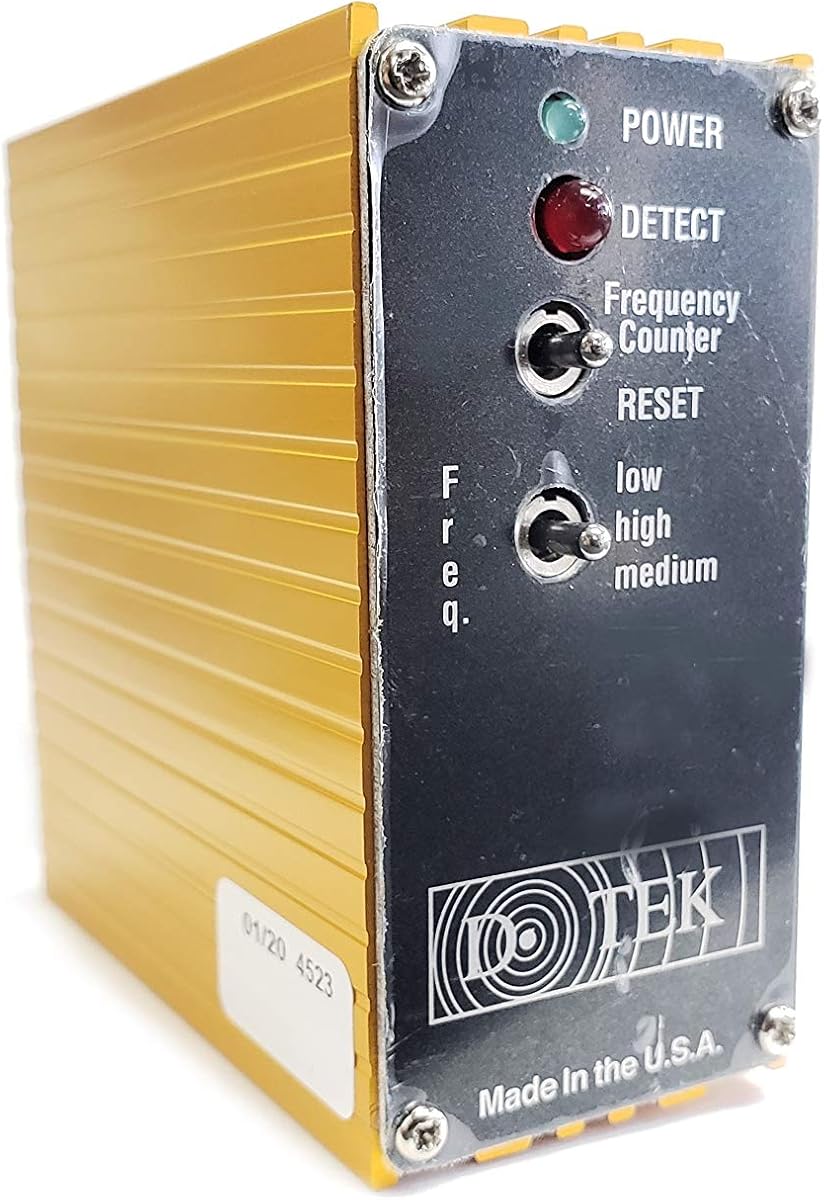


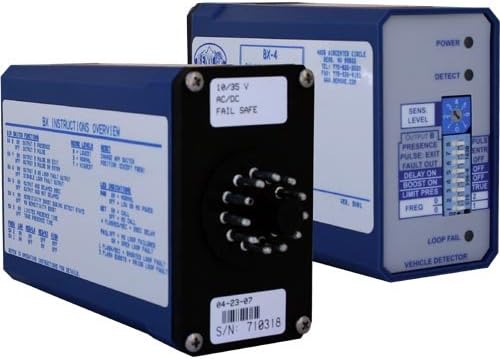


The Loop Detector Vehicle Sensor is a versatile 12/24V AC/DC detector with a 4.3 rating and a clear emphasis on straightforward gate installation. Its stated compatibility with LiftMaster and most universal gate systems makes it a useful starting point for technicians who cannot commit to one operator brand before inspecting the control hardware.
We may earn a commission when you buy through this link, at no additional cost to you.
Automatic boost is one of its most useful features because it adjusts sensitivity to different vehicle heights, reducing the need to repeatedly reset the detector when traffic changes from motorcycles to trucks. On-unit audible and visual feedback also helps installers confirm detection without relying entirely on gate movement, which is particularly valuable during initial setup and troubleshooting.
The trade-off is that the product information is less extensive than that of several specialist controllers. It does not itemize a complete list of compatible operators, relay functions, timing options, or fail-safe behavior. Those details should be confirmed with the seller, installer, or gate manufacturer before the detector is placed in a safety-related circuit.
This is a strong value-oriented choice for a standard gate, driveway, traffic-control enclosure, or garage-door system using 12/24V power. It is especially appealing to installers who want automatic sensitivity and immediate setup feedback without committing to an operator-specific module. Confirm electrical connections, loop configuration, and control-board compatibility first.
Audible and visual confirmation makes it easier to determine whether a vehicle is being recognized before fine-tuning the rest of the gate system. This feedback can shorten setup time and reduce uncertainty when a loop is installed near ordinary pedestrian traffic.
Automatic boost is intended to accommodate differences in vehicle height and metal content. That flexibility makes the detector more suitable for mixed traffic than a unit with a single fixed detection response.
We may earn a commission when you buy through this link, at no additional cost to you.
The Liftmaster LOOPDETLM is a genuine LiftMaster plug-in loop detector with a 5.0 rating and an unusually long list of supported slide- and swing-gate operator models. It is a compelling choice for a technician replacing a failed detector in a compatible installation or adding vehicle detection to a gate from the same supported product family.
We may earn a commission when you buy through this link, at no additional cost to you.
Its fail-safe behavior is designed to allow the gate to remain open when a vehicle obstructs the path. That is a valuable safety-oriented characteristic, but it also means the detector's role must be understood during commissioning. The same module can operate as a Shadow Loop, Interrupt Loop, or Exit Loop, giving installers flexibility for different positions within the traffic-control layout.
The extensive model list is both its greatest strength and its clearest limitation. This is not a broadly universal controller, and the shortened spelling in the marketplace title can make identification less straightforward. Buyers should match the gate operator's exact model and board requirements rather than assuming that all LiftMaster systems accept the same plug-in module.
For a compatible LiftMaster installation, this is the most confidently matched product in the group. It is particularly appropriate for facilities using an exit or safety loop where fail-safe operation and a genuine replacement part matter more than the freedom of a universal controller. Verify the operator model before ordering and follow the manufacturer's wiring and programming instructions.
Using a genuine replacement module can simplify electrical and programming expectations when the gate already falls within the published compatibility list. Exact model verification remains essential because the list contains numerous slide, swing, and controller variants.
Shadow, interrupt, and exit configurations allow the same detector to participate in different stages of vehicle movement. The correct choice depends on the loop position, traffic direction, and behavior required from the connected operator.
We may earn a commission when you buy through this link, at no additional cost to you.
The EMX Ultra II DTEK combines a 4.8 rating with extensive diagnostic and tuning features, making it the strongest technical choice in this roundup. It is positioned as a universal detector for gates and traffic control, which is useful for installers supporting varied equipment rather than one operator family.
We may earn a commission when you buy through this link, at no additional cost to you.
Ten sensitivity settings offer more granular control than the two-setting system described for some competing models. Four operating frequencies, a frequency counter, a reset switch, loop diagnostics, and lightning and surge protection create a comprehensive toolkit for separating loop behavior from electrical or environmental issues.
Its sophistication may also be unnecessary for a simple residential gate. The listing does not provide a full inventory of output relays, timing controls, and power requirements, so a buyer must confirm that the module's electrical interface matches the operator. A more advanced unit does not compensate for an incompatible control board or incorrectly sized loop.
This detector is best suited to professional installers, multi-gate operations, and traffic-control applications where diagnostics and frequency selection add value. It is a strong premium option for users who want finer tuning than a basic plug-in module. Before purchase, match the power input, output contacts, and enclosure requirements to the existing system.
A frequency counter, reset switch, and loop diagnostics give technicians more ways to evaluate installation behavior. These features can help distinguish a detector problem from a loop, wiring, or environment issue when a gate does not respond as expected.
Ten sensitivity levels and four operating frequencies provide substantial configuration flexibility. Multiple frequencies are particularly relevant where several loops or detection zones operate near one another and unwanted interference must be minimized.
We may earn a commission when you buy through this link, at no additional cost to you.
The EMX D-TEK MVP is a 4.3-rated universal loop detector whose defining theme is multi-voltage operation. That makes it a logical candidate for installations where the available power may differ from the supply found in a newer operator or a retrofit enclosure.
We may earn a commission when you buy through this link, at no additional cost to you.
The product is identified as the EMX MVP-D-TEK, placing it within a recognizable detector family and suggesting a conventional universal controller rather than a narrow replacement card. Multi-voltage support can simplify electrical planning when a technician is working across a mixed fleet of gates or access-control equipment.
The supplied listing is notably sparse and does not state sensitivity levels, output types, timing behavior, diagnostic indicators, or exact supported voltage ranges. Those omissions make the product difficult to compare confidently with the richer EMX Ultra II and Northstar specifications. The model number should be matched to technical documentation rather than inferred from the marketplace summary.
This detector is most appropriate for a professional buyer who already knows the MVP-D-TEK platform and has confirmed its electrical and interface requirements. It may be a sensible choice for a technician standardizing across a mixed-voltage equipment base, but it is not the clearest option for a first-time buyer without a wiring manual. Obtain the installation guide before committing to a specific installation.
A multi-voltage controller can reduce the need for separate power-conversion hardware when the detector must support more than one type of operator cabinet. Exact input tolerances still need to be verified from the model's documentation.
The MVP-D-TEK designation identifies a specific controller family that experienced installers may already recognize. Familiarity can be useful, but accessory and configuration details should always be checked against the exact model being installed.
We may earn a commission when you buy through this link, at no additional cost to you.
The EMX ULT-PLG is a feature-rich 12–24VDC plug-in detector designed for automatic gates, overhead doors, and access-control systems. Its most distinctive feature is Detect-on-Stop, which waits for a vehicle to stop on the loop before signaling detection and is intended to reduce unwanted activation from cross traffic.
We may earn a commission when you buy through this link, at no additional cost to you.
The Ultrameter display presents an optimum sensitivity setting, while ten sensitivity levels allow fine adjustment. Dual solid-state open-collector outputs expand the control options: Output A can indicate presence, while Output B can be configured for presence, loop fault, entry pulse, or exit pulse. The stated loop-inductance range of 20–2000 µH gives installers useful guidance when evaluating a loop design.
This product is not as broadly power-compatible as detectors accepting both AC and DC. The listing also provides no customer rating, so the absence of visible feedback should not be interpreted as either a positive or negative performance signal. Advanced features do not remove the need to confirm connector type, output logic, and controller-board requirements.
The ULT-PLG is an excellent fit for tight access-control layouts where cross traffic is common and the system should react to a vehicle stopping rather than merely passing over the loop. It is also attractive for technicians who need configurable outputs and meter-guided setup. Verify that the gate operator supports a 12–24VDC plug-in module and the intended output configuration.
Detect-on-stop changes the response from simple loop occupancy to a defined vehicle-stop event. In a confined driveway or parking approach, that behavior can make a more deliberate opening signal possible.
The meter display is intended to show an optimum sensitivity setting, which can make initial tuning more systematic. Technicians should still compare the suggested value with actual site traffic and nearby interference sources.
We may earn a commission when you buy through this link, at no additional cost to you.
The Sentex/Chamberlain Brands LM Loop Detector Plug-In, identified as O2-LOOPDETLM, is a compact operator-specific option with a 5.0 rating. It appeals to buyers seeking a direct plug-in module for a compatible LiftMaster or Chamberlain-branded control system rather than a general-purpose detector.
We may earn a commission when you buy through this link, at no additional cost to you.
The straightforward replacement format is the product's central advantage. A matching module can be attractive when an existing card has failed or when a technician is familiar with the established installation process. Its part identity is particularly useful for comparing it with the newer LOOPDETLM unit, although the two listings should not be treated as automatically interchangeable without model verification.
The supplied information is extremely limited and does not describe supported operators, sensitivity controls, output behavior, timing, or fail-safe operation. It also notes that the product is made in Mexico. Without a compatibility statement or detailed electrical specification, this option is less attractive to buyers who have not already identified the required part.
This detector is best for a technician who has confirmed that O2-LOOPDETLM is the correct module for the control cabinet. It may be the simplest choice for a like-for-like replacement, but first-time installers should avoid selecting it solely on its rating. Check the operator model, board revision, connector, and original part number before ordering.
Plug-in installation can minimize cabinet changes when replacing a compatible detector. The key requirement is an exact match to the operator's accepted part number and control-board arrangement.
The listing does not publish a supported-model list. That omission makes the operator's manual, a label photograph, or the existing module's part number especially important when determining fit.
We may earn a commission when you buy through this link, at no additional cost to you.
The LiftMaster Plug-In LOOP DETECTOR Chamberlain AELD combines a 4.3 rating with a clear diagnostic feature set. Its four LED indicators identify detection, an open loop, a loop failure, and power, allowing an installer to see the detector's current status without opening the cabinet or relying only on gate movement.
We may earn a commission when you buy through this link, at no additional cost to you.
The detector offers two sensitivity settings with boost and four frequency settings. This is less granular than controllers with ten levels, but it can still be appropriate for a straightforward supported installation. The multiple frequencies help separate the detector from nearby interference, while boost can improve recognition when a small vehicle sits on the loop.
Compatibility is limited to LiftMaster CSW200 and SL3000 gate operators equipped with the Omni Control Board, according to the supplied information. Those requirements are useful but also narrow. A plug-in shape alone does not ensure that the detector can read the loop or communicate correctly with the operator's safety inputs.
The AELD is a good match for a CSW200 or SL3000 installation with an Omni Control Board where visible status feedback is important. It is less suitable for a mixed-brand fleet or a modern universal gate project. Confirm the operator model and board generation, then use the diagnostic LEDs to guide installation and fault checking.
Separate indicators for detect, open loop, loop failure, and power give a compact explanation of what the module is doing. This can make commissioning and later troubleshooting more methodical.
Four available frequencies offer useful flexibility in installations with adjacent loops or electrical interference. The correct setting is the one that provides stable vehicle detection without unwanted activation.
We may earn a commission when you buy through this link, at no additional cost to you.
The RENO A & E BX3 is a 110VDC vehicle-detection controller with a 4.2 rating and a focus on conventional relay-based control. Dual relay outputs make it relevant where a gate or access-control installation requires more than one separately controlled vehicle-detection signal.
We may earn a commission when you buy through this link, at no additional cost to you.
Outputs A and B can be delayed by two seconds, allowing the installer to coordinate detection with another system. Sensitivity boost and four loop frequencies provide the primary tuning tools, while fail-safe and fail-secure versions are said to be available. The difference matters because it determines the operator's behavior when the loop is disrupted or the detector loses power.
The main limitation is its 110VDC operating voltage. Unlike several products in the guide, the BX3 does not list a broader AC/DC or low-voltage range, so it may require a dedicated supply and appropriate enclosure provisions. Users should confirm that the selected fail-safe or fail-secure version matches the required control logic.
The BX3 is best for an installer with a 110VDC control environment who needs dual relay outputs and adjustable delay behavior. It may suit professional traffic-control or equipment-room installations where dry contacts are preferable. It is not a convenient choice for a low-voltage residential gate unless that gate already has the necessary power infrastructure.
Two relay outputs can serve different functions or coordinate the detector with a second control stage. This is valuable when the gate system needs independently configurable contacts rather than a single presence output.
Fail-safe and fail-secure versions produce different system responses when a fault occurs. The correct choice should reflect the site's safety policy and the behavior required by the connected gate operator.
We may earn a commission when you buy through this link, at no additional cost to you.
The DSP-6LP Microdetector is a compact 5.0-rated controller designed around energy efficiency, particularly for solar-powered gate applications. It accepts 10–30V AC or DC and draws approximately 1 milliamp while waiting for a car, making it a notable option where every watt matters.
We may earn a commission when you buy through this link, at no additional cost to you.
The detector is preset to a normal sensitivity level and automatically tunes itself to an appropriate operating frequency. It also adjusts sensitivity for different loop sizes and uses the stated Hypertrack software to compensate for changing environmental conditions. The listing describes the system as virtually crosstalk-free in most applications and identifies United States patent number US 7,132,959.
Its low-power operation is clearly its main advantage, but this is not a conventional all-purpose gate detector. The description focuses on battery-powered gates, parking, and access control, and it does not detail relay types, timing ranges, or fail-safe configuration. Users requiring a conventional control interface may need documentation beyond the product listing.
The DSP-6LP is a strong fit for a solar-powered gate, remote parking entrance, or battery-backed access-control system where standby consumption must remain low. It is also appealing to installers who value automatic compensation over manual sensitivity selection. Confirm output compatibility and fail-state requirements before integrating it with the gate controller.
An approximate one-milliamp waiting draw reduces the load placed on batteries and solar-powered systems. Lower standby consumption can help preserve stored energy during periods when no vehicle is present.
Automatic frequency tuning, loop-size adaptation, and environmental compensation reduce the amount of ongoing manual adjustment. These characteristics are particularly helpful in remote installations where routine service visits may be infrequent.
We may earn a commission when you buy through this link, at no additional cost to you.
The Northstar NP2 is a 5.0-rated universal vehicle detector with a balanced set of detection, timing, and diagnostic features. Its 12–24V AC/DC support gives it broader power flexibility than many products in the group, while wrong-voltage protection helps reduce installation errors.
We may earn a commission when you buy through this link, at no additional cost to you.
Ten sensitivity levels, four selectable frequencies, and automatic boost provide solid tuning flexibility. The detector also includes extend and delay timing, selectable presence periods, and selectable pulse lengths. Separate power, detect, and fault indicators make its operating state visible to an installer during commissioning.
The feature set is attractive, but the listing does not identify connector type, relay or output configuration, enclosure rating, or the exact gate operators supported. A high rating and broad specifications cannot answer every compatibility question. Those details should be confirmed from the NP2 manual or with the supplier before the module is connected.
The NP2 is a good general choice for a 12–24V gate system that needs fine sensitivity control, adjustable timing, and visible status feedback. It may be especially suitable for installers who want more configuration than a simple two-setting plug-in without moving to an elaborate diagnostic controller. Validate the output interface and timing behavior against the operator's requirements.
Extend, delay, presence, and pulse controls allow the detector's response to be matched to different gate sequences. Adjustable timing can prevent premature closure or excessive hold-open periods when traffic patterns change.
Wrong-voltage protection adds a safeguard against an incorrect power connection, while separate power, detection, and fault lights simplify troubleshooting. The indicators are especially useful during initial setup and future diagnostics.
We may earn a commission when you buy through this link, at no additional cost to you.
The right gate loop detector depends on electrical compatibility, operator design, loop behavior, traffic conditions, and the safety response required when a fault occurs. Buyers should match the detector to the existing system instead of selecting on loop sensitivity alone.
Start with the gate operator's exact model, control-board generation, available connector, and accepted detector type. Some products are genuine plug-in replacements limited to a listed family of operators, while universal controllers may require more involved wiring and configuration. Even when two products share the same brand, their supported systems and connector layouts can differ, so a broad brand match is not enough.
Check the operator manual, the existing detector's part number, or a clear photograph of the control board before ordering. If the listing omits compatibility details, request documentation rather than relying on visual similarity between circuit boards.
The detector's voltage and current requirements must align with the gate control cabinet. Some products accept both AC and DC, others specify 12–24VDC, and the RENO BX3 is listed for 110VDC. A broad voltage range can simplify mixed installations, but exact tolerances, current draw, and whether AC or DC is required should still be confirmed.
For solar or battery systems, standby consumption deserves special attention. A low-power detector can reduce the load on the energy-storage system, while a high-current module may be less appropriate where power is scarce.
A basic presence loop keeps the gate open while a vehicle occupies the zone, while an exit loop or interrupt loop can trigger a closing sequence. A safety loop may hold the gate open when a vehicle is detected in the path. Some detectors can be assigned several roles, making them useful in more complex traffic layouts.
Identify exactly what each loop should do before selecting a controller. A module with several output modes may suit a versatile system, but a dedicated application can be easier to manage with a simpler, purpose-specific product.
Sensitivity settings determine how readily the detector responds to different vehicles. Motorcycles, compact cars, SUVs, trucks, and vehicles carrying substantial metal can produce very different loop signals, and the detector must remain stable without activating for pedestrians or nearby moving metal.
Ten selectable levels offer fine control, automatic boost adapts to changing vehicle characteristics, and automatic compensation can simplify remote installations. The best setting is the one that detects the intended vehicles consistently while ignoring irrelevant movement.
Loop detectors operate at selectable frequencies so nearby detectors and other electromagnetic sources do not interfere with one another. Products with four frequency settings or an automatic tuning function provide useful flexibility, particularly at sites with adjacent vehicle zones or substantial surrounding electrical equipment.
A frequency counter and reset switch can assist professional troubleshooting, while automatic frequency selection is advantageous in installations that may be difficult to service. These features help establish stable detection but do not replace a properly installed and tested loop.
A detector's fail-safe or fail-secure behavior determines how the connected gate responds to a power loss, open loop, or other fault. Some products allow the required behavior to be selected, while others offer fail-safe and fail-secure versions. A fail-safe arrangement may keep the gate open during a fault, whereas fail-secure behavior follows a different safety strategy.
The choice should follow the gate manufacturer's requirements, the site risk assessment, and local access-control policy. Do not select a failure mode solely because it is easier to wire; confirm how it changes actual traffic flow and pedestrian safety.
Outputs determine how the detector communicates with the gate operator. Relay contacts, solid-state open-collector outputs, pulse signals, and presence outputs each suit different controllers. Timing options such as delay, extend, presence duration, and pulse length can also be essential when the gate must remain open long enough to clear the vehicle.
Separate detection, fault, and power indicators make installation and maintenance easier. More indicators are not essential in every site, but they can save diagnostic time by showing whether the module is powered, seeing a vehicle, or encountering a loop problem.
The physical detector, the buried loop, and the control cabinet must be treated as one system. Confirm enclosure space, connector orientation, wire routing, grounding requirements, and local rules for cutting and sealing pavement. A compact plug-in module may be convenient, while a universal unit may require a separate enclosure and more careful wiring.
Choose a detector that the installer can support and service. Clear documentation, recognizable status indicators, and locally available replacement modules can be more valuable over time than a long feature list.
Begin by identifying the operator, control board, power source, loop position, and required detection behavior. Read the detector's installation guide and compare every connection with the wiring diagram for the gate system. Do not assume that a plug-in module with a similar connector is electrically or functionally identical to the original.
Install and secure the loop according to local electrical and paving requirements, paying close attention to lead-in cable, splice integrity, separation from interference sources, and protection from moisture. Connect the detector with power isolated, set the required sensitivity, frequency, timing, output, and failure behavior, then restore power and test each state without a vehicle in the gate path.
Test the complete sequence with a vehicle of the type normally expected at the site. Confirm opening, presence hold, closing delay, obstruction response, and behavior during an open-loop or power-fault condition. Clean the area around any cabinet vents, keep connectors dry, inspect the loop after resurfacing, and retune the detector if seasonal traffic or nearby electrical changes alter its response.
A gate loop detector is an electronic controller that senses a vehicle through an inductive loop installed in or beneath the pavement. When a vehicle changes the loop's electromagnetic field, the detector sends a signal to the gate operator. Depending on the configured function, that signal can open the gate, keep it open, prevent closure, or initiate an exit sequence.
A universal detector still has to match the operator's power supply, output interface, and control requirements. Some universal units use dry-contact relay outputs, while others use low-voltage open-collector outputs. Check the detector manual and the operator's wiring diagram before installation rather than relying on the word universal as proof of compatibility.
A compatible plug-in detector can simplify installation because it may use a dedicated cabinet connector and avoid additional field wiring. It is only suitable when the exact operator model and control board accept that module. Confirm the part number, connector, firmware or board requirements, and supported loop functions before ordering.
The best setting is one that consistently detects the smallest vehicle expected at the site without causing false activations. Automatic boost or a wide sensitivity range can help accommodate differences in vehicle size. A detector should be tested with several representative vehicles, and its frequency should also be adjusted if nearby loops or electrical equipment cause interference.
Fail-safe operation usually changes the gate or access-control state when the detector loses power or detects a loop fault in the direction considered safer for that site. Fail-secure operation follows a different predetermined state and may preserve controlled closure. The appropriate choice depends on the operator's safety design, traffic flow, emergency access requirements, and applicable site policies.
They can be, provided the detector's operating voltage and standby consumption fit the available power system. The DSP-6LP is specifically described for solar-powered gate applications and low idle current. A higher-consumption detector may still work if the solar system's battery and charge controller have sufficient capacity, so the complete power budget should be reviewed.
Possible causes include a damaged loop, poor splices, excessive lead-in cable, electrical interference, incorrect frequency selection, unsuitable sensitivity, low detector power, or an incompatible wiring connection. Diagnostic indicators, loop tests, and a careful physical inspection can help isolate the cause. Do not adjust sensitivity continuously without checking the loop and wiring first, as that may hide the underlying fault.
They need periodic inspection even when the gate itself operates normally. Maintenance should include checking the cabinet and connectors, reviewing fault indicators, confirming that pavement and loop wiring remain intact, and testing representative vehicles. Seasonal changes, nearby construction, new electrical equipment, or resurfacing can alter detection behavior and justify a fresh test and tuning.
The Loop Detector Vehicle Sensor stands out as the most versatile value-oriented choice, while the Liftmaster LOOPDETLM is the most natural pick for a compatible LiftMaster installation. The EMX Ultra II DTEK offers the strongest combination of diagnostic depth, sensitivity control, frequency selection, and protection for professional traffic-control work.
Prioritize electrical compatibility and the exact operator model before considering advanced features. Once those fundamentals are confirmed, choose the detector that matches the installation's priorities: plug-in simplicity, broad voltage support, low standby consumption, configurable outputs, fault behavior, or detailed diagnostics. Site traffic and loop placement remain just as important as the detector model itself.
Before purchasing, verify the full model compatibility, connector type, output configuration, power requirements, failure mode, and installation instructions. Ratings, technical details, pricing, and availability can change, so check the current product listing and the latest gate-operator documentation before ordering or installing any detector.
