
Duracell CR123A 3V Lithium Battery
4.8Editor score
Ten-year storage guarantee
Wide operating temperature range
High-energy lithium chemistry
Suited to security cameras
This guide compares 10 lithium batteries for trail cameras, covering compatibility, capacity, charging, runtime, weather resistance, and field convenience for
Trail camera batteries must deliver dependable power through cold mornings, summer heat, and long stretches without access to mains electricity. Lithium chemistry offers useful advantages over ordinary alkaline cells, including longer storage life, consistent output, lighter weight, and better performance in demanding outdoor conditions.
This guide compares ten lithium battery options ranging from general-purpose AA cells to rechargeable packs made for Reveal, SPYPOINT, and Stealth Cam cameras. The evaluation considers stated battery chemistry, capacity, charging options, compatibility, temperature performance, safety features, shelf life, and likely field convenience.
Each pick reveals a different way to power a remote camera, from simple disposable cells to high-capacity rechargeable systems and bundled charging solutions. Ratings and specifications come from the supplied product information, while prices and availability can change, so shoppers should confirm current details before purchasing.
4.8Editor score

4.3Editor score
4.2Editor score
The table below compares all ten options by format, stated capacity, charging method, and compatibility, helping readers distinguish universal AA choices from camera-specific rechargeable packs.



The Energizer Ultimate Lithium AA 24 Pack combines a broadly useful battery format with a large quantity and a 4.7 rating. Its strongest attraction is flexibility: these are 1.5V AA lithium cells intended to support many electronics, including outdoor surveillance systems and Blink cameras, without tying the buyer to one camera brand.
We may earn a commission when you buy through this link, at no additional cost to you.
Storage life is a major practical benefit. Energizer states that the batteries can hold power for up to 25 years in storage, which makes the pack useful for maintaining spare stock at home, in a vehicle, or in a hunting camp. The stated operating range of minus 40°F to 140°F also suits cameras exposed to significant seasonal temperature changes.
The pack is not rechargeable, so the eventual replacement cycle remains. That drawback is balanced by straightforward operation, familiar AA dimensions, and a broad range of devices that can use the cells. Leak-resistant construction is another useful feature, although the statement is based on standard use and should not be interpreted as a guarantee against improper handling or damaged batteries.
This is a strong pick for hunters or wildlife observers who use several AA-powered cameras, keep a dispersed group of devices, and want one purchase to cover numerous units. It may also suit people who prefer keeping spare cells over managing chargers. For a single camera, a smaller pack would be less wasteful.
Twenty-four cells provide a practical reserve for several cameras or repeated field seasons. Keeping spare batteries reduces the chance that a depleted pack interrupts a monitoring session.
The broad stated temperature range and long storage life make these cells a practical choice for remote equipment exposed to cold winters, summer heat, and infrequent use.
We may earn a commission when you buy through this link, at no additional cost to you.
The Energizer Ultimate Lithium AA 8 Pack offers the same 4.7-rated lithium format as the larger option in a more compact quantity. It is a sensible pick for one trail camera, a small collection of devices, or a traveler who wants dependable AA backups without carrying a large inventory.
We may earn a commission when you buy through this link, at no additional cost to you.
The cells provide 1.5V lithium performance and are stated to operate from minus 40°F to 140°F. Their lightweight design and up-to-25-year storage life make them suitable for equipment that may remain installed but receive occasional attention. Leak-resistant construction adds another layer of confidence for unattended electronics.
Compared with the 24-cell version, the principal limitation is inventory scale. Eight cells may not support multiple high-consumption cameras for an entire season, and disposable chemistry still creates a recurring replacement requirement. Buyers must also confirm that their camera accepts AA cells rather than a proprietary battery cartridge.
Choose this pack when convenience, low weight, and a manageable spare supply matter more than maximum quantity. It is especially helpful for seasonal users who can replenish batteries between trips and want confidence that stored cells will remain ready.
Eight cells fit neatly into a camera bag or equipment locker without adding unnecessary bulk. The long storage life is valuable for batteries kept between hunting trips.
Because they use the familiar AA format, these cells can also support compatible cameras, flashlights, and other electronics that benefit from lithium battery longevity.
We may earn a commission when you buy through this link, at no additional cost to you.
The Energizer Ultimate Lithium AA listing is a straightforward 4.7-rated option centered on a familiar battery format and a recognized manufacturer. It is a practical candidate for trail-camera users whose equipment accepts AA cells and who value consistent performance more than a specialized rechargeable system.
We may earn a commission when you buy through this link, at no additional cost to you.
The appeal lies in simplicity. AA lithium batteries require no charging equipment, can be swapped quickly in the field, and are broadly compatible with many cameras and household electronics. That makes them useful when a camera is deployed somewhere charging access is limited and technicians need a battery that can be replaced immediately.
The supplied product information contains less detail than the other Energizer listings, with the manufacturer identified as Energizer but no stated count, shelf life, or temperature range. As a result, buyers should check the package quantity and compare the final listing specifications before ordering.
This option makes sense for a single AA-powered camera or as part of a mixed electronics kit. It is less suitable for buyers who need clearly documented capacity, a large fleet reserve, or camera-specific rechargeable features.
Disposable lithium cells are valuable where every battery swap would otherwise require a charger, cable, or reliable external power source. They are ready to install when needed.
Because the supplied information does not specify count or detailed performance claims, shoppers should confirm those details on the current product page before buying multiple packs.
We may earn a commission when you buy through this link, at no additional cost to you.
The Duracell CR123A 3V Lithium Battery set holds the highest listed rating in this roundup at 4.8. Its compact six-cell configuration and ten-year storage guarantee make it an attractive backup option for compatible security cameras, sensors, and other 3V devices used around outdoor monitoring setups.
We may earn a commission when you buy through this link, at no additional cost to you.
Duracell states that the high-energy lithium chemistry provides more energy density than standard alkaline in high-drain devices. The batteries are also listed for use in Ring, Nest Cam, and Arlo cameras, along with alarm sensors, professional cameras, and tactical flashlights. A wide temperature range adds relevance for equipment exposed to sub-freezing or hot conditions.
Compatibility is the main limitation because CR123A cells are not a substitute for AA batteries. A trail camera must specifically accept the 3V lithium format. The cells are also disposable, so buyers will need replacements eventually, although the guaranteed storage period makes unused spares easier to keep on hand.
For a camera that takes CR123A batteries, this is an excellent compact choice because of its rating, storage guarantee, and outdoor-oriented performance. It is best treated as a focused battery solution rather than a universal replacement for every trail-camera power system.
The ten-year storage guarantee makes the six-cell pack easy to maintain as a standby supply. It can sit in a dry equipment locker until a compatible camera needs replacement power.
The stated high-energy chemistry targets cameras, flashlights, and sensors that draw more power than ordinary low-drain devices, supporting consistent operation in demanding field applications.
We may earn a commission when you buy through this link, at no additional cost to you.
The BEVIGOR 24 Pack is a 4.3-rated AA lithium option built for users who want a large supply of disposable cells. Its stated 1.5V high-capacity chemistry, 20-year shelf life, and low self-discharge rate target cameras and other high-use electronics that must remain ready between service visits.
We may earn a commission when you buy through this link, at no additional cost to you.
The listing specifically identifies trail cameras as a suitable application and says the cells maintain full voltage nearly to the end of discharge. This stable output is valuable in a device where unpredictable voltage decline could affect performance. A stated operating range of minus 40°F to 140°F also covers demanding outdoor conditions.
Safety features include leak-proof construction, an explosion-proof valve, and short-circuit protection. Each cell weighs 15 grams according to the description, substantially less than a 26-gram alkaline cell, which matters when carrying many replacements. The product remains disposable, and its 4.3 rating trails the strongest options in the group.
Choose BEVIGOR when a large AA reserve, broad temperature tolerance, and reduced carrying weight matter most. Confirm that your camera accepts AA cells and verify compatibility with any unusual battery requirements before purchasing.
The product description emphasizes stable 1.5V output until the cells are nearly depleted, a useful characteristic for electronics that need steadier power than gradually declining alkaline chemistry provides.
At a stated 15 grams per cell, the batteries reduce the weight of a 24-cell field kit compared with equivalent alkaline stock while preserving broad operating-temperature capability.
We may earn a commission when you buy through this link, at no additional cost to you.
The Lesaps 2-Pack 6000mAh Rechargeable Reveal Lipo Lithium Batteries Pack earns an Editor's Choice distinction for its combination of compatibility, charging flexibility, and field monitoring features. Its 4.3 rating is supported by a substantial stated capacity and an LED meter that shows charging or full-charge status.
We may earn a commission when you buy through this link, at no additional cost to you.
The packs are designed for numerous Tactacam Reveal models, including X Ultra 3.0, X Gen 3.0, 2.0, X Pro 3.0, Pro, SK, XB, and X. Buyers can charge through USB-C or a 12V DC connection, and the supplied listing says a full charge takes approximately five hours. Compatibility with Tactacam solar panels can extend unattended operation.
Safety protections cover over-charge, over-discharge, over-voltage, over-current, overheating, and short circuits. The stated operating range of minus 20°F to 140°F is wide, although it does not extend as far into extreme cold as the AA products. Users must also determine whether their exact Reveal camera model is covered.
This is a compelling choice for Reveal owners who want large rechargeable packs, clear charge status, and multiple ways to recharge in the field. It reduces the recurring expense and handling associated with disposable cells while requiring planned charging and careful model compatibility.
USB-C offers convenient charging from standard wall adapters or power banks, while the 12V port supports vehicle and solar-panel setups. That flexibility is valuable away from mains electricity.
The LED meter flashes during charging and remains lit when full, reducing uncertainty when deciding whether a pack is ready for another monitoring trip.
We may earn a commission when you buy through this link, at no additional cost to you.
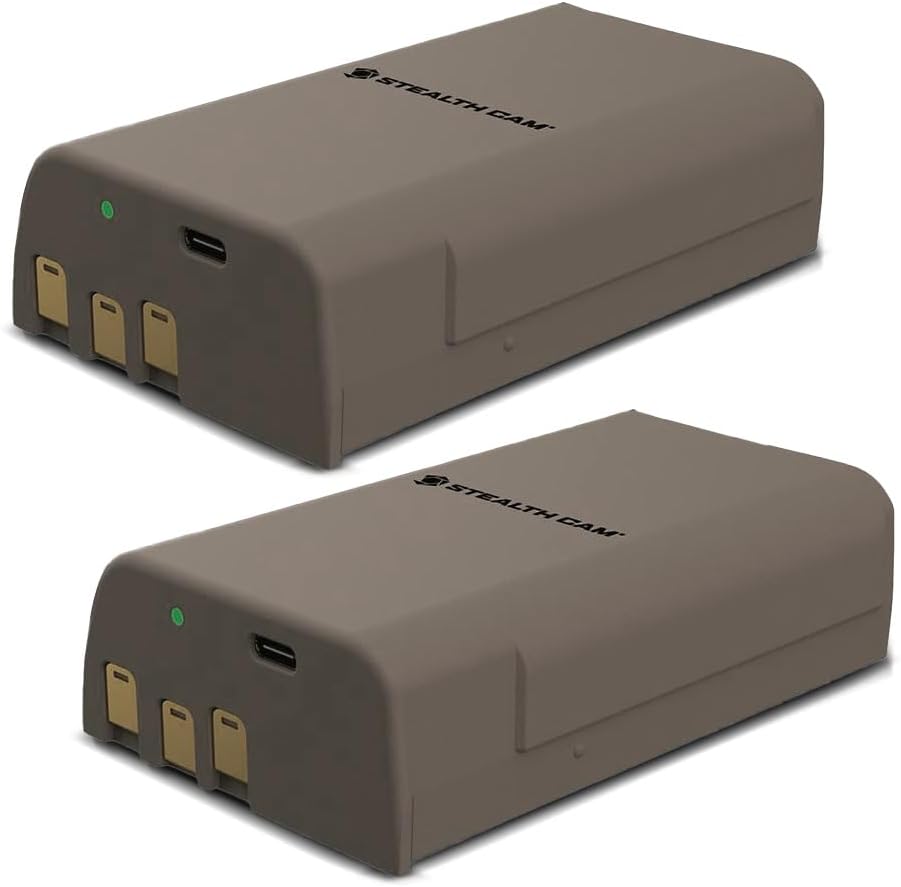
The Stealth CAM FieldMax MAX-PAK is a 4.5-rated rechargeable cartridge system built for Stealth Cam cellular trail cameras. Its 12V, 5000mAh lithium-ion format offers a substantial alternative to disposable common power units, while the included USB cable simplifies recharging between deployments.
We may earn a commission when you buy through this link, at no additional cost to you.
The product is especially relevant in wooded areas where sunlight may be insufficient for dependable solar charging. Rechargeable cartridges can remain useful across multiple seasons, reducing the need to carry a large number of disposable cells. Their weather-resistant construction is intended to handle temperature swings and adverse outdoor conditions.
Compatibility is limited to specified Stealth Cam models: Flashback, Deceptor MAX, Fusion MAX, and Connect MAX. The description does not provide a stated charging time, so users should verify turnaround time against their monitoring schedule. A cartridge system also costs more upfront than ordinary AA cells, though the included two-pack creates some redundancy.
This is a strong fit for owners of supported Stealth Cam models who operate in low-light environments and want a reusable, camera-specific power source. Confirm your camera model before buying and maintain a charged spare for uninterrupted coverage.
Rechargeable cartridges are especially useful in dense woods where a solar panel may not receive enough direct light. The cells can be topped up from a portable USB power source.
Using a camera-specific cartridge can simplify installation compared with adapting general-purpose cells. The trade-off is that compatibility is narrower than it is for AA batteries.
We may earn a commission when you buy through this link, at no additional cost to you.
The Lesaps 2-Pack 7000mAh Rechargeable LIT-22 Battery is the highest-capacity option in the list by stated milliamp-hour rating. At 4.2, it offers a strong capacity proposition for SPYPOINT cellular trail cameras that need dependable power for extended wildlife monitoring.
We may earn a commission when you buy through this link, at no additional cost to you.
The battery is presented as a direct replacement for the SPYPOINT LIT-22 pack and is compatible with Flex-M, Flex G-36, Flex-Plus, Flex-S, and other stated models. Its 7.7V output, built-in USB-C port, and approximately six-hour charging time create a clear replenishment routine for field users.
LED indicators show red while charging and green when full. The included six-layer protection system addresses over-charge, discharge, voltage, current, heat, and short circuits. The stated operating range of minus 20°F to 140°F supports year-round use, though buyers in severe cold should consider the difference from batteries rated to minus 40°F.
The listing says the packs last 30 percent longer than standard batteries and claim a lifespan three times that of traditional AA cells in trail-camera applications. Since no controlled runtime is supplied, real results will depend on the camera, weather, transmission signal, and activity level. This is a capacity-focused choice for compatible SPYPOINT users.
The 7000mAh rating is the highest stated among the rechargeable packs here. It can be especially helpful for cameras that transmit frequently, operate in cold weather, or face extended periods without charging.
USB-C and clearly defined LED indicators simplify charging from compatible wall adapters, vehicles, or field power sources. The two-pack provides a useful rotation between deployed and charging batteries.
We may earn a commission when you buy through this link, at no additional cost to you.
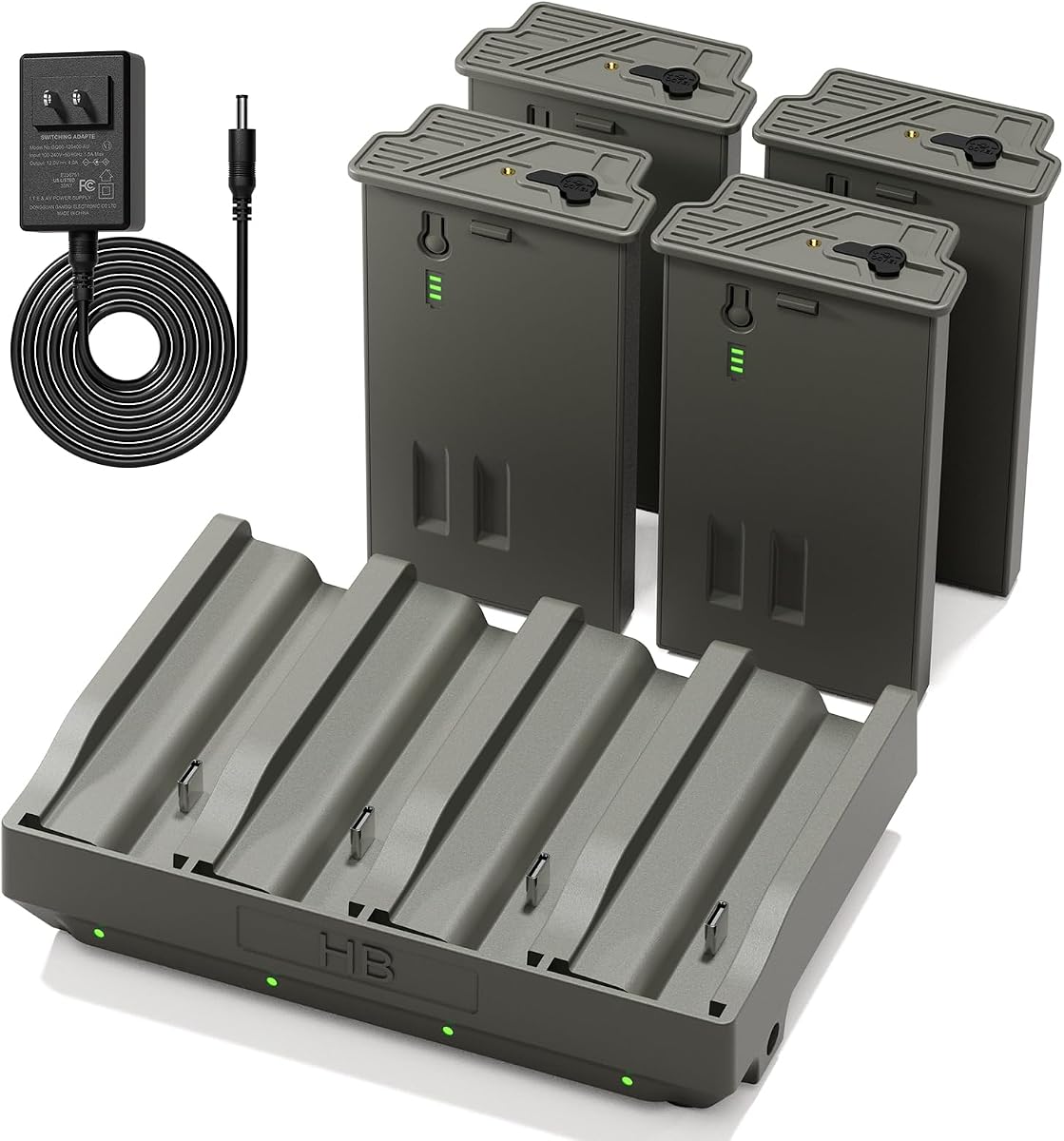
The Reveal Lithium Battery plus four-port charger is the premium pick because it addresses a complete high-capacity power system rather than a single battery. Its 4.2 rating reflects a package aimed at Reveal users who operate several cameras, rotate packs, or want a dedicated charger ready at the end of every trip.
We may earn a commission when you buy through this link, at no additional cost to you.
The 5000mAh battery supports Trail Cameras Ultra, Pro 3.0, X Gen 2.0, 3.0, X Pro, XB, SK, and X series models according to the listing. High-performance Japanese cells are paired with protection circuitry and CE/FCC-certified components, while the integrated LED indicator provides a clear view of charge status.
The charger can operate four channels independently, allowing one to four batteries to charge at once without cumbersome adapters. Type-C charging and sequential flashing indicators during charging improve convenience, while easy installation and removal make field swaps less disruptive.
This bundle is most compelling for users with multiple compatible cameras or a rotation of spare batteries. Its upfront investment is higher than buying ordinary AA cells, and the battery capacity is not the largest in the roundup, but the dedicated four-port charger adds practical value that individual battery packs do not provide.
Independent four-channel charging allows several camera batteries to be prepared at once. That is useful for users who deploy multiple units and need each pack ready when the next field rotation begins.
Japanese cells, built-in protection, and an integrated LED status light reinforce the package's premium positioning while making battery readiness easier to monitor.
We may earn a commission when you buy through this link, at no additional cost to you.
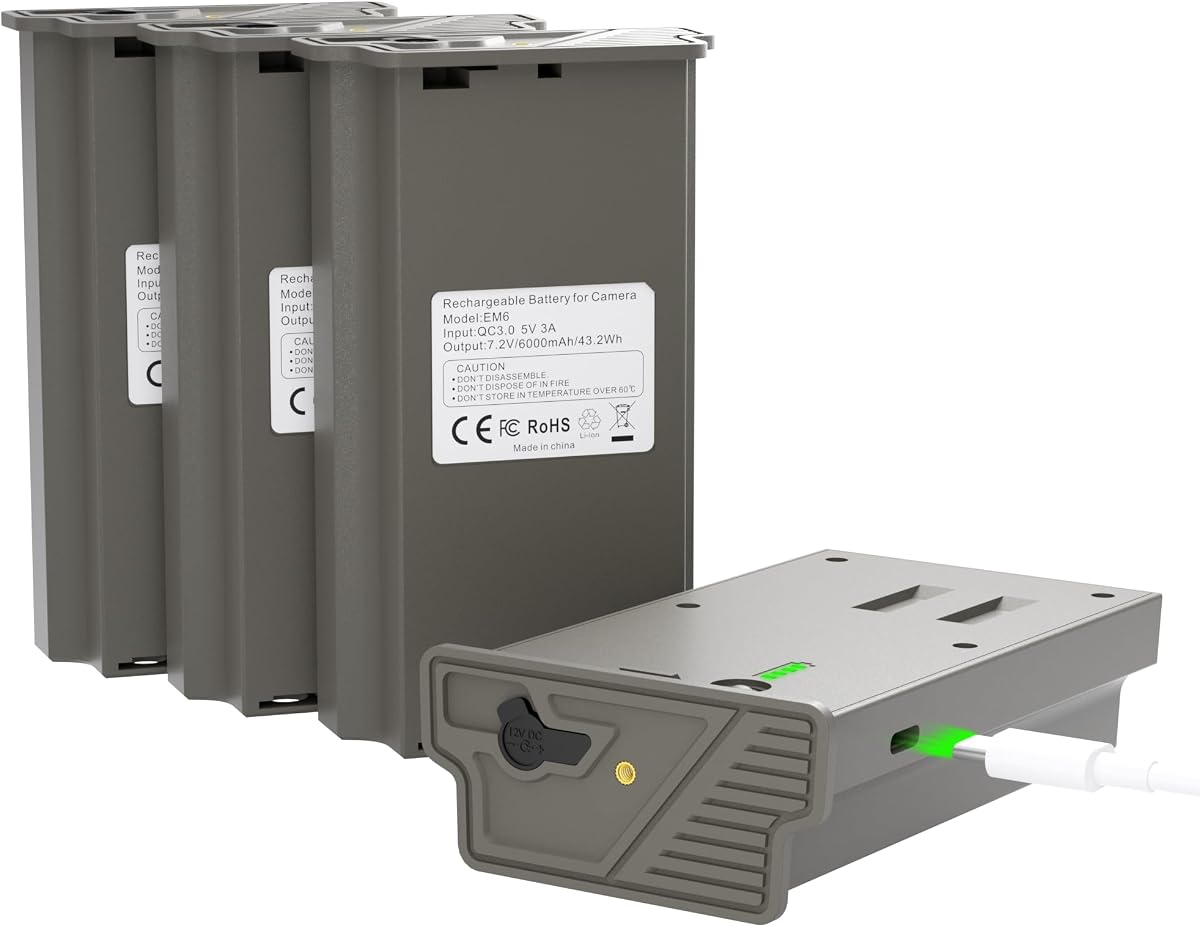
The 4 Pack New Reveal Lithium Battery Pack combines a 4.4 rating with a substantial four-battery inventory. Each pack has a stated 7.4V, 6000mAh capacity, making this option well suited to users who want a dependable rotation of rechargeable power for compatible Reveal trail cameras.
We may earn a commission when you buy through this link, at no additional cost to you.
The stated compatibility includes X, XB, SK, X Gen 2.0, X Gen 3.0, X Pro, and X Pro 3.0 models. The package contains four battery packs, four USB-C cables, and a user manual. Its support for matched solar panels adds a valuable path toward sustained unattended operation where sunlight is available.
An LED power meter can be checked before installation, and the lights flash during charging before remaining solid when full. The smart protection chip covers overheating, over-charge, over-discharge, over-current, over-voltage, and short circuits. The pack is engineered for variable outdoor temperatures, although exact limits are not stated in the supplied information.
This four-pack is ideal for Reveal owners who want spare capacity without buying a dedicated multi-battery charger. The included cables reduce initial accessory needs, but a suitable USB-C charger and adequate charging time must still be available. Confirm camera compatibility and compare the four-pack with the bundled charger option if fast fleet rotation is the priority.
Four interchangeable packs let one battery remain in service while the others recharge. This setup reduces delays during camera rotation and discourages sending a camera out with uncertain remaining power.
Compatibility with matched solar panels can provide a renewable charging path for long-distance deployments. The benefit depends on panel placement, available sunlight, and the camera's overall energy demand.
We may earn a commission when you buy through this link, at no additional cost to you.
The right battery depends on camera compatibility, deployment length, climate, charging access, and the number of cameras being powered. These factors help separate universal cells from specialized rechargeable systems.
Start with the exact battery format accepted by your camera. Some trail cameras use standard AA cells, while others rely on proprietary rechargeable cartridges, 3V lithium coin cells, or model-specific lithium-ion packs. A battery cannot be made compatible through guesswork, and a visually similar pack may have different voltage, contacts, dimensions, or communication requirements. Check the camera manual, the battery compartment, the original battery, and the seller's compatibility list before ordering.
Choose only a format explicitly listed as compatible with your exact model. If the listing names several cameras but not yours, contact the manufacturer or seller rather than assuming the pack will fit.
Milliamp-hour ratings help compare rechargeable battery packs, but they do not directly translate into days of camera operation. Runtime depends on battery voltage, image frequency, infrared use, cellular signal strength, night vision, temperature, and whether the camera transmits still images or video. A larger capacity can reduce charging frequency, but the camera's energy demand remains the deciding factor.
Treat stated capacity as a relative measure within the same chemistry and voltage class. For disposable AA cells, look for consistent voltage and long storage life instead of a capacity figure.
Rechargeable packs should fit your field routine. USB-C is convenient when wall outlets, power banks, or vehicle charging are available, while a 12V input can be useful with compatible solar panels. A multi-port charger is helpful when several cameras operate at once, but a single-port setup may be enough for one or two units. Stated charging times provide a useful baseline for planning turnaround.
Match charging speed to your available power sources. Buying a high-capacity pack without a convenient charger can reduce the benefit, so consider the complete system rather than the battery alone.
Remote cameras experience substantial temperature variation. The listed products claim operating ranges from minus 20°F or minus 40°F up to 140°F, although the figures are not directly interchangeable. Cold can reduce available capacity temporarily, while heat can accelerate degradation and create greater demand on solar charging. Look for the widest stated range appropriate for your region, but also allow the battery to acclimate before deployment.
For deep-winter locations, an AA cell rated to minus 40°F may offer a stronger temperature specification. For proprietary packs, verify the stated range against the manufacturer's guidance for your camera.
Long shelf life matters when spare batteries are stored between hunting seasons or kept at a remote cabin. The Energizer AA products claim up to 25 years in storage, BEVIGOR states a 20-year shelf life and less than 1 percent annual self-discharge, and Duracell provides a 10-year storage guarantee for its CR123A cells. These are useful indicators of how well unused batteries can remain ready.
Store cells in a dry, moderate environment and keep spare rechargeable packs near a partial charge if the manufacturer provides specific guidance. Extreme heat can shorten storage life even when the chemistry itself is long-lived.
Lithium AA cells are lighter than comparable alkaline batteries, which helps when carrying a large field inventory. Rechargeable cartridges reduce the need to carry many disposable spares, but they add weight and may require more charging equipment. A 24-cell AA pack is convenient for several cameras, while a two-pack of proprietary batteries is often more appropriate for one or two units. Four-packs are useful for creating a rotation.
Balance pack size against realistic deployment duration. Extra batteries that cannot be kept properly dry or within a suitable temperature range may offer less practical value than a smaller, carefully managed set.
Rechargeable lithium-ion packs benefit from built-in controls against over-charge, over-discharge, voltage extremes, excessive current, overheating, and short circuits. The Lesaps options specifically describe multi-layer protection, while the Reveal bundle also mentions built-in protection circuitry. These safeguards are important because outdoor packs may be connected to vehicles, solar panels, or unattended charging equipment. Use compatible chargers and inspect cables and contacts before deployment.
Do not use visibly swollen, torn, leaking, or damaged batteries. For disposable cells, follow the camera manufacturer's guidance and remove exhausted batteries promptly when replacement is required.
A single battery should not be the only source of power for an important camera. AA multipacks provide spare-cell redundancy, while rechargeable systems benefit from keeping one pack charging while another operates. The Lesaps 6000mAh Reveal pack and the Stealth CAM MAX-PAK each include two units, the SPYPOINT set includes two, and the 6000mAh Reveal four-pack supports a broad rotation. The bundled Reveal option adds a four-port charger for fast fleet preparation.
Choose enough redundancy to tolerate one depleted or failed battery. For critical wildlife monitoring, a second camera or independent power supply can add useful protection against unexpected shutdown.
Before installation, verify the battery model, voltage, polarity, and compatibility with the camera. For rechargeable packs, read the camera and battery instructions, fully charge the pack with a compatible charger, and confirm that the LED indicator shows it is ready. Disposable cells should be new, undamaged, and inserted according to the polarity markings inside the compartment.
Rechargeable packs should be charged on a stable, dry surface with good ventilation and away from combustible materials. Do not use damaged cables or chargers that do not meet the device requirements. Before deploying a pack, check the power indicator and inspect the casing, contacts, and cable connection for damage. Remove exhausted cells or packs promptly to reduce the risk of leakage or corrosion.
For long deployments, test the camera and battery together before leaving the site. Periodically check the camera, battery meter, and signal, and keep a charged spare nearby. Store unused cells and packs in a dry location at a moderate temperature, and avoid leaving rechargeable batteries in a vehicle during extreme heat or cold.
Lithium batteries are often better suited to remote trail cameras because they can offer longer storage life, lower weight, more consistent output, and better extreme-temperature performance. Camera electronics, battery draw, weather, and transmission frequency still determine actual runtime. Check the camera manual to ensure the lithium chemistry and battery format are approved.
Only use them if the camera manual or battery compartment explicitly accepts AA lithium cells. Some cameras require specific rechargeable battery packs, while others use CR123A cells or proprietary cartridges. Never combine lithium and alkaline cells in the same compartment unless the manufacturer specifically permits it.
There is no universal runtime because camera behavior and conditions vary substantially. Night vision, frequent motion detection, video recording, temperature, cellular reception, and image transmission can all affect consumption. Treat 6000mAh as a relative capacity measure, then check the camera maker's estimates and reduce remote deployments when using multiple features.
Rechargeable packs can be more convenient for frequent users because they rotate quickly between deployments and work well with solar charging. Disposable lithium cells remain useful for low-volume users, emergency spares, and locations where chargers cannot be used. The better choice depends on camera compatibility, charging access, and the number of units you operate.
Several listed Reveal-compatible packs support compatible solar panels, but the exact ports and requirements should be confirmed for the selected model. Some use a 12V DC input, while others use USB-C and require a panel with the appropriate output. Check the current manufacturer guidance and avoid improvised wiring that bypasses battery protections.
Store them dry, clean, and away from extreme heat, moisture, and metal objects that could create a short circuit. Keep disposable cells in their original packaging and rechargeable packs at the charge level recommended by their manufacturer. Inspect them before every deployment and discard any battery that is swollen, leaking, corroded, or physically damaged.
Two packs are not required for operation, but they make charging much more convenient because one can remain in the camera while the other recharges. A second pack also protects against an unexpected loss of power. If budget is tight, one high-quality compatible pack can work when the camera is monitored on a regular charging schedule.
No. Capacity is only one part of runtime and should be compared within the same voltage and chemistry. Camera settings, temperature, network signal, night vision, and recording behavior can change consumption more than the label suggests. Real-world runtime depends on the complete camera-and-battery combination.
The Energizer Ultimate Lithium AA 24 Pack stands out for broad device compatibility, a large cell count, long storage life, and a 4.7 rating. For compatible CR123A-powered equipment, the Duracell set is the compact budget choice with the highest listed rating, while the Lesaps Reveal pack is the Editor's Choice for high-capacity rechargeable power and flexible charging.
Camera-specific systems deserve careful consideration because they can simplify installation and reduce battery waste. The Stealth CAM MAX-PAK fits supported cameras in shaded locations, the SPYPOINT LIT-22 set emphasizes high stated capacity, and the Reveal bundles prioritize convenient rotation, status indicators, and multi-battery charging. Choose based on verified model compatibility, climate, charging access, and the number of cameras in service.
Prices, ratings, package contents, and availability may change, so confirm current listing details before ordering. Also check the camera maker's battery requirements, compare the complete power setup rather than the battery alone, and maintain at least one charged spare wherever uninterrupted wildlife monitoring is important.