
Aston Microphones Halo
4.6Editor score
Vertical 360-degree filtering
Expanded acoustic surface area
Lightweight portable construction
Linear sound absorption
Reflection filters create a more controlled recording area around a microphone by reducing reflections, room reverb, and interference from nearby sources. The right model can make vocals sound more focused in a home studio, podcasting setup, broadcast booth, or untreated recording space.
We compared ten shields using the information supplied for each product, focusing on panel coverage, layered acoustic construction, mounting options, adjustability, portability, and compatibility with common recording microphones and stands. The list includes compact pop-filter-style shields, foldable panels, and complete systems with stands.
Each review explains the product's strongest qualities and practical limitations, while the top picks highlight a budget-friendly option, a versatile all-around choice, and a premium professional design. Product ratings, features, availability, and prices can change, so verify the latest listing details before purchasing.
4.6Editor score

4.4Editor score

4.4Editor score
As an Amazon Associate we earn from qualifying purchases.
The comparison below places all ten shields side by side, emphasizing their physical format, acoustic approach, included mounting hardware, and suitability for home studios, podcasts, broadcasting, and mobile vocal recording.

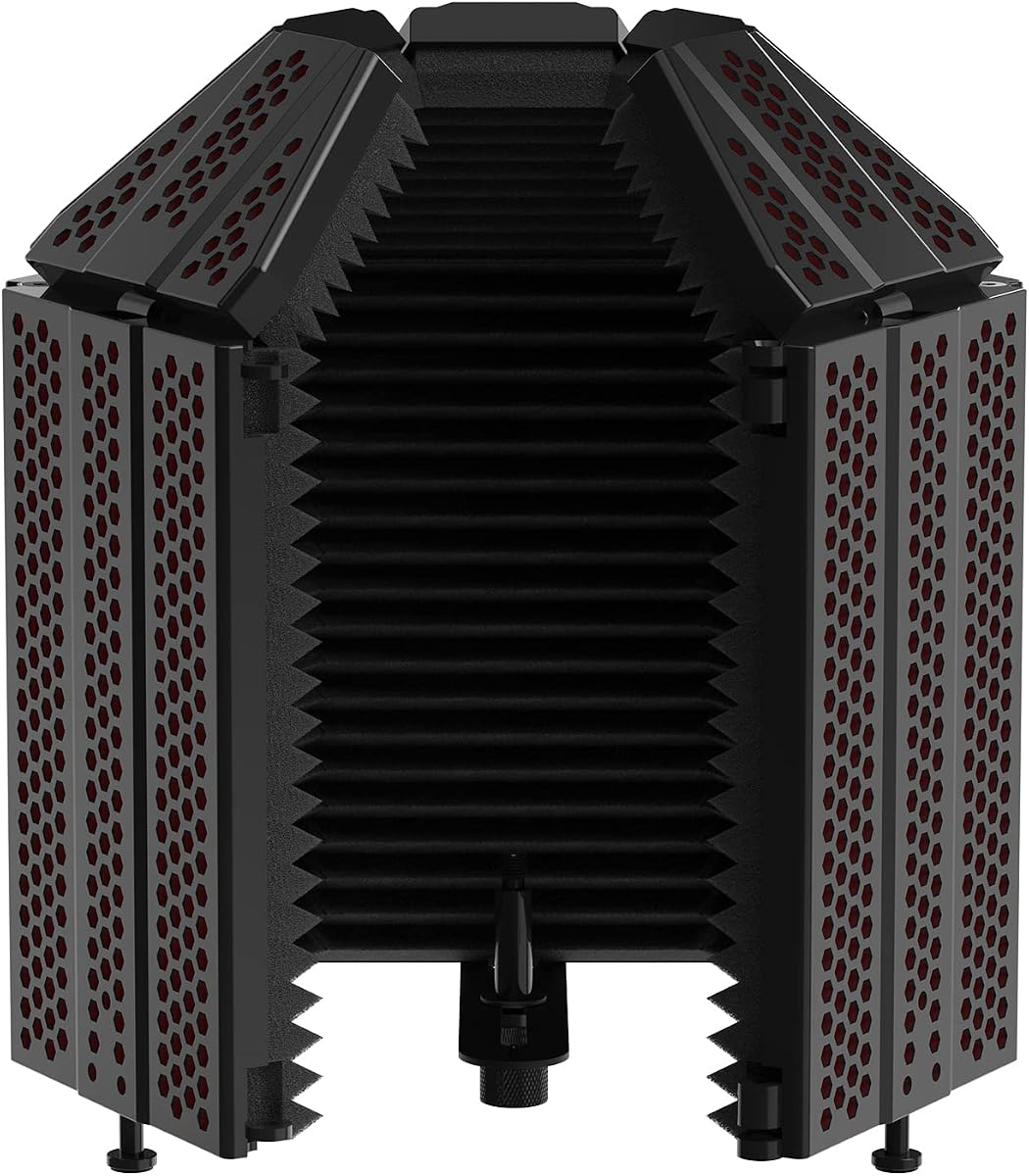
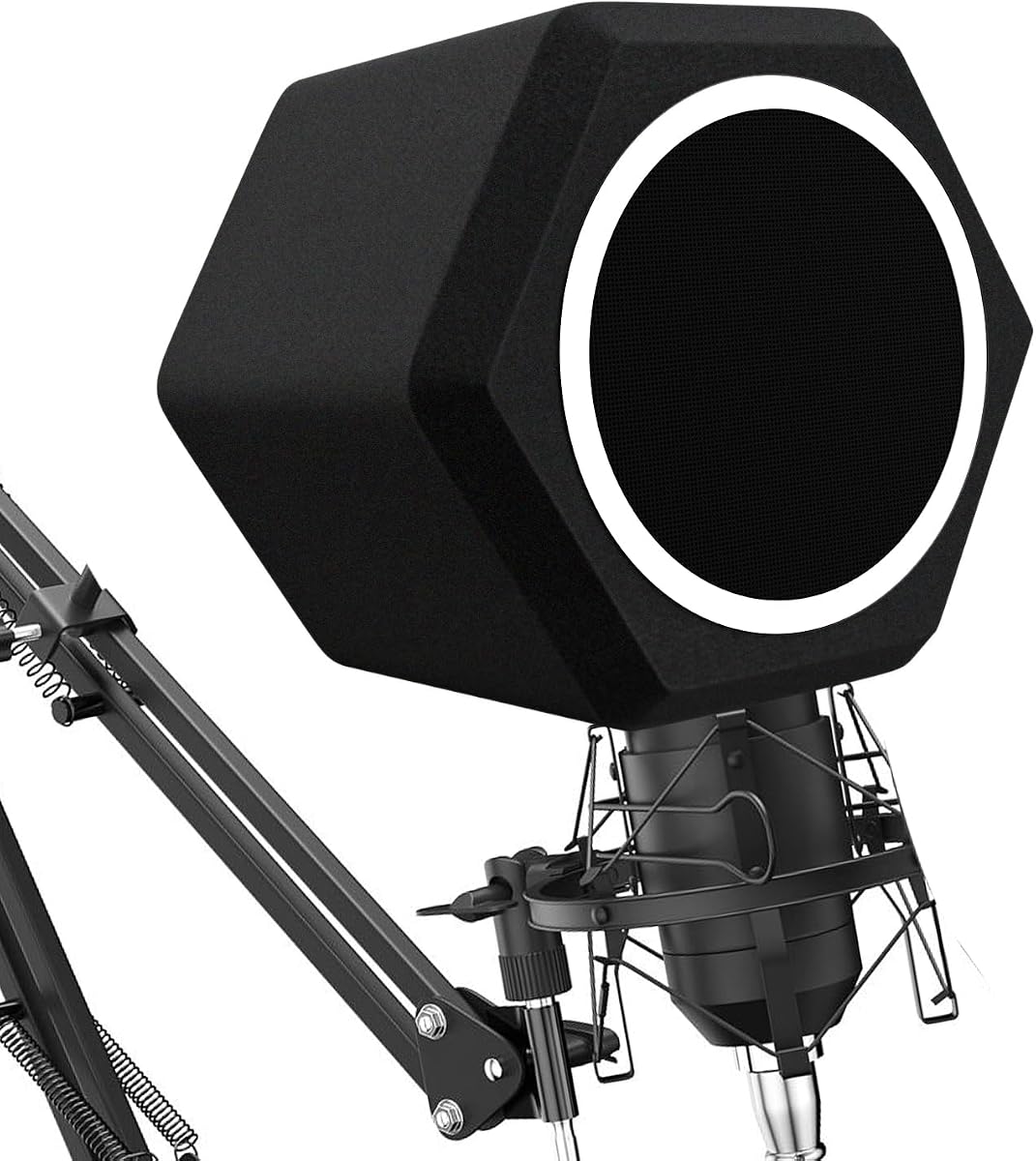


The Moukey Microphone Isolation Shield is a compact, foldable option with a 4.4 rating. Its three-panel format combines reflective, filtering, and absorbing layers, with high-density acoustic foam positioned to help limit wave bounceback and ambient interference. The design is aimed at singers, podcasters, and broadcasters who want more control without a large booth.
We may earn a commission when you buy through this link, at no additional cost to you.
Its greatest convenience comes from the dual-use setup. The shield can sit on a desktop or tabletop, or it can be attached to a microphone stand. The included metal conversion nuts accommodate 3/8-inch and 5/8-inch fittings, which makes the product practical with many common stands and shock mounts. Each panel can also be angled to suit the microphone and recording position.
The main limitation is the open-sided three-panel layout, which does not enclose the performer as thoroughly as five- or six-panel shields. It is also a standalone shield rather than a complete system, so buyers who need a stand must already own one or allow for another purchase. Even so, the folding design and adjustable angle support make the trade-offs reasonable for compact spaces.
Choose this model when affordability, portability, and flexible placement matter most. It is well suited to a small home studio, desktop podcast station, or temporary vocal recording setup where full acoustic treatment is unavailable. Among straightforward three-panel shields, it offers a useful combination of layered construction and mounting flexibility.
The reflective, filter, and absorbing layers give the shield more treatment than a plain foam panel. Its three-panel format also folds for storage while remaining large enough to direct sound around the front and sides of a microphone.
Desktop placement, stand mounting, and adjustable panel angles allow the shield to follow the microphone rather than forcing the entire room to change. The supplied adapters broaden its usefulness with standard recording stands.
We may earn a commission when you buy through this link, at no additional cost to you.
The XTUGA MIS02 has a 4.3 rating and offers a five-panel version of the classic folding reflection shield. Its triangular, thickened sponge panels work with reflective and absorbing areas to reduce interference from the sides and rear of the microphone. The result is intended to create cleaner and more consistent vocal recordings in home or professional environments.
We may earn a commission when you buy through this link, at no additional cost to you.
A notable advantage is the choice between a three-panel arrangement with two folding end panels and a five-panel arrangement with four folding end panels. This allows the user to control how much coverage is needed. The panels can be repositioned, the arch adjusted, and the shield placed on a desk or mounted to a stand with height adjustments for different performers.
The product does not include a stand, and changing configurations means adjusting several hinged sections. Its portable design may also require careful handling because repeated folding can loosen connections over time. However, the denser triangular treatment is more substantial than a basic single-layer windscreen and the modular layout adds flexibility.
This is a strong option for podcasters and vocalists who want a balance between enclosure and open access. It can be especially useful when the room changes or when the same shield needs to move between a seated desk session and a standing broadcast position.
The ability to use three or five panels makes the MIS02 adaptable to different room conditions. A smaller setup can preserve visual openness, while the full configuration increases treatment around the microphone.
Triangular sponge sections work with reflective surfaces to interrupt returning sound. This mixed approach can improve focus without requiring a fully enclosed vocal booth.
We may earn a commission when you buy through this link, at no additional cost to you.
The Penypeal Microphone Isolation Ball is a small, enclosed acoustic filter with a 4.5 rating. Its five-sided foam design surrounds most of the microphone, while a double-layer screened opening faces the sound source. This structure is intended to reduce reflections, plosive sounds, wind interference, and unwanted sound arriving from several directions.
We may earn a commission when you buy through this link, at no additional cost to you.
The included holder supports removable-jacket condenser microphones with diameters between 50 and 75 millimeters, and the product is also described as suitable for many XLR and USB microphones. At only 120 grams, it is notably easy to carry and can be mounted to desktop stands, small tripods, cantilever arms, or floor stands.
Its key constraint is size. The defined fit range excludes larger microphones and many substantial studio condensers. The screened opening also occupies space around the front of the mic, so it may not provide the same working clearance as an open reflection filter. Buyers should confirm dimensions before committing.
The Penypeal is best for mobile creators, streamers, and home users who need a lightweight, focused pop-filter-style enclosure. It is particularly attractive when the priority is a tidy vocal setup in a small space and the microphone fits the stated dimensions.
Five sealed sides reduce the number of directions through which reflections and ambient interference can reach the microphone. The screened front opening adds targeted control while keeping the design compact.
The low weight and broad stand compatibility make this filter easy to reposition. It suits creators who regularly move between rooms or work with smaller condenser and USB microphones.
We may earn a commission when you buy through this link, at no additional cost to you.
The Six-Panel Microphone Isolation Shield with Adjustable Stand is a complete package with a 4.1 rating. Six foldable panels wrap around the microphone to reduce echo and reverb, while the included metal stand provides height adjustment for different users and recording positions.
We may earn a commission when you buy through this link, at no additional cost to you.
High-density acoustic foam forms the primary sound treatment. The stated compatibility includes Blue Yeti, Audio-Technica, and other standard recording microphones, making the package convenient for common home-studio equipment. Its six-panel coverage is more complete than open three-panel designs and creates a more consistent area around the mic.
The tradeoff is size and material longevity. Six panels require more space and more careful folding, while foam can gradually collect dust, become compressed, or discolor with age. The complete stand also adds components that must be assembled, transported, and maintained separately from the shield.
This product makes sense for creators who want one coordinated setup rather than a shield and separate stand. It is well suited to home studios, podcast rooms, and streaming corners where wraparound coverage and quick height changes are the main priorities.
Six panels provide broader acoustic coverage than the smaller folding shields. The included stand completes the setup, making it easier to establish a repeatable recording position.
A height-adjustable stand allows seated and standing performers to use a similar microphone position. This improves workflow for podcasters who need a reliable alternative to separate microphone hardware.
We may earn a commission when you buy through this link, at no additional cost to you.
The Microphone Isolation Shield with Tripod Stand & Pop Filter earns a 4.4 rating and provides one of the most complete kits in this guide. Its acoustic sandwich structure combines sound-reflective, precision-filter, and sound-absorption layers, with high-density foam designed to reduce reflections and interference.
We may earn a commission when you buy through this link, at no additional cost to you.
The included tripod extends from 15 to 71.5 inches, supporting both seated and standing positions. A steel clamp, locking screw, and quick-release adapter provide repeatable microphone placement. The weighted triple-leg base is designed to resist tipping, while the package also includes universal adapters for 3/8-inch and 5/8-inch connections.
This system does take more setup than a simple desktop shield, and the full-size tripod is less convenient to carry than a folding panel. Its acoustic panel is also described as 17.1 inches, so users need adequate desk or floor space. Even so, the combination of stability, vertical adjustment, and layered treatment addresses several common frustrations at once.
Choose it if you want a ready-to-build vocal booth without sourcing a separate stand. It is particularly appropriate for podcasters, streamers, voice-over artists, and home performers who work at varying heights and need stable microphone positioning.
The acoustic sandwich structure uses separate reflective, filtering, and absorbing functions rather than relying on a single foam layer. That layered approach targets reflections and interference from the microphone's surrounding space.
The weighted tripod and locking hardware help prevent movement during longer recordings. Quick release and broad height adjustment also make it easier to repeat the same placement across sessions.
We may earn a commission when you buy through this link, at no additional cost to you.
The Moukey Five-Side Shield has a 4.4 rating and expands the company's folding-panel approach with five sides for broader acoustic coverage. Reflective, filtering, and absorbing layers are combined with high-density foam intended to reduce audio bounceback, ambient interference, and unwanted room reflections.
We may earn a commission when you buy through this link, at no additional cost to you.
The five-panel construction creates a more enclosed area around the microphone than a basic three-panel shield while preserving an open side for the performer. Foldable panels support compact storage, and their angles can be adjusted to suit the mic position. The shield can also rest on a desktop or be fitted to a microphone stand.
An ABS back panel supplies structural support, while non-slip contact points help the desktop arrangement remain stable. As with other foam-based products, the panels should be kept away from prolonged moisture, direct heat, and impact during transport. The missing stand also means the final setup may cost more than the shield alone suggests.
This model is a good middle ground between compact three-panel designs and larger enclosed booths. It suits vocalists and podcasters who want more directional control but still value an open, foldable form that can be stored away between sessions.
The additional side panels increase the shield's ability to intercept reflections from the sides and rear. This creates a more controlled vocal environment without fully enclosing the performer.
An ABS structural panel helps the foam assembly retain its shape. The foldable sections allow the shield to become compact when it is not being used for recording.
We may earn a commission when you buy through this link, at no additional cost to you.
The sE Electronics RF Pro is a premium portable reflection filter with a 4.4 rating. Introduced as an industry-standard design, it uses a patented nine-layer construction intended to reduce room reflections and ambient noise while preserving a natural, uncolored vocal character.
We may earn a commission when you buy through this link, at no additional cost to you.
Its key technical distinction is the deliberate distribution of absorption and diffusion across different frequency ranges. The product is also built entirely from metal components rather than plastic and conventional foam, giving it a substantial construction that is intended for long-term reliability. Each unit is described as hand-assembled in sE's own factory.
The mounting system supports height, distance, and angle adjustments, allowing the performer and microphone to be positioned accurately. It is compatible with a wide range of large-diaphragm condensers, microphone stands, and studio arrangements. The trade-off is its higher cost and less space-efficient shape compared with folding foam shields.
For professional voice-over artists, singers, podcasters, and studio operators who prioritize consistency and precise placement, the RF Pro is the most specialized option here. It is also a strong choice for users who want durable hardware rather than a disposable-feeling foam accessory.
The nine-layer design assigns different acoustic behavior to different areas and frequency ranges. This supports controlled capture without relying on the same material across the entire structure.
Independent height, distance, and angle controls let the user define the relationship between the microphone and source. Such fine positioning is valuable for repeatable recordings in permanent studios.
We may earn a commission when you buy through this link, at no additional cost to you.
The TroyStudio Portable Booth is a compact enclosed shield with a 3.9 rating. Unlike open folding panels, it surrounds the microphone with two-inch-thick dense egg-crate foam, providing internal treatment intended to reduce echoes, reflections, and ambient noise while producing a dry vocal presentation.
We may earn a commission when you buy through this link, at no additional cost to you.
The internal space measures 8 by 10 by 12 inches, while the exterior is 12 by 12 by 16 inches and folds to a 12 by 12 by 6-inch package. Holes for cables and microphone stands are provided. It weighs two pounds and can be mounted on a table or compatible stand, with setup described as taking about one minute.
Its 0.86-inch stand-diameter limitation is important, as many larger stands and boom arms will not fit. The enclosed format also takes up more desk area than an open shield, and the lowest rating in this selection suggests that some users may find the overall fit or result less consistent. Compressed foam and case hardware also require care during transport.
This booth is most useful for singers, voice-over workers, and mobile podcasters who need a self-contained foam enclosure and travel between locations. Its measured dimensions and fast setup make it straightforward to integrate into a temporary recording corner.
Two-inch egg-crate foam covers the interior surfaces to reduce reverberation inside the enclosure. The construction targets room sound that would otherwise reach the microphone through the open front.
The folding structure reduces the booth to a compact package for transport. Elastic bands hold the foam pieces in position, while the reinforced backing supports the overall shape.
We may earn a commission when you buy through this link, at no additional cost to you.
The Aston Microphones Halo combines a 4.6 rating—the highest among these ten products—with an exceptionally lightweight portable format. Its design provides 360-degree filtering rather than concentrating on the horizontal plane, helping address reflections that can arrive from above, below, and around the microphone.
We may earn a commission when you buy through this link, at no additional cost to you.
The shield has an acoustic surface described as approximately 40 percent larger than that of a main competing design. It also uses more linear absorption, which is intended to reduce coloration while controlling unwanted room energy. Its low weight makes it easy to move between a permanent studio, podcast desk, and mobile session.
Unlike the shields that include a complete stand or enclosed foam booth, the Halo is a focused reflection-filter accessory. It does not create a sealed environment, cannot stop all room noise, and still requires a separate compatible stand or mount. Large or heavy microphone setups may also benefit from more rigid support than the Halo's construction provides.
The Halo is a compelling selection for budget-conscious vocalists and home recordists who value lightweight portability and a broad filtering surface. It is especially useful when the performer needs directional control without carrying a bulky booth or assembling a large multi-panel system.
Vertical coverage expands the Halo's control beyond the microphone's horizontal plane. This helps reduce reflections that might otherwise reach the microphone from elevated or lowered room surfaces.
A larger absorption area can improve the amount of room energy the shield intercepts. The lightweight housing makes that additional surface easy to carry and reposition.
We may earn a commission when you buy through this link, at no additional cost to you.
The Portable Folding Reflection Shield is a lightweight travel-oriented filter with a 4.2 rating. Its multi-layer construction includes absorbing, filtering, and reflective sections, plus a vented metal back plate. The combined materials are intended to reduce exterior sound reflections and ambient interference while maintaining vocal clarity.
We may earn a commission when you buy through this link, at no additional cost to you.
Two folding panels can be angled to form a partial enclosure around the microphone. The reinforced steel structure supports freestanding use, and the product is also compatible with most microphone stands. When recording is complete, the panels fold flat for storage in a bag or other compact space.
Compared with five- and six-panel products, two panels provide less total coverage and leave more of the room open to reflections. The freestanding design may also occupy desk space near the front of the performer, and the vented rear plate is structural reinforcement rather than a completely sealed acoustic barrier. Nevertheless, it offers meaningful treatment in a smaller format.
This shield is best for mobile vocalists, podcasters working in temporary spaces, and users who need a lightweight filter that can be packed away quickly. It is a sensible middle ground between a basic pop filter and a larger multi-panel shield.
High-density sponge, filtering material, reflective layers, and a vented metal back combine to improve both sound control and structural support. The layered assembly provides more treatment than a conventional foam windscreen.
The two hinged panels collapse flat and can be angled for different microphone positions. Freestanding use or compatibility with most stands gives creators flexibility when working away from a permanent studio.
We may earn a commission when you buy through this link, at no additional cost to you.
The most useful reflection filter depends on your room, microphone, recording style, and tolerance for setup effort. Consider acoustic coverage, physical design, mounting requirements, and portability together rather than judging a shield by panel count alone.
A reflection filter is most valuable in rooms with audible reverb, reflective walls, parallel surfaces, nearby computers, or HVAC noise. Listen for a hollow vocal sound, smeared consonants, or a long decay after each word. More enclosed designs can help with direct room reflections, while an open filter mainly manages sound arriving from the rear and sides.
Choose coverage that matches the problem rather than assuming total soundproofing is possible. A reflection filter shapes the immediate recording environment; it does not block sound from passing through it.
Absorbing foam dissipates energy, reflective layers redirect it, and filtering sections help limit unwanted propagation. Products that combine several materials can address a broader mix of reflections. The sE RF Pro uses a patented nine-layer design, while several folding models use foam-backed reflective panels or a sandwich construction.
Look for dense, consistent treatment and a rigid backing that helps the panels retain their shape. Check whether the materials are suited to portable use and easy maintenance.
Three-panel designs are compact and preserve an open feeling. Five- and six-panel shields provide broader rear and side coverage, making them more appropriate for untreated rooms. Fully enclosed foam booths can be even more effective but require more desk area and may be less convenient for performers who need visibility or airflow.
More panels do not automatically guarantee better recordings. Placement, microphone distance, room size, and the direction of the noise source remain equally important.
Check the microphone thread and stand connection before buying. Several products include adapters for 3/8-inch and 5/8-inch fittings, while the TroyStudio booth has a stated maximum stand diameter of 0.86 inches. Some models include a stand, and others are designed to work with an existing desktop, boom-arm, tripod, or floor stand.
A stable stand matters because movement can create low-frequency thumps and change the distance between the singer and microphone. Confirm both weight support and height range for your preferred recording position.
Reflection shields differ from conventional pop filters because they occupy space around the microphone. Large-diaphragm condensers, side-address microphones, and heavy studio models need more clearance than compact USB microphones. The Penypeal isolation ball fits removable-jacket microphones between 50 and 75 millimeters, so its dimensions are essential to verify.
Look for a product that leaves the microphone accessible for positioning and does not press against cables, shock mounts, or removable grilles.
Folding panels and foam booths are useful when recording away from a permanent studio. Consider folded size, carry weight, and whether the product needs to be reassembled at each location. The Aston Halo is exceptionally lightweight, while the TroyStudio booth folds into a defined travel package and includes securing bands.
Portable products should be protected from moisture, crushing, and direct heat. Remove loose accessories before folding and keep cables from being pinched during storage.
Panel angles, shield height, microphone distance, and stand height determine how effectively the acoustic surfaces intercept reflections. Products with multiple adjustments are easier to use across different performers and room layouts. A fixed compact filter may work well for one setup but become less effective after the microphone or chair is moved.
Choose a design that can be repositioned without complicated disassembly. Repeated, repeatable placement also makes it easier to compare recordings before and after adding the shield.
Some products are complete vocal recording kits with a stand, pop filter, adapters, clamp, or installation manual. Others include only the shield and small mounting hardware. A bundled stand can simplify setup, but existing equipment may make that feature less valuable. Adapters are still useful for maintaining flexibility across different stands.
Review the package contents against your current equipment before ordering. The useful choice is the one that fills a real gap without forcing you to replace compatible gear you already own.
Begin by positioning the microphone and performer before expanding or attaching the shield. Set the microphone at the appropriate vocal distance, then place the filter so its reflective and absorbing surfaces face the walls or noise sources most likely to send unwanted sound toward the capsule. Keep the front of the microphone open to the singer.
Mount the shield securely and check it from several angles. Adjust panel angles so the microphone sits within the protected area without forcing the singer to turn away from the direction of the stand. If a shield includes a stand, use the locking hardware and keep the base stable. Make a short test recording, then compare it with the shield removed to evaluate reflections, clarity, and any unintended sound coloration.
For care, remove the microphone before folding or transporting most models, and follow the product instructions regarding the order of the panels. Keep foam dry, clean it gently with a soft brush or suitable vacuum attachment, and avoid compressed air at close range. Store metal-mounted filters in their cases or between flat, stable surfaces, and never obstruct ventilation or place the microphone where it presses against damp foam.
No. A reflection filter improves the immediate acoustic environment around the microphone by controlling some reflections and nearby interference. It cannot prevent sound from traveling through its material or eliminate every source of room noise. For comprehensive isolation, a treated room, enclosed booth, or additional acoustic panels remain valuable.
No. A standard pop filter is usually a thin screen placed in front of a microphone to reduce plosive bursts from letters such as P and B. A reflection filter surrounds more of the microphone and targets reflections, reverberation, and directional interference. Some complete products include both functions, while others focus primarily on acoustic isolation.
Usually, the open side should face the performer and the treated sides should face the room or likely noise sources. Exact orientation can vary by design, especially with enclosed foam booths and compact spherical filters. Test the position by recording short samples and listening for reduced reverb without an unnaturally close or dull vocal sound.
Ideally, no for many home recordings, especially in a small or moderately reflective room. A well-positioned shield can control important local reflections and improve vocal clarity. However, a filter cannot address every reflection, bass buildup, or noise path, so adding absorptive panels and bass traps can produce a more consistent result.
Many models are compatible with USB, XLR, and condenser microphones, but the mounting method matters. Check the shield's dimensions, included adapters, and stand compatibility. A small USB microphone may fit a compact enclosed filter, while a large condenser microphone usually needs more clearance and a stable stand.
It may reduce room reverb, but it should not be expected to create a perfectly dry sound. The result depends on the filter's construction, placement, room acoustics, microphone, vocal performance, and any effects applied afterward. Compare recordings with and without the shield to make sure the change sounds controlled rather than unnaturally muffled.
Use the distance recommended for your microphone, since condenser and dynamic models have different pickup characteristics and proximity behavior. The reflection filter should not force a major change in that distance. Position the singer on the open side, keep the shield stable, and avoid standing too close to a reflective wall.
Follow the manufacturer's care instructions and avoid liquids unless they are explicitly approved. Loose dust can usually be removed gently with a soft brush or suitable vacuum accessory. Keep the shield dry, fold it according to the instructions, and store it in a breathable bag or case where it will not be crushed or warped.
The Aston Halo stands out as the budget selection because it combines a 4.6 rating, vertical filtering, and lightweight portability. The Microphone Isolation Shield with Tripod is the most versatile complete package, while the sE Electronics RF Pro is the premium choice for precise, professionally engineered acoustic control.
Prioritize microphone fit, stand compatibility, coverage, and room conditions over panel count alone. A compact model can work well for close-miked vocals in a small space, while a multi-panel or enclosed design offers more treatment when the room is reflective or noisy. Always test placement with short recordings before committing to a permanent position.
Product ratings, included accessories, construction details, and prices can change over time. Review the current listing and seller information before purchasing, and verify dimensions and mounting specifications against your existing microphone and stand.